

Some health topics get blown up online so fast that people start looking at perfectly normal foods like they are secretly out to get them. Oxalate is one of those topics.
Read a few scattered posts and suddenly spinach looks suspicious, almonds seem guilty, and chocolate starts catching heat. But the real story is more specific than that.
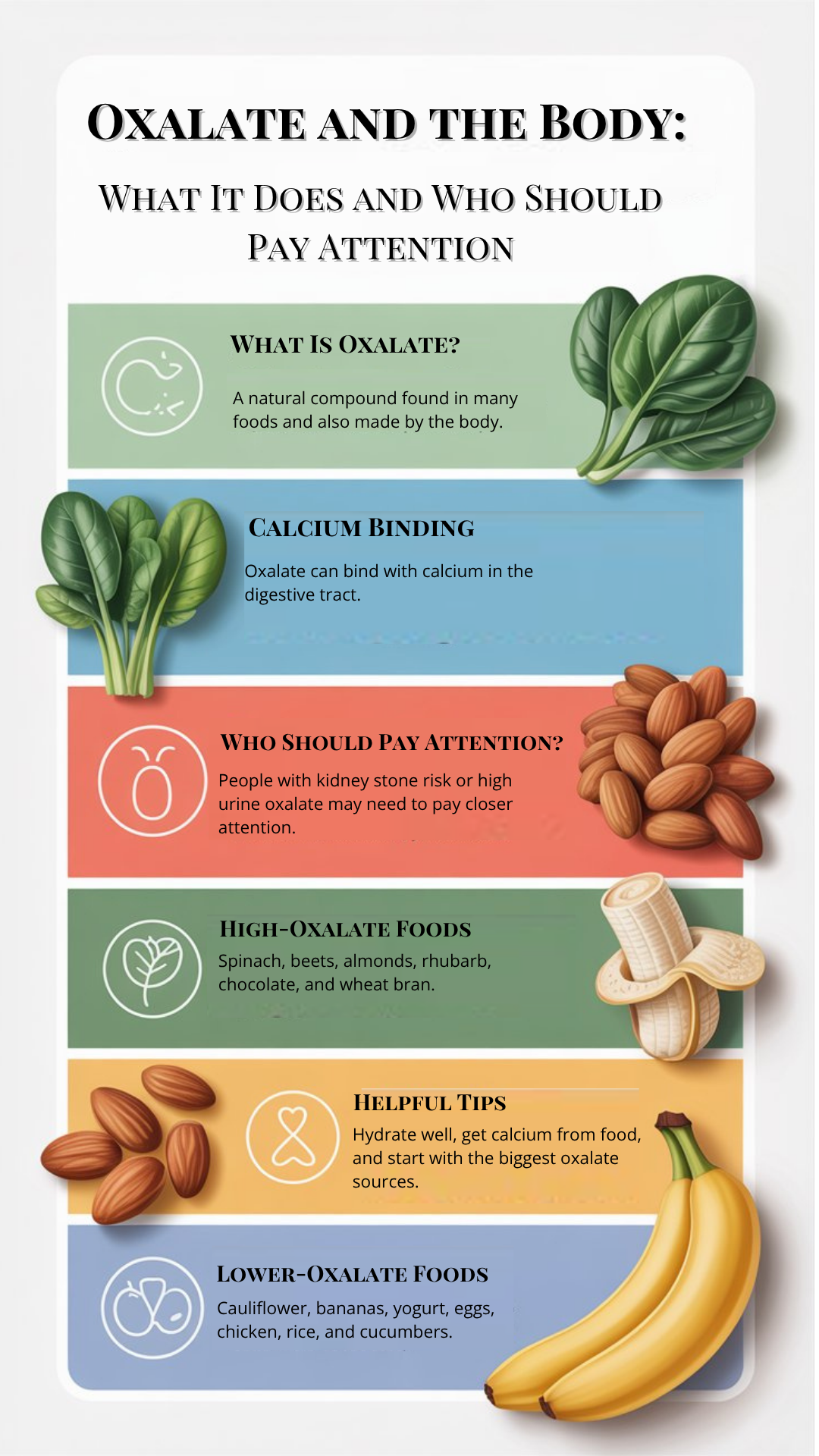
Oxalate is a natural compound found in many foods, and your body also makes some on its own. It matters most in the context of calcium oxalate kidney stones, certain digestive or absorption-related problems, and rare disorders such as hyperoxaluria, which means too much oxalate in the urine.
So this is not a “never eat healthy foods again” kind of post. This is a practical look at what oxalate does in the body, who really needs to pay attention, and how to lower risk without turning your kitchen into a stress factory.
📌 OXALATE GUIDE AT A GLANCE
| Post Type | Oxalate wellness guide |
| Focus | What oxalate does in the body and how to lower risk without over-restricting your diet |
| Best For | Readers worried about kidney stone risk, high-oxalate foods, and practical everyday food choices |
| Covers | Oxalate basics, calcium binding, higher-oxalate foods, lower-oxalate swaps, hydration, and when to get help |
| Style | Clear, practical, food-first, not alarmist |
| Helpful For | Smarter meal planning, reducing food fear, understanding kidney stone risk, and choosing lower-oxalate options |
| Main Goal | Help you make better oxalate decisions through everyday food habits, not panic or over-restriction |
🧠 What Is Oxalate?
Oxalate is a natural substance found in many foods, and your body also produces it. Trouble can happen when too much oxalate ends up in the urine, where it can combine with calcium and help form calcium oxalate stones, the most common type of kidney stone.
That does not mean oxalate is automatically harmful to everybody. Context matters. Someone with no history of stones is in a different situation from someone with repeated calcium oxalate stones, high urine oxalate, malabsorption issues, or a rare disorder like hyperoxaluria.
⚙️ What Does Oxalate Do in the Body?
Oxalate matters most in two places: the digestive tract and the urinary tract.
In the digestive tract, oxalate can bind with calcium. That matters because when calcium and oxalate bind there, less oxalate may be absorbed and later excreted into the urine. This is one reason kidney-stone guidance does not recommend slashing calcium from food for people with calcium oxalate stones.
In the urinary tract, higher levels of oxalate can combine with calcium and contribute to stone formation. NIDDK notes that changing how much sodium, animal protein, calcium, or oxalate you consume may help prevent future stones, depending on the type of stone you have had.
Because oxalate handling starts in the digestive tract, absorption matters more than many people realize — which is one reason broader digestive-health topics, including the gut-brain connection, continue to get so much attention.
💡 Tip: Oxalate is not a universal food villain. It is a risk factor that matters much more for some people than for everyone.
🚨 Does Oxalate Harm Everyone?
No. That is one of the biggest things people get wrong.
For most healthy people, oxalate-rich foods are simply part of a normal diet. Many of those foods also bring fiber, vitamins, minerals, and variety to the plate. The stronger concern is for people prone to calcium oxalate stones, people with certain intestinal diseases or malabsorption issues, and people with inherited hyperoxaluria.
That is why broad advice like “avoid all oxalates” is usually too blunt to be useful. National Kidney Foundation guidance is more targeted: do not reduce calcium in your diet, work on sodium intake, pair calcium-rich foods with oxalate-rich foods, and make changes based on the stone type and the person.
👀 Who Should Pay Closer Attention?
Oxalate deserves more attention if you:
- have had calcium oxalate kidney stones
- have been told you have high urine oxalate
- have intestinal disease or fat malabsorption
- have had bariatric surgery
- have a family history or medical concern for hyperoxaluria
- keep getting stones and do not know why
Usually less of a concern if:
- you have no history of kidney stones
- you eat a varied diet
- you stay well hydrated
- no clinician has told you that oxalate is an issue for you
That does not make oxalate irrelevant. It just means it may not need to run your life.
🥬 High-Oxalate Foods That Matter Most
This is where people often make the topic harder than it needs to be.
The goal is usually not to panic over every moderate source. The bigger payoff often comes from watching the foods that are highest in oxalate, especially if you are already stone-prone. National Kidney Foundation calcium oxalate meal-planning materials highlight foods such as spinach, rhubarb, certain nuts, cocoa, wheat bran, and some beans among the foods that may deserve closer attention.
Common foods often watched more closely in calcium oxalate stone prevention:
- spinach
- Swiss chard
- rhubarb
- beets and beet greens
- almonds
- cashews
- sesame seeds
- cocoa and chocolate
- wheat bran
- navy beans
💡 Tip: If you are trying to lower oxalate exposure, start with the highest-oxalate foods first. That is usually more realistic than trying to micromanage every ingredient on your plate.
🥛 Why Calcium Matters More Than People Think
This is the part that surprises a lot of readers.
A common assumption is that if a stone contains calcium, then calcium must be the problem. But NIDDK says calcium from food does not increase your chance of having calcium oxalate stones in the usual way people assume, and the National Kidney Foundation warns that a diet low in calcium can actually increase stone risk.
The National Kidney Foundation recommends about 1,000 to 1,200 mg of calcium per day for calcium stone prevention and specifically advises pairing calcium-rich foods with oxalate-rich foods.
That does not mean you need to load every meal with dairy.
Real-life examples:
- spinach with a yogurt-based dressing
- a bean-based meal with a calcium-containing side
- meals built around food-based calcium instead of random guesswork
A quick note about TUMs and calcium carbonate
This is where people can get confused. Getting enough calcium from food is not the same thing as casually overusing calcium carbonate antacids. Stone-prevention guidance centers on calcium intake from food and overall risk management, not self-prescribing antacids as a shortcut. Calcium-containing antacids can also interfere with absorption of some medicines.
💧 Hydration Does a Lot of the Heavy Lifting
If oxalate gets all the drama, hydration deserves more credit.
NIDDK says that if you have had kidney stones, drinking lots of water may help prevent future stones unless a healthcare professional tells you otherwise. Kidney Foundation guidance also emphasizes total fluid intake as a core part of prevention.
That matters because concentrated urine gives stone-forming substances less room, which raises the chances that they can collect and crystallize.
💡 Tip: Before you build a giant “foods I can never eat again” list, make sure your daily fluid intake is honestly where it should be.
🍽️ Lower-Oxalate Foods That Can Make Meals Easier
A lower-oxalate approach does not have to feel bleak.
For people who do need to watch oxalate more closely, lower-oxalate meal patterns often include foods such as cabbage, cauliflower, cucumbers, mushrooms, rice, bananas, melons, dairy foods, eggs, chicken, and fish. These are not morally superior foods. They are simply easier building blocks for many people trying to reduce oxalate load while keeping meals practical.
That is a much saner goal than trying to make every meal perfect.
🍲 Can Cooking Change Oxalate Content?
Sometimes, yes.
Food preparation can matter. Kidney Foundation meal-planning materials note that preparation is part of the overall strategy, and some cooking methods can make a difference in the final oxalate load of certain foods. It is not a magic trick, but it does mean the conversation is not always just “eat it” versus “never touch it.”
So the better question is often:
- how often are you eating it
- how much are you eating
- and is it one of the highest-oxalate foods to begin with
🩺 When Is This More Than a Food Issue?
Oxalate becomes a more serious topic when symptoms and history suggest stones or an underlying metabolic problem.
Oxalate-related problems are more often linked to kidney stone symptoms than to general digestive complaints like gas or bloating. If you have recurrent abdominal discomfort, constipation, or bloating, those symptoms may point to another digestive issue rather than oxalate alone.
Mayo Clinic says hyperoxaluria means too much oxalate in the urine and notes that long-term kidney health depends on recognizing and treating the problem early. Mayo also lists symptoms of kidney stones such as severe pain, blood in the urine, nausea, vomiting, fever, and chills.
Talk to a healthcare professional if you have:
- repeated kidney stones
- blood in the urine
- severe side, back, or flank pain
- nausea or vomiting with suspected stone symptoms
- fever or chills with urinary symptoms
- digestive disease plus recurring stones
- a child or teen with kidney stones
- a family history of hyperoxaluria or unexplained recurrent stones
🛠️ How to Lower Oxalate Risk Without Over-Restricting Your Diet
A practical approach usually looks more like this:
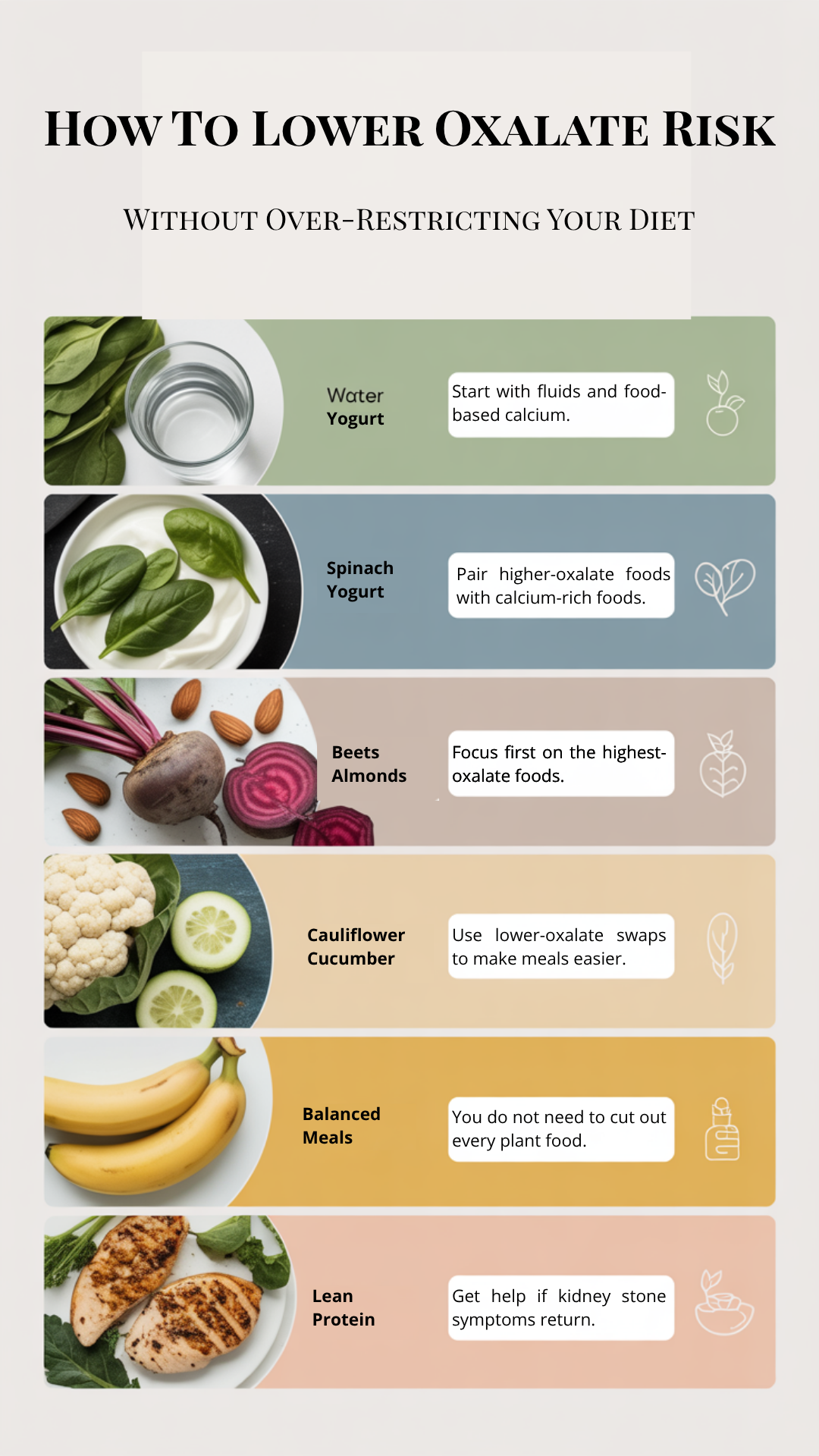
1. Drink enough fluid
This remains one of the most important steps in stone prevention.
2. Get enough calcium from food
Do not assume low-calcium is the answer for calcium oxalate stones.
3. Pair calcium-rich foods with oxalate-rich meals
This can help reduce oxalate absorption in the digestive tract.
4. Focus first on the highest-oxalate foods
You usually do not need to police every moderate source.
5. Remember the bigger stone-prevention picture
Sodium, animal protein, calcium, hydration, and oxalate can all matter, depending on the stone type.
6. Get personalized help if stones keep coming back
That matters even more if you also have digestive disease, malabsorption, or a family history of hyperoxaluria.
❓Frequently Asked Questions
Are oxalates bad for everyone?
No. They matter most for people at higher risk of calcium oxalate stones or those with certain medical conditions that affect oxalate handling.
Should I stop eating spinach, nuts, and chocolate?
Not automatically. If you have a history of calcium oxalate stones, those foods may deserve more attention, especially in large amounts or frequent servings. But most people do not need to avoid every oxalate-containing food.
Is calcium bad if my stones are made of calcium oxalate?
Usually no. Calcium from food does not increase the chance of calcium oxalate stones in the usual way people assume, and too little calcium in the diet can make stone risk worse.
Is a low-oxalate diet enough to prevent stones?
Not always. Hydration, sodium intake, animal protein, calcium from food, and your specific stone type also matter.
When should I ask for testing or medical advice?
If you have repeated stones, blood in your urine, severe pain, digestive disease with stone history, or a family history of hyperoxaluria, it is worth asking for medical guidance.
🥂 Final Thoughts
Oxalate is one of those health topics that gets oversimplified fast.
It is not fake. It is not something every person needs to fear. And it is definitely not a reason to start treating every vegetable like bad news.
The smarter takeaway is this: oxalate matters most when your history, symptoms, or stone risk say it matters. For the right person, adjusting oxalate intake can be part of a useful prevention plan. But the real win usually comes from the bigger picture too: hydration, enough calcium from food, and a targeted approach instead of food panic.



Leave a Reply