

There are seasons when your body just does not feel right.
You wake up tired, but not peacefully tired. More like off. A little heavy, a little foggy, maybe already tense before the day has even properly started. So you make coffee because, honestly, what else are you going to do? You need to function. You need to get moving. You need to deal with life.

Then maybe the coffee helps for a while. Or maybe it helps and makes you feel a little strange at the same time. A little more awake, but also a little jumpy. Your heart feels more noticeable. Your patience is thinner. Later on, you are craving something sweet, snapping faster than usual, or wondering why your whole body feels like it is running too hot.
And that is usually the point where people start asking themselves the real question:
What am I doing that is making me feel this way?
That is a much more human place to begin than jumping straight into hormone talk.
Because most people do not wake up thinking, “Ah yes, cortisol.” They wake up thinking, “Something is off with me lately.”
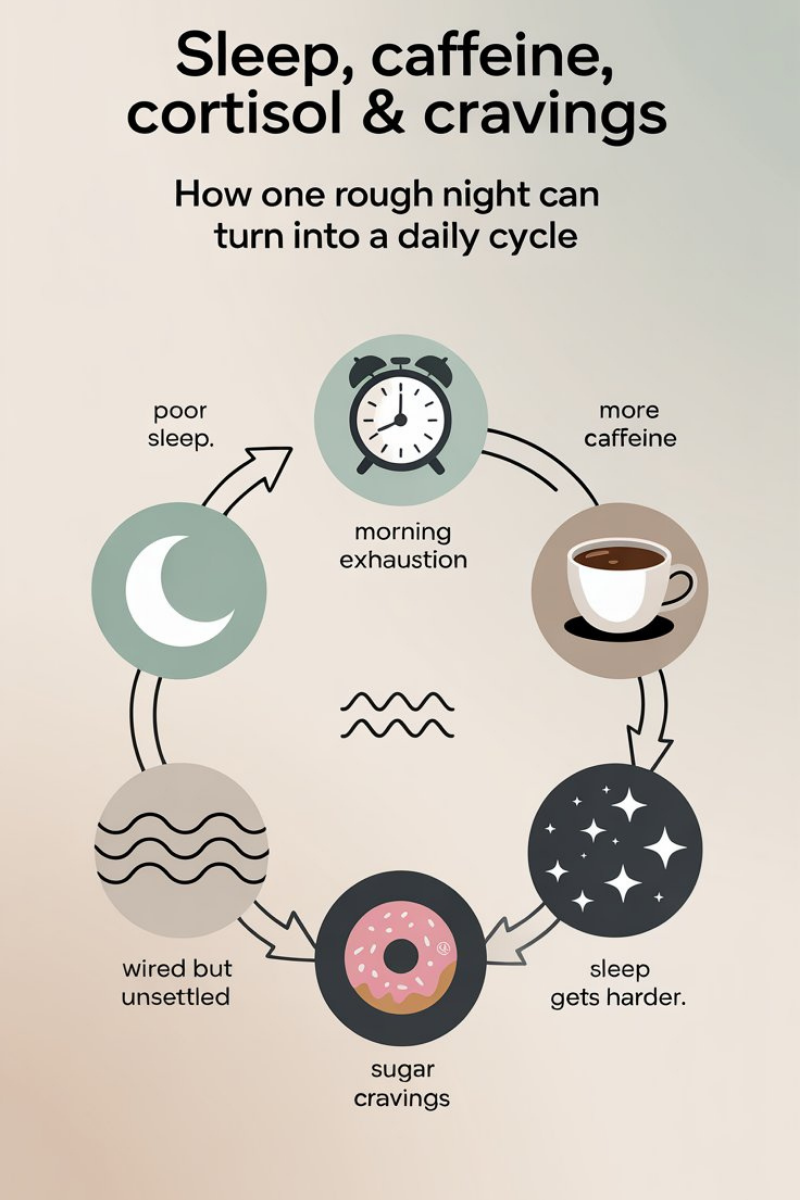
And sometimes, that “off” feeling is not one single thing. It is the result of several things piling up together: poor sleep, stress, too much caffeine, not enough recovery, blood sugar swings, a body that never quite settles, and a nervous system that feels like it is always halfway bracing for impact.
That is where cortisol comes in.
Not as the villain of the story, but as one part of a bigger picture.
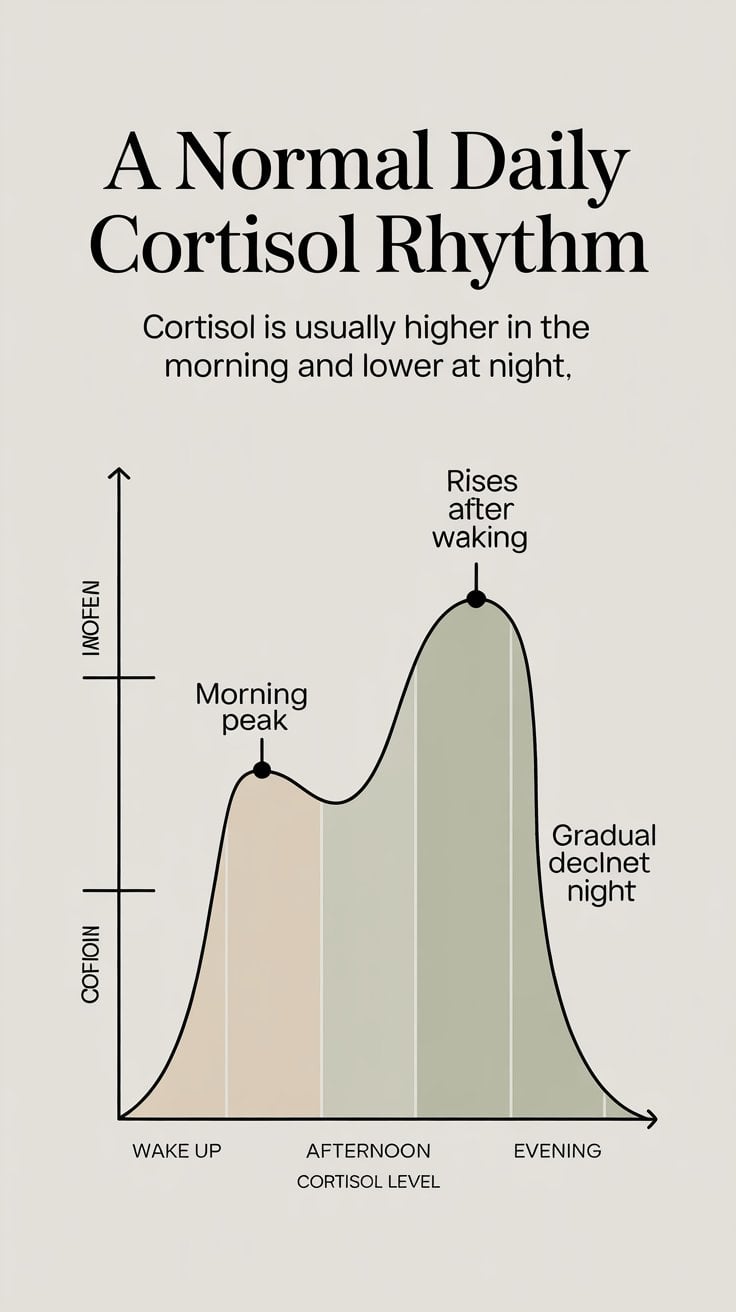
Cortisol is often called the stress hormone, which is true, but it is also part of your body’s normal wake-up system. Under healthy conditions, cortisol follows a daily rhythm. It tends to be higher in the early morning, rise after waking, and then gradually fall as the day goes on. That morning rise is not automatically bad. In fact, it is one of the ways your body helps you become alert enough to start the day.
So if you have been feeling tired, wired, shaky, hungry, restless, or just unlike yourself, this is not really a story about “bad cortisol.” It is more a story about what happens when sleep, caffeine, stress, and daily habits start pulling on the same system at once.
What Cortisol Actually Does
Let’s slow it down for a second.
Cortisol is a hormone made by the adrenal glands. It helps regulate things like metabolism, blood pressure, immune activity, and the body’s response to stress. It is controlled through what is called the hypothalamic-pituitary-adrenal axis, or HPA axis, which is basically part of the body’s built-in stress and survival wiring.
But here is the part people often miss: cortisol is not only about stress.
It also follows a circadian rhythm, which means it changes over the course of the day. Under normal conditions, cortisol is usually lower at night, higher in the early morning, and part of what helps the body transition from sleeping to waking.
So when you hear that cortisol is “high in the morning,” that does not automatically mean something is wrong. Sometimes it just means your body is trying to do its job.
Why Morning Cortisol Is Not Automatically A Problem
One of the most studied parts of this rhythm is the cortisol awakening response, often shortened to CAR. This is the rise in cortisol that happens during the first 30 to 45 minutes after waking. Researchers describe it as a distinct part of the normal shift into daytime alertness.
In plain English, your body does not go from sleep to full daytime mode like flipping a light switch. It ramps up.
That morning cortisol rise helps support that shift.
So the goal is not to flatten cortisol into the ground and keep it low forever. That would not be healthy. A healthier pattern is more like this:
Cortisol is higher when it needs to help you wake up.
Lower when it is time to wind down.
Not dragging that revved-up feeling deep into the evening.
That is an important distinction, because a normal morning rise is not the same thing as feeling constantly stressed, overstimulated, edgy, and unable to come down.
When The Whole Pattern Starts To Feel Off
This is where life gets messy.
Because even if morning cortisol itself is normal, the bigger rhythm can start working against you when your sleep is poor, your schedule is irregular, your caffeine is creeping up, and your stress load never really comes down.
That is when the experience often sounds like this:
You wake up tired.
You reach for coffee fast.
You feel a little better, but not really steady.
Then later you crash, crave sugar, lose patience, or feel weirdly both foggy and overstimulated at the same time.
At night, you are tired again, but not calm-tired. More like wired-tired.
Then the next day starts the same way.
If that sounds familiar, you are not imagining it.
This kind of cycle is not caused by cortisol alone, but cortisol is part of the system being pulled around. Sleep and circadian disruption can interfere with the body’s normal daily rhythms, which helps explain why the whole thing can start to feel like one long stress loop instead of a day with a natural beginning, middle, and end.
Where Caffeine Steps In — And Why It Can Get Tricky
Now let’s talk about the thing most people are actually leaning on to survive this cycle: caffeine.
Coffee can feel like the rope you grab when the day starts badly. And sometimes it does help. But it helps in a way that can get complicated fast.
Caffeine promotes alertness, but it does not replace sleep. It does not repair the system underneath. And when the timing or amount is off, it can make the whole pattern harder to escape.
One of the clearest findings here is that caffeine taken even 6 hours before bedtime can significantly disrupt sleep. So if your day already started in a depleted state, and you keep using caffeine to push through it, there is a good chance you are feeding tomorrow’s exhaustion while trying to survive today’s.
That is the kind of cycle people get stuck in all the time:
Bad sleep.
More caffeine.
A shakier day.
Another bad night.
Then even more caffeine tomorrow.
Not because they are careless. Because they are tired and trying to cope.
Coffee Is Not One Fixed Thing
And this is the part almost nobody talks about enough.
When someone says, “I only had one coffee,” that could mean almost anything.

One person means a modest cup with a little milk. Another means a giant mug brewed strong enough to wake the neighbors, plus a refill, plus flavored creamer poured in by instinct instead of measurement.
Those are not the same thing.
For most healthy adults, the FDA says up to 400 milligrams of caffeine a day is not generally associated with dangerous negative effects, but real-life intake varies widely because serving sizes and brew strength vary so much.
So yes, coffee matters. But so does the measurement of coffee.
How big is the mug?
How strong is the brew?
How many scoops went in?
How many times did you top it off?
How much creamer, sugar, or syrup got invited into the cup with it?
Because once you start looking at real life instead of a textbook serving, “one coffee” can turn into a very blurry number.
And then there is creamer.
A lot of people are not just drinking coffee. They are drinking coffee plus sugar, flavored additives, repeated refills, and sometimes a kind of dessert-in-a-mug situation that affects the body very differently than a smaller, simpler cup would.
Added sugars are recommended to stay below 10% of daily calories in U.S. dietary guidance, which is one reason those add-ins matter more than people realize.
So the real question is not just, “Is coffee bad?”
It is: What exactly is in your cup, how much of it are you having, and what is it doing on top of poor sleep and stress?
That is a much more honest conversation.
Why Sugar Cravings Often Show Up Next
This is another part people know in their bones before they know it in words.
After a bad night of sleep, your body often wants quick energy. Sleep loss has been linked to changes in appetite regulation, food reward, calorie intake, and glucose handling, which helps explain why sugar and easy carbs can start looking much more appealing after you are under-rested.
So if your day starts with too little sleep and too much coffee, then slides into feeling shaky, foggy, irritable, or depleted, it makes sense that your body may start reaching for something fast and rewarding later on.
That does not mean you are weak. It means your system is trying to self-correct the easiest way it knows how.
This is why that coffee-then-sugar cycle feels so familiar to so many people:
You are exhausted.
Coffee gets you moving.
Your energy gets uneven.
Later you want something sweet, quick, or comforting.
Then the day feels even less steady.
It is not glamorous. It is just very human.
When This Stops Being “Just Physical” And Starts Showing Up In The Rest Of Life
And this is where the conversation gets more personal.
Because once your body is running on poor sleep, too much stimulation, uneven energy, and no real reset, it usually does not stay contained to your coffee cup or your afternoon snack.
It starts showing up in your mood.
You are shorter with people.
Normal stress feels bigger than it should.
You snap faster.
You have less room inside yourself.
You fight with your spouse over something small and then hate that it even happened.
You get impatient with the kids.
You drive like everyone in front of you has personally offended you.
You feel less like yourself and more like a live wire in sweatpants trying not to unravel in the cereal aisle.
That matters.
Because a lot of what people call “stress” is not just emotional. Sometimes it is the cumulative result of being under-slept, overstimulated, under-recovered, and trying to force the body through another day anyway.
And once you see that, the whole thing starts to make more sense.
Can Cortisol And Too Much Caffeine Affect Heart Rate And Blood Pressure?
Yes, this is part of the picture too, and it is worth talking about carefully.
A normal morning cortisol rise is part of healthy physiology. That is not the problem by itself. But chronically disrupted stress systems and true cortisol excess are associated with blood pressure regulation and cardiovascular strain over time.
Caffeine can add another layer. Mayo Clinic notes that caffeine can cause a brief rise in blood pressure, especially in people who are not regular caffeine users or who are more sensitive to it. It can also leave some people feeling jittery, more aware of their heartbeat, or like their body is running too hot.
That does not mean coffee is automatically dangerous for everyone. It does mean that if you are already sleeping poorly, already stressed, and already leaning hard on caffeine, your body may feel the combined load more strongly.
So the better message is not, “Cortisol is causing all of this.”
It is: when poor sleep, stress activation, and too much caffeine stack on top of each other, some people feel noticeably more wired, less steady, and more aware of things like heart pounding, tension, or elevated blood pressure.
That is a much more grounded and believable way to say it.
Why Sleep Still Has To Stay At The Center Of This
This is where I would gently pull you back to the bigger picture.
Because even though cortisol and caffeine are part of the story, sleep is often the foundation underneath it all.
If your sleep is off, the next day becomes harder. Then coffee steps in. Then your energy gets less steady. Then cravings get louder. Then your mood gets thinner. Then your body has a harder time settling at night. And round and round it goes.
If your nights are broken by middle-of-the-night waking, and your mornings start groggy, tense, or oddly alert, it helps to look more closely at what may be driving that pattern. You can read more here about why you wake up at 3 AM and can’t fall back asleep.
And if you have already tried melatonin, but still wake up groggy, foggy, or just not quite right the next day, it may help to take a closer look at melatonin side effects for sleep before treating it like the automatic answer.
That is not me dodging the cortisol conversation. It is me saying that sometimes the most helpful answer is not found in one hormone, but in the rhythm you live inside every day.
What Actually Helps
You do not need to become perfect. You do not need a dramatic “hormone reset.” And you definitely do not need to treat yourself like a project that has failed.
But it does help to get honest about the basics.
Look at your sleep schedule. Not the ideal one in your head. The real one. The one your body is actually living through.
Look at your coffee honestly too. How big is the mug? How strong is the brew? How often are you refilling it? What is in it besides coffee?
Look at timing. Caffeine that feels harmless at 2:00 in the afternoon can still be part of the reason bedtime feels frustrating later on.
Look at your food patterns. Running on coffee for half the day and then wondering why you are ravenous, shaky, or craving sugar later is not a mystery your body is creating to annoy you. It is feedback.
Try to get morning light when you can. Try to give your body some daytime movement. Try to make nighttime look and feel more like nighttime. The body responds to rhythm more than most of us give it credit for.
And maybe most importantly, stop assuming this is a character problem.
Sometimes it is not that you are lazy, weak, disorganized, dramatic, or “bad at handling stress.”
Sometimes you are just under-slept, over-caffeinated, underfed, overstimulated, and trying to do too much from inside a body that has very little margin left.
That does not mean nothing has to change. It just means the change needs to come from understanding, not self-attack.
Conclusion
If you have been feeling tired, wired, foggy, shaky, irritable, or just unlike yourself lately, there may be more going on than one simple bad habit or one scary hormone.
In many cases, it is not one thing. It is several things piling up together: poor sleep, too much caffeine, uneven energy, sugar swings, stress, and a body that never quite gets the reset it needs.
That is why this can feel so confusing. You are not only dealing with biology. You are dealing with the lived result of all those parts interacting inside a real day, inside a real home, inside a real life.
The good news is that once you start seeing the pattern more clearly, things often begin to make more sense.
And when things start making more sense, they become a lot easier to change.
FAQ
Is it normal for cortisol to be high in the morning?
Yes. Cortisol normally rises in the early morning and increases after waking as part of the body’s normal daily rhythm. That morning rise helps support alertness and readiness for the day.
Does coffee raise cortisol?
Caffeine can interact with the body’s stress-response systems, but the bigger everyday issue is often that caffeine increases alertness while making it easier to push past underlying fatigue instead of correcting it with better sleep and recovery. Evidence also shows caffeine timing can interfere with sleep.
Can too much caffeine affect heart rate or blood pressure?
Yes, in some people. Caffeine can cause a temporary rise in blood pressure and may leave some people feeling jittery, aware of a pounding heartbeat, or overstimulated.
Why do I crave sugar after a bad night of sleep?
Poor sleep is linked with changes in appetite regulation, glucose handling, and food reward, which can make sweet or quick-energy foods feel much harder to resist the next day.
Is coffee always the problem?
Not necessarily. Dose, brew strength, mug size, how many times you refill it, what gets added to it, and your own sensitivity all matter. “One coffee” is often not a very precise measurement in real life.
When should I talk to a healthcare professional?
If you are dealing with frequent palpitations, chest pain, dizziness, fainting, severe fatigue, or consistently high blood pressure, do not assume it is “just cortisol” or “just caffeine.” Symptoms like these deserve proper medical evaluation.



Leave a Reply