

Some nights, melatonin can sound like the easiest answer in the world. You are tired, you want sleep, and a small pill on the nightstand starts to look like a simple fix.

That is part of why this topic matters. Melatonin may help in some situations, especially when sleep timing is off, but it is not side-effect free and it is not the right answer for every kind of sleep problem. Short-term use appears safe for many people, but common side effects can still happen, long-term safety is not fully clear, and melatonin can interact with medicines.
It is also worth saying out loud that not every rough night is just a “sleep problem.” Stress about work, money, relationships, loss, uncertainty, or simply the weight of life can interfere with sleep. And the pressure of thinking, I have to get some sleep, can make the whole thing worse.
So before reaching for melatonin like it is the only option left, it helps to understand what it does, what side effects can show up, and what other sleep-supportive steps may be worth trying first.
WHAT TO KNOW AT A GLANCE
- • What melatonin is: A hormone your body naturally makes in response to darkness that helps regulate the sleep-wake cycle.
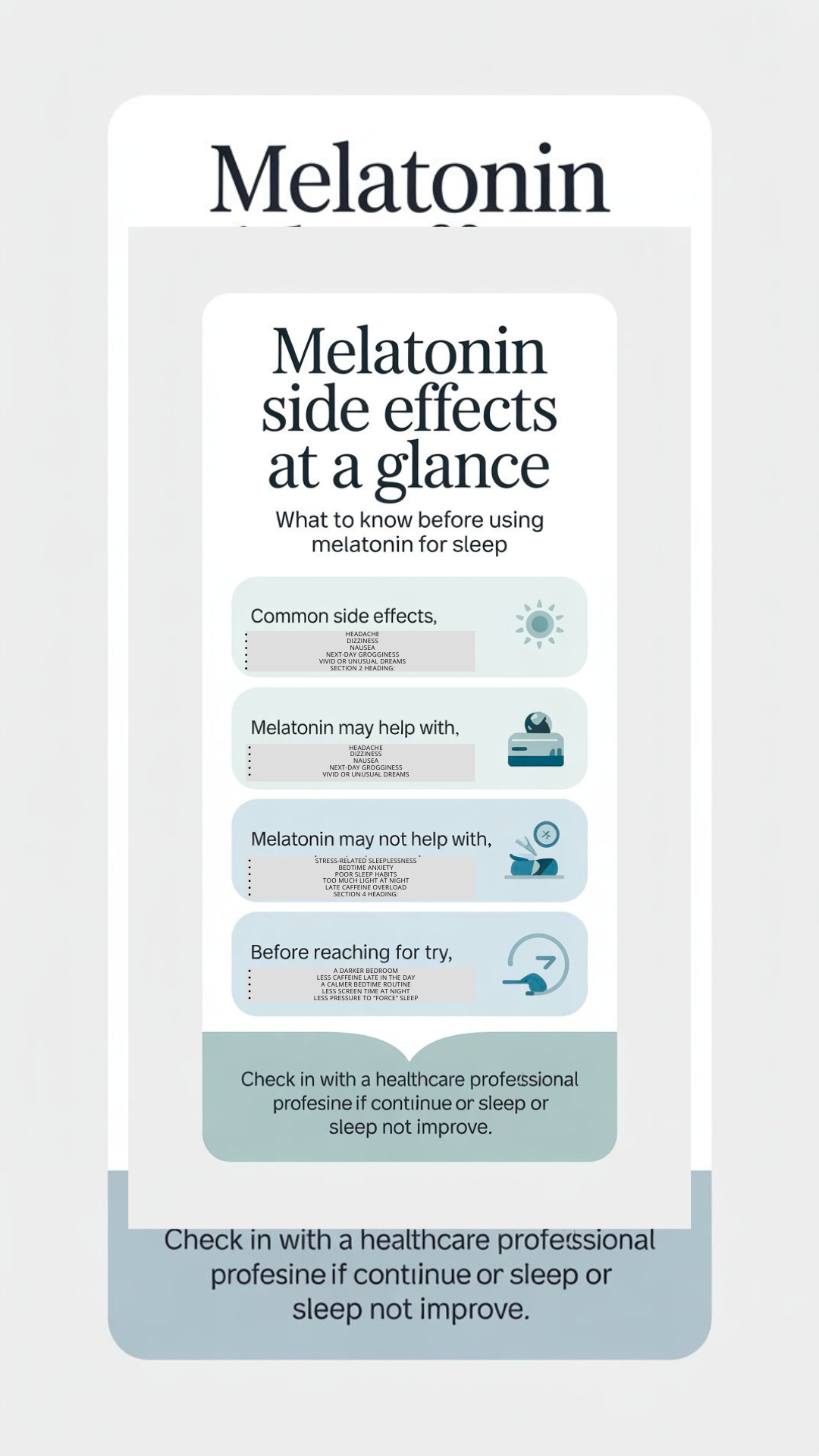
- • Most common side effects: Headache, dizziness, nausea, and next-day grogginess.
- • What melatonin may help with: It may be more useful for sleep timing issues than for every kind of insomnia.
- • What it does not do: It is not a cure-all for every sleep problem.
- • When to be cautious: If you take other medications, feel groggy or foggy the next day, or keep relying on it without understanding why your sleep is off.
- • What may help first: A darker bedroom, less late caffeine, a calmer bedtime routine, and less pressure around “having” to fall asleep.
What Melatonin Actually Is
Melatonin is a hormone your body naturally makes in response to darkness. It helps regulate the sleep-wake cycle, which is why it is often called a sleep hormone.
Light matters here too. Artificial light at night can interfere with melatonin production and make it harder for the body to settle into sleep. That is one reason bedtime habits and bedroom setup matter more than people sometimes realize.
Melatonin supplements may sound harmless because they are sold so casually, but they still affect the body. That is worth remembering, especially when someone starts treating them like an automatic nightly solution.
For a broader look at the habits that support real rest, see How to Sleep Better: Healthy Bedtime Habits That Actually Help.
Common Melatonin Side Effects
The side effects most often mentioned with melatonin include:
- headache
- dizziness
- nausea
- drowsiness or next-day grogginess
Those may sound mild on paper, but they still matter. A sleep aid that leaves you foggy, slow, or off-balance the next morning is not really solving the full problem.
For a more detailed medical overview, the NIH National Center for Complementary and Integrative Health’s melatonin guide is a solid reference.
The Side Effect Many People Notice First: Morning Grogginess
For many people, the first issue is not dramatic. It is the heavy, dull, half-awake feeling the next morning.
That can happen if the dose is too high, the timing is off, or your body is simply sensitive to it. This is one reason melatonin can become frustrating. People are usually looking for better sleep quality, not just stronger sedation.
If you are waking up groggy and then trying to push through the day with coffee, that can create a rough cycle of tired nights and wired mornings. That is also where Morning Cortisol: Why You Wake Up Wired, Tired, or Both fits naturally into the larger sleep conversation.
Can Melatonin Cause Weird Dreams or Sleep That Feels “Off”?
Some people notice more vivid dreams, more intense dreaming, or sleep that just feels strange after taking melatonin.
That does not mean everybody will react that way. It does mean that if your sleep started feeling unusually dream-heavy, restless, or unsettling after taking melatonin, that is not an unreasonable thing to notice.

Melatonin Is Not the Answer to Every Sleep Problem
This is where a lot of sleep advice online gets too simplistic.
Melatonin may be useful in some situations, especially when the issue is sleep timing. But that does not mean it is the right answer for every adult who cannot sleep.
If the real problem is stress, nighttime anxiety, inconsistent routines, late caffeine, too much light at night, or an untreated sleep issue, melatonin may not solve much. Better sleep habits often matter more in the long run than reaching for another supplement.
And if the bigger issue is waking up in the middle of the night and not being able to settle back down, melatonin may not be getting at the real problem. In that case, it helps to read more about why you wake up at 3 AM and can’t fall back asleep.
That is also why the American Academy of Sleep Medicine insomnia guideline is worth reading if you want a more careful medical perspective.
Stress, Anxiety, and the “I Have to Sleep” Trap
Stress and anxiety can interfere with sleep in very real ways. When life feels uncertain, heavy, or unstable, the mind does not always power down just because the clock says bedtime.
For some people, the problem is not that they need a stronger sleep aid. The problem is that their nervous system is loaded, their thoughts are looping, or life feels hard to set down at night.
Then comes the second layer: I have to get some sleep.
That pressure can become part of the problem. The harder you try to force sleep, the more tense bedtime can become.
Sometimes the better direction is gentler. Step back from the panic. Stop trying to wrestle sleep into submission. Create a calmer runway and let the body have a fair chance to settle. That does not mean doing nothing. It means not turning bedtime into a performance test.
There is also something to be said for learning to mentally loosen your grip a little. Disassociate from the day. Disengage from the noise. Let go, as much as you can, of the people, situations, and pressures you cannot fix late at night. Once the road opens, sleep often has a better chance of showing up on its own.
If stress and anxiety are part of the picture, this NCCIH overview on stress, anxiety, and sleep problems is a useful evidence-based starting point.
Is It Safe to Take Melatonin Every Night?
This is where the answer gets less tidy.
Short-term use appears safe for many people, but long-term safety is still not fully clear. So if someone is taking melatonin night after night, it is worth pausing to ask:
- What problem am I actually trying to solve?
- Is this helping, or just sedating me?
- Am I overlooking a deeper sleep issue?
- Have I started relying on it without really knowing why?
That is not anti-melatonin. It is just a more careful way to look at it.
Medication Interactions Matter More Than People Realize
Melatonin is often treated casually because it is sold casually. But that does not mean it belongs in the “can’t hurt” category.
If you take medications regularly, already deal with dizziness or daytime sleepiness, or have a more complicated health picture, it makes sense to be more cautious. The same goes for combining sleep aids without clear guidance.
For a straightforward safety reference, see the NHS melatonin guidance and side effects page.

Why Bedroom Darkness Is Worth Taking Seriously
This is one of the simplest sleep supports people often overlook.
Even if you can fall asleep with a night light, TV glow, hallway light, or window light coming through the room, that does not necessarily mean the setup is helping your sleep. Light is one of the strongest signals affecting the sleep-wake cycle.
So a darker bedroom is usually a better sleep environment than a brighter one. That does not mean everybody needs cave-level darkness, but reducing unnecessary light at night is a sensible, low-risk thing to try before assuming you need more supplementation.
If you sleep with the lights on, a glowing television, bright electronics, or too much light leaking through the window, the room may be working against you more than you realize.
Other Options to Try Before You Treat Melatonin Like the Only Answer
This is where people sometimes need the most reassurance: you may have more options than you think.
Helpful starting points can include:
- keeping a more regular bedtime and wake time
- reducing late caffeine
- cutting back on bedtime doom-scrolling
- making the bedroom darker at night
- keeping the room calm, quiet, and comfortable
- building a wind-down routine that actually feels calming
- using relaxation or mindfulness practices
- giving yourself permission to stop fighting sleep minute by minute
That last one may sound simple, but it matters. Learning to loosen your grip a little from the day, the noise, the people, the pressure, and the events you cannot control at night can sometimes help more than one more pill taken out of panic.
For a broader foundation, circle readers back to How to Sleep Better: Healthy Bedtime Habits That Actually Help.
When Melatonin Side Effects Are a Sign to Stop and Check In
If melatonin leaves you feeling clearly off, pay attention to that.
Feeling persistently groggy, dizzy, mentally foggy, or generally not right the next day is worth noticing, especially if it keeps happening. A reaction does not have to be dramatic to still matter.
When to Talk to a Healthcare Professional
It is smart to check in with a healthcare professional if:
- you keep using melatonin but still are not sleeping well
- side effects keep showing up
- you feel very groggy, dizzy, or mentally foggy the next day
- your sleep problem is chronic or getting worse
- anxiety or stress is interfering with daily life
- you snore heavily, wake gasping, or think another sleep disorder may be involved
That is not alarmist. It is just recognizing the difference between an occasional rough patch and a problem that deserves a closer look.
Frequently Asked Questions
What are the most common melatonin side effects?
The most common melatonin side effects are headache, dizziness, nausea, and drowsiness or next-day grogginess.
Can melatonin make you groggy the next day?
Yes. Some people feel sleepy, foggy, or slow the next morning, especially if the dose or timing does not suit them.
Can melatonin cause vivid dreams?
It can for some people. More intense or unusual dreams are something some people notice after taking melatonin.
Is melatonin safe to take every night?
Short-term use appears safe for many people, but long-term safety is still not fully clear.
Should adults use melatonin for insomnia?
Not as a blanket answer. It may help in some situations, but it is not the right fix for every kind of sleep problem.
Can stress and anxiety make sleep worse?
Yes. Stress and anxiety can absolutely contribute to trouble sleeping, and worrying about sleep itself can make the problem worse.
Does sleeping in a darker room really help?
Usually, yes. A darker room often supports better sleep because light can interfere with the body’s natural sleep signals.
Final Thoughts on Melatonin and Sleep
Melatonin is one of those sleep topics that seems simpler than it really is.
It may help in the right situation. But it is not side-effect free, it is not the right answer for every type of insomnia, and it should not be treated like the only path left when sleep gets difficult.
Common side effects like headache, dizziness, nausea, and grogginess are real. It is also worth respecting the fact that stress, anxiety, light exposure at night, and pressure around sleep itself can all be part of the story.
For many people, the better long-term question is not just, “What can I take?” It is, “What is keeping my body from settling in the first place?”
That is often where more useful answers begin.




Leave a Reply