

The first Msemen rarely makes it all the way to the serving plate.
You tear into a warm, golden square and find crisp edges giving way to soft, buttery layers. Honey pools in the folds, mint tea steams nearby, and suddenly a simple stack of flatbread becomes the quiet center of the table.
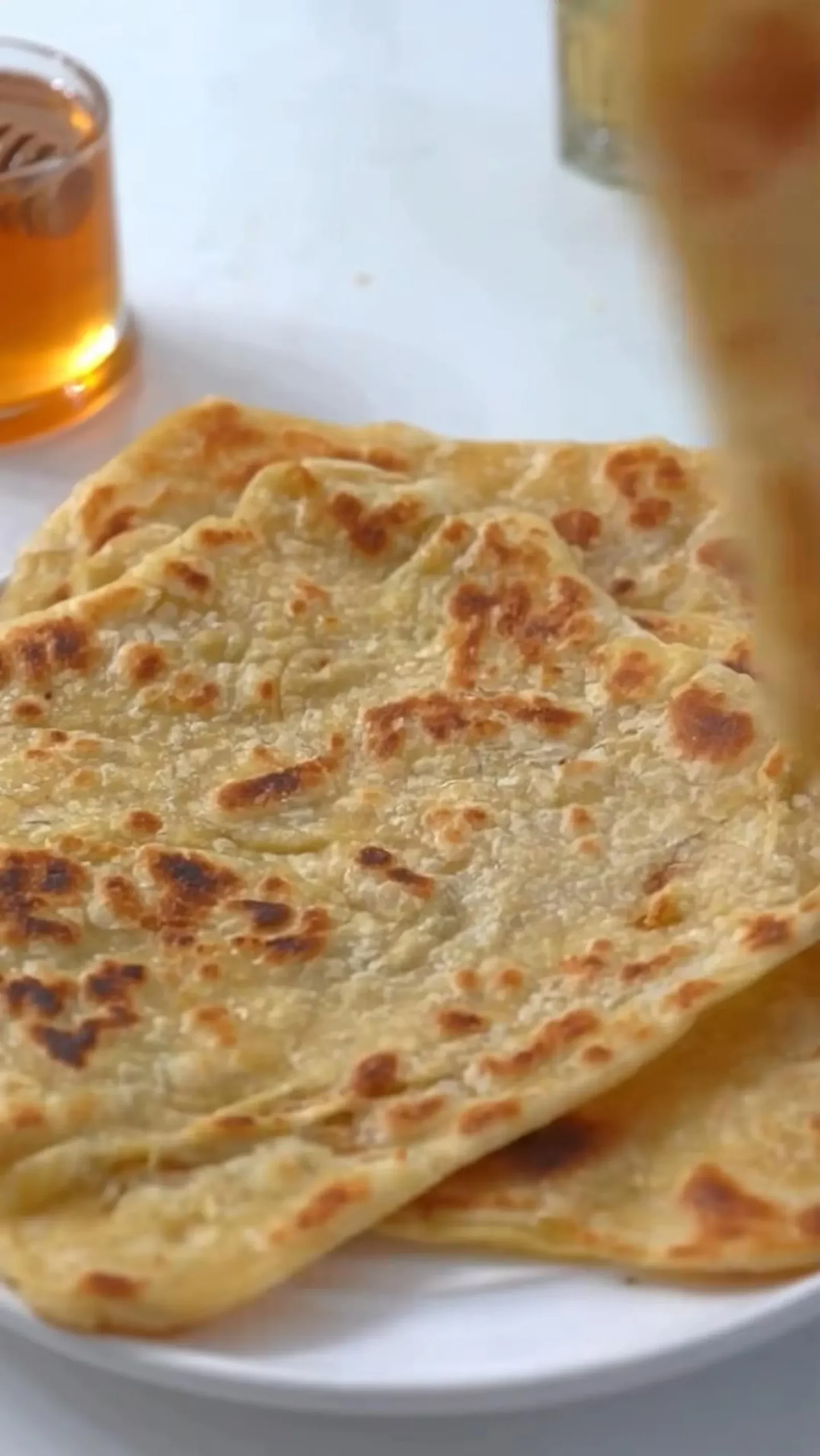
These Moroccan pancakes look more intricate than they really are. The ingredients are humble—flour, semolina, a little butter and oil—but the technique creates something special: thin, flaky layers with a tender center and those irresistible crisp edges.
The dough does most of the work once you understand three simple things: it must stay soft, it needs time to rest, and it should be stretched gently rather than forced.
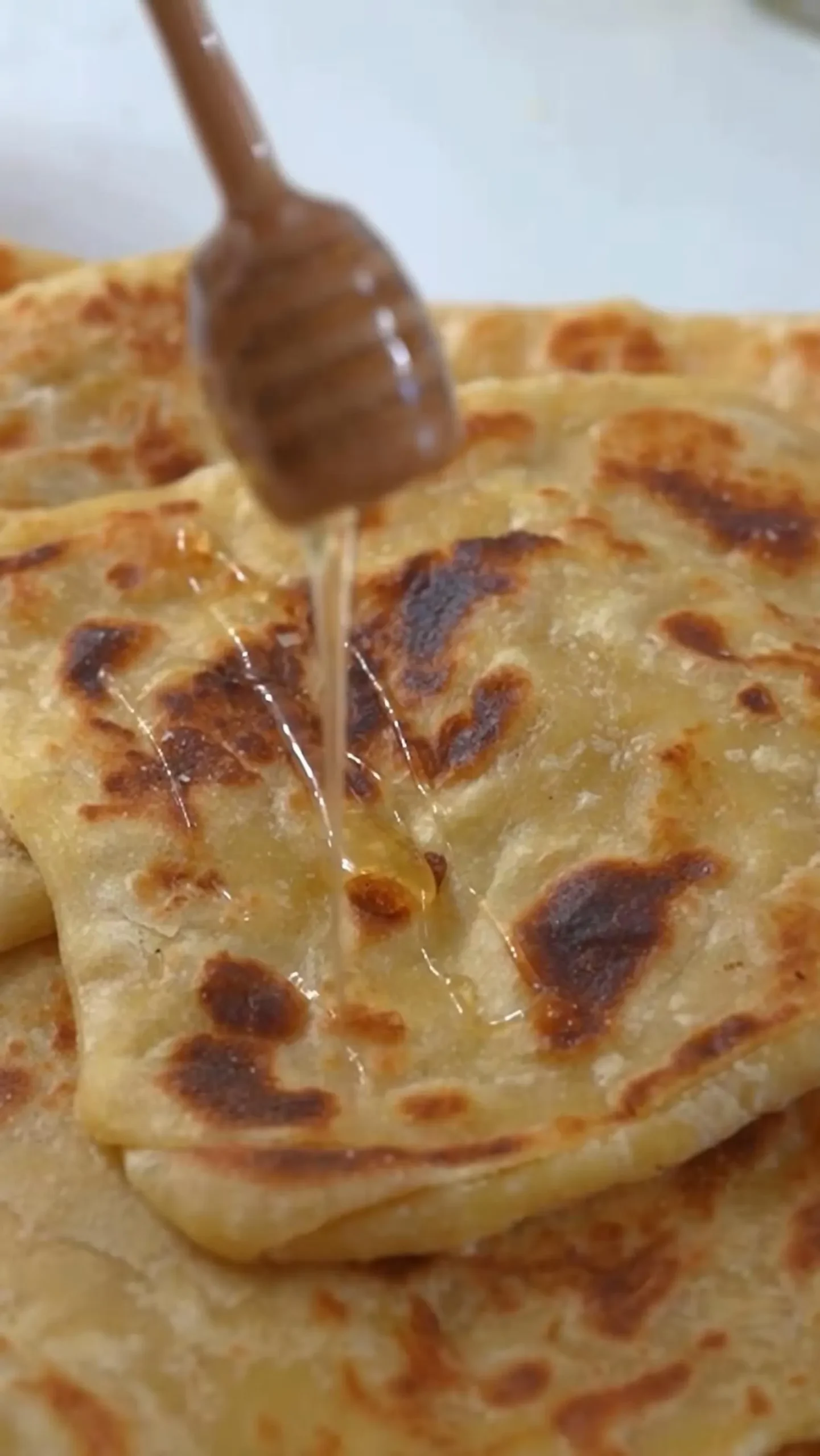
They are particularly good for leisurely mornings or small gatherings because you can rest the dough balls ahead of time, then stretch, fold, and cook them when everyone is ready to sit down.
If you are building a larger breakfast or mezze table, tuck them next to soft cheese, olives, or a cool dip. The Msemen bring the warm, flaky element that makes the whole spread feel more generous.
💡 Lightbulb Tip: Do not rush the rest. Soft, relaxed dough stretches thinly and cleanly. Tight dough tears and fights back.
🍽️ Recipe at a Glance
| 🥄 Difficulty | Moderate |
| 🔪 Active Prep | About 30 minutes |
| ❄️ Rest | 20–30 minutes (plus a short second rest) |
| 🔥 Cook | 30–40 minutes |
| ⏱️ Total | About 1 hour 10 minutes |
| 🍽️ Yield | 8 Msemen |
| 🥐 Texture | Crisp, flaky edges with tender layered centers |
| 💡 Best Tip | Keep the dough soft and oil the surface generously |
| 🏡 Best For | Breakfast, brunch, Moroccan tea service, or sweet and savory tables |
❤️ Why These Msemen Work
These Msemen look like carefully layered Moroccan pancakes, but the method is more forgiving than it first appears.
The dough stays soft and slightly tacky so it can stretch thin without tearing. A proper rest relaxes the gluten, letting each portion open into a nearly translucent sheet. Melted butter and oil create the richness and separation, while fine semolina keeps the folds distinct as they cook.
The result is a stack of golden squares with crisp edges and soft, buttery interiors—exactly what you want to tear and share.
There is another practical advantage: once the dough is made and rested, the remaining steps move at a comfortable pace. You can focus on gentle stretching and even browning rather than racing against a fussy dough.
Serve them with something cool and creamy if you like contrast. Honey and butter keep the classic Moroccan pairing, while a soft cheese or labneh board turns them into a savory centerpiece.
🛒 Ingredients You’ll Need
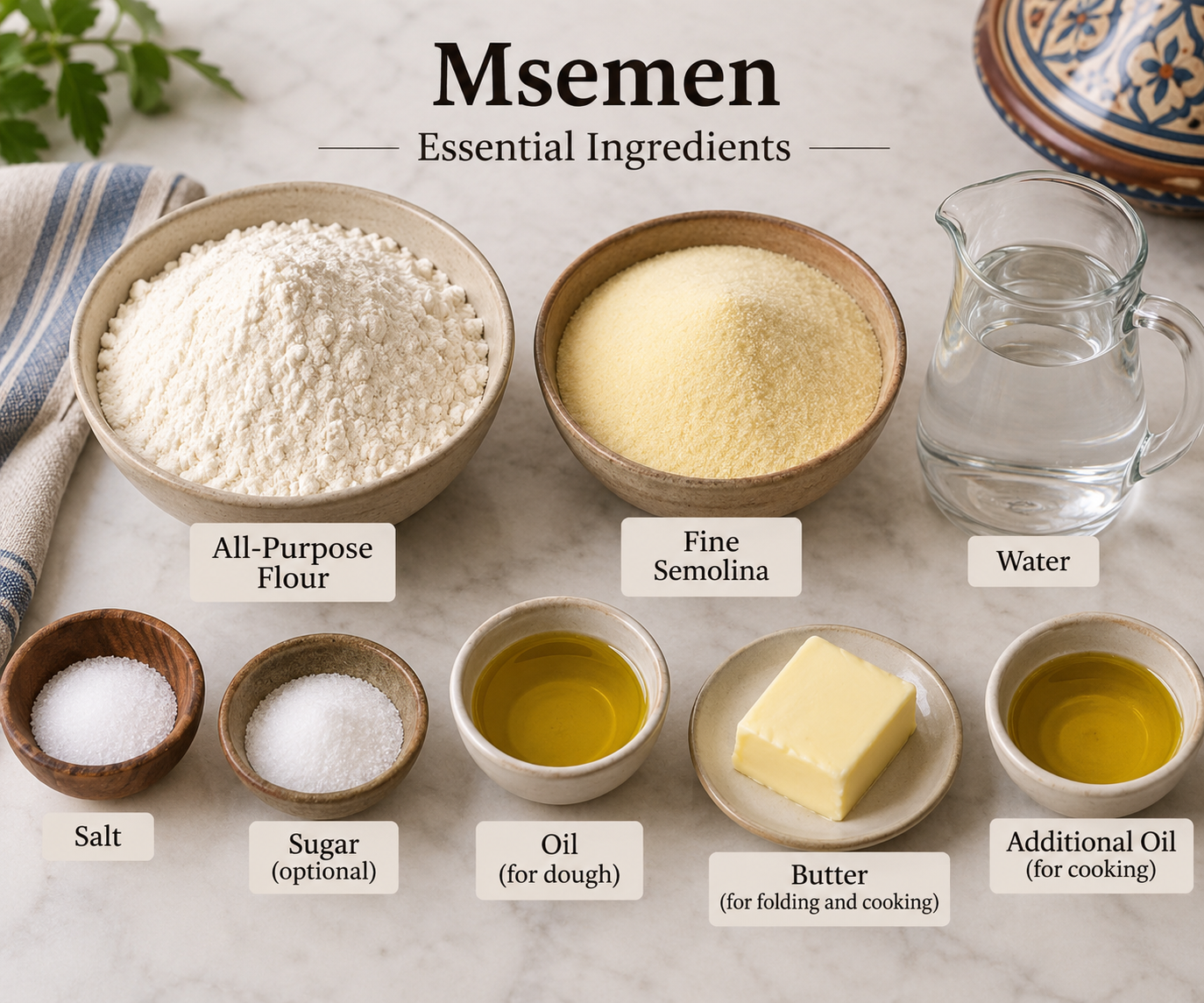
All-Purpose Flour and Fine Semolina
Three cups of all-purpose flour form the structure. One cup of fine semolina brings the characteristic texture and helps the layers stay separate.
Fine semolina is important here. Coarser varieties can leave a gritty feel and do not create the same delicate separation.
Salt and Sugar
One teaspoon of salt seasons the dough. One tablespoon of sugar is traditional and helps with gentle browning without making the Msemen sweet.
Warm Water
About 1½ cups, added gradually. The exact amount can vary slightly with the flour, so judge by feel. The dough should become smooth, soft, and slightly tacky.
Neutral Oil and Melted Butter
A quarter cup of neutral oil (plus more for the work surface) keeps the dough flexible and helps the layers separate. Half a cup of melted butter adds richness and flavor.
Together they create the flaky texture that defines good Msemen. A mild olive oil can stand in for the neutral oil if you prefer its flavor.
Extra Fine Semolina for Layering
Half a cup is enough for sprinkling between the folds. A light, even dusting is more effective than heavy piles in the center.
Why a Soft Dough Matters
A stiff dough resists stretching and tears more easily. A soft, slightly tacky dough glides across an oiled surface and opens into thin, even sheets. Extra flour may feel safer in the moment, but it often leads to tougher, less flaky results.
👩🍳 How to Make Authentic Msemen
Step 1 — Make the Soft Dough
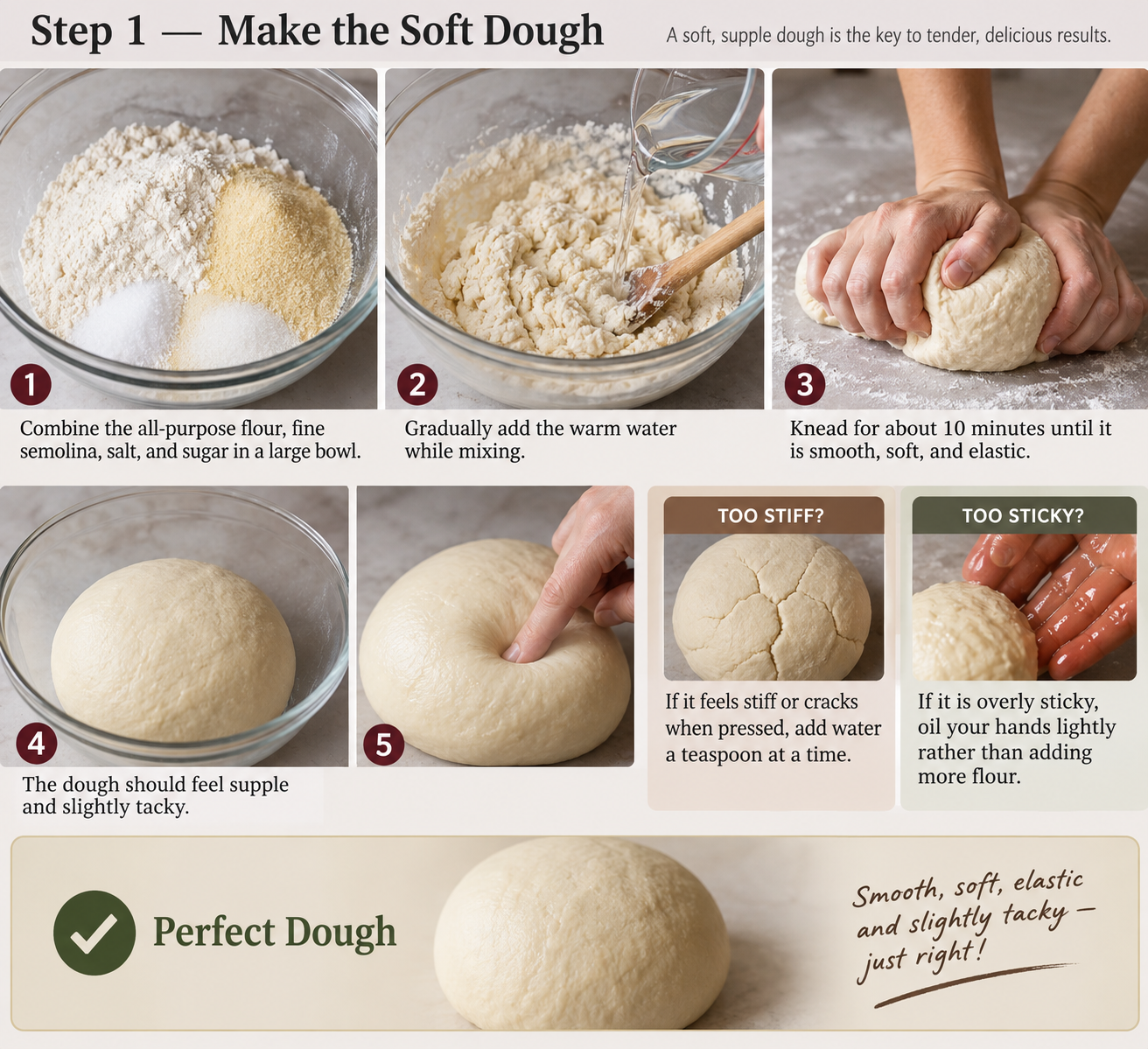
Combine the all-purpose flour, fine semolina, salt, and sugar in a large bowl.
Gradually add the warm water while mixing. Once a shaggy dough forms, knead for about 10 minutes until it is smooth, soft, and elastic.
The dough should feel supple and slightly tacky. If it feels stiff or cracks when pressed, add water a teaspoon at a time. If it is overly sticky, oil your hands lightly rather than adding more flour.
💡 Lightbulb Tip: Msemen dough should be softer than ordinary bread dough. Extra flour makes handling easier in the short term but can leave the finished pancakes tough and hard to stretch.
Step 2 — Divide and Rest
Lightly oil a clean work surface. Divide the dough into eight equal portions and shape each into a smooth ball.
Coat the balls lightly with oil, cover with a clean kitchen towel, and let them rest for 20 to 30 minutes.
This rest is doing real work. It relaxes the gluten so each portion can stretch thin instead of shrinking back into a thick disk.
💡 Lightbulb Tip: If a portion keeps shrinking while you work, stop and let it rest another 10 minutes. The dough is telling you it needs more time.
Step 3 — Stretch One Portion Very Thin
Brush the work surface with a little oil. Place one dough ball on the surface and gently press it outward with your fingertips.
Continue stretching from the center toward the edges until the dough is very thin and almost translucent. Work slowly. You want a broad, delicate sheet rather than a perfect circle.
It is normal for the outer edge to remain a little thicker. Small tears can be ignored; the folds will hide them.
💡 Lightbulb Tip: Oil is your friend here. A dry board creates friction. A lightly oiled surface lets the dough glide and stretch without the need for extra flour.
Step 4 — Brush, Sprinkle, and Fold
Brush the thin sheet with about 1 tablespoon melted butter and 1 teaspoon oil. Sprinkle roughly 1 tablespoon fine semolina evenly over the surface.
Fold the top third toward the center, then the bottom third over it. Fold the left third in, then the right third over it to form a square. Brush each new surface lightly with butter and oil and add a small sprinkle of semolina as you go. Do not saturate the dough.
Place the finished squares on a lightly oiled surface, cover, and let them rest for 10 minutes before flattening. Repeat with the remaining portions.
💡 Lightbulb Tip: Do not pile the semolina only in the center. A light, even sprinkle gives the whole pancake a more consistent flaky texture.
Step 5 — Flatten and Cook
Heat a large skillet or griddle over medium heat and lightly oil the surface.
Gently flatten one folded square with your fingertips until it is an even thickness. Place it in the hot skillet and cook for 4 to 5 minutes on the first side. Turn when the underside is golden in spots, then cook the second side for another 4 to 5 minutes.
Continue in batches. The full batch usually takes 30 to 40 minutes.
Do not raise the heat to hurry the process. Medium heat gives the butter and semolina time to create a crisp exterior while the interior becomes tender and layered.
💡 Lightbulb Tip: Leave enough room to turn the Msemen comfortably. An overcrowded skillet makes even browning harder and can trap steam around the edges.
Step 6 — Loosen the Layers and Serve
Transfer the cooked Msemen to a plate or clean towel. While still warm, gently loosen the layers by lifting and flexing the edges with your hands.
Serve warm with honey and butter, alongside Moroccan mint tea, or with your favorite savory accompaniments.
💡 Lightbulb Tip: Do not press down on the cooked pancakes as they cool. A little gentle movement keeps the layers airy instead of compacting them.
🔥 How to Know When Msemen Is Done
The surface should show golden-brown spots, the edges should look crisp, and the pancake should feel cooked rather than doughy when gently pressed. You should be able to see or feel the layers separating near the edge.
If the outside is browning too quickly, lower the heat. If the Msemen remains pale and soft after several minutes, increase the heat slightly and continue until color develops.
🛠️ Common Msemen Problems and How to Fix Them
Why Is My Dough Tearing?
The dough may be too dry or may not have rested long enough. Add water gradually when mixing, keep the portions lightly oiled, and give them the full 20 to 30 minutes of resting time.
Why Is My Msemen Tough?
Too much flour is the most common cause. Msemen dough needs to stay soft. Toughness can also come from cooking over high heat, which browns the outside before the layers have time to cook gently.
Why Did the Layers Disappear?
The dough may not have been stretched thin enough, or the butter, oil, and semolina may have been unevenly distributed. Stretch until the middle is almost translucent, then use a light, even coating before folding.
Why Is the Center Still Doughy?
The pancake may be too thick, the skillet may be too hot, or it may simply need more time. Flatten the folded dough evenly and cook over medium heat, turning as needed.
Can I Make Msemen Without Butter?
Yes. Replace the butter with additional oil or a suitable plant-based butter. The flavor will be different, but the layering method still works.
🥗 What to Serve With Msemen
For the classic sweet approach, serve warm Msemen with honey and butter. Moroccan mint tea is the natural companion—its fresh mint and gentle sweetness balance the rich, flaky bread.
For breakfast, add eggs, soft cheese, olives, or fresh vegetables. They also sit beautifully beside an Egg, Tomato, and Feta Breakfast Pita.
For a savory snack board, tear the pancakes into pieces and serve them next to a Mediterranean labneh and vegetable board.
They also pair well with a smoky Mediterranean bread dip or a Mediterranean roasted eggplant platter.
For a fuller Moroccan-inspired meal, serve them alongside Moroccan Chicken Wraps or simply roasted vegetables.
For dessert, small pieces are excellent with honey-roasted figs with labneh and pistachios.
🕐 Can You Make Msemen Ahead?
Yes. The best stopping points are after the dough is divided into oiled balls or after the squares have been folded.
Refrigerate the oiled dough balls, covered, for up to 24 hours. Bring them back toward room temperature before stretching so they are relaxed and flexible.
You can also shape the folded squares earlier in the day. Keep them lightly oiled and covered so they do not dry out, then flatten and cook when you are ready to serve.
This lets you bring freshly cooked Msemen to the table without working the full process while guests are already waiting.
❄️ Storing, Freezing and Reheating
These Msemen are best on the day they are cooked.
Once cooled, place leftovers in an airtight container and refrigerate for up to 3 days.
Reheat them in a skillet, toaster oven, or regular oven until warm and crisp again. The microwave will warm the bread, but it will leave the layers noticeably softer.
Freeze cooled Msemen with parchment between the pieces for up to 2 months. Reheat directly from frozen until hot throughout.
💡 Lightbulb Tip: Let the pancakes cool before closing the storage container. Sealing warm bread traps steam and softens the crisp edges you worked to create.
❓ Questions Before You Start
What is Msemen?
Msemen is a Moroccan layered flatbread made from a soft flour-and-semolina dough. The dough is stretched thin, coated with fat and semolina, folded into squares, flattened, and cooked on a skillet or griddle.
Is Msemen the same as a pancake?
It is pancake-shaped, but it is not the same as a sweet breakfast pancake. Msemen is a layered flatbread with a crisp, flaky exterior and a tender interior. It can be served sweet or savory.
Can I use only all-purpose flour?
Fine semolina is part of the characteristic texture, so the best result uses both. If you must substitute, the texture will be less traditional and less distinctly layered.
Do I need yeast or baking powder?
No. This version relies on kneading, resting, stretching, fat, and folding rather than a chemical or yeast leavener.
Can I use olive oil?
Yes. A mild olive oil works well for coating and layering. Choose an oil whose flavor you enjoy because a little remains in the finished bread.
Why does the recipe use both oil and butter?
Butter adds richness and flavor, while oil stays fluid and helps the layers stretch and separate. Together they produce a tender, flaky result.
Can I make the Msemen smaller?
Yes. Divide the dough into more portions for smaller pancakes, but watch the skillet closely because smaller pieces may cook more quickly.
❤️ One Last Bite
Put a warm Msemen on a plate and it looks neat and self-contained.
Then you tear into it.
The edges shatter, the layers pull apart in buttery sheets, and the honey finds every fold.
That is why I would serve them warm and within reach of everybody at the table. Add a pot of mint tea, something cool on the side, and enough napkins for the flaky pieces that inevitably fall.
And take one for yourself before the stack starts making its way around the room.
Print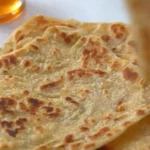
Authentic Msemen Recipe | Flaky Moroccan Pancake
- Total Time: About 1 hour 10 minutes
- Yield: 8 Msemen 1x
Description
Traditional Moroccan msemen with crisp, golden layers and a soft, chewy center. This flaky pan-fried flatbread is made from a simple semolina dough, folded with butter and oil, then cooked in a skillet until beautifully golden.
Ingredients
Ingredients
For the Dough
- 3 cups all-purpose flour
- 1 cup fine semolina flour
- 1 teaspoon salt
- 1 tablespoon sugar
- 1½ cups warm water, added gradually
For Folding and Layering
- ¼ cup oil, plus more for coating the dough and work surface
- ½ cup melted butter
- ½ cup fine semolina
Instructions
1. Make the Soft Dough
Combine the all-purpose flour, fine semolina, salt, and sugar in a large bowl. Gradually add the warm water while mixing. Once a shaggy dough forms, knead for about 10 minutes until smooth, soft, and elastic. The dough should feel supple and slightly tacky.
2. Divide and Rest
Divide the dough into 8 equal portions and shape each into a smooth ball. Lightly coat the dough balls with oil, cover, and let them rest for 20–30 minutes.
3. Stretch and Layer
Oil your work surface and hands. Gently stretch one dough ball into a very thin, nearly translucent sheet. Spread about 1 tablespoon melted butter and 1 teaspoon oil over the surface, then sprinkle with about 1 tablespoon fine semolina.
4. Fold the Msemen
Fold the stretched dough inward to form a compact square. Repeat with the remaining dough balls. Cover the folded squares and let them rest for another 10 minutes.
5. Flatten and Cook
Gently flatten each rested square with oiled hands. Heat a skillet over medium heat. Cook each msemen for about 4–5 minutes per side, turning once, until golden brown with crisp spots and the interior is cooked through.
6. Serve
Serve the msemen warm while the outside is crisp and the layered center is soft and tender.
Notes
Notes
Keep the dough soft and supple rather than adding extra flour. Resting is essential because it relaxes the gluten and makes the dough much easier to stretch without tearing.
Oil your hands and work surface if the dough becomes sticky. Avoid adding excess flour.
Cook over medium heat so the layers have enough time to cook through without the exterior browning too quickly.
Store leftover msemen in the refrigerator for up to 3 days. For longer storage, freeze with parchment paper between each piece.
- Prep Time: 30 minutes
- Cook Time: 30–40 minutes
- Category: Breakfast, Flatbread
- Method: skillet
- Cuisine: Moroccan


Leave a Reply