

Pancakes that are - Light, Puffy, and Perfectly Oven-Baked
Don’t let the name fool you—Dutch Baby Pancakes aren’t complicated or fussy. In fact, they’re one of the easiest yet most impressive breakfast recipes you can make in under 30 minutes.
Think of them as a cross between a pancake, a popover, and a crepe—crispy on the edges, soft and custardy in the middle, and ready for sweet or savory toppings.
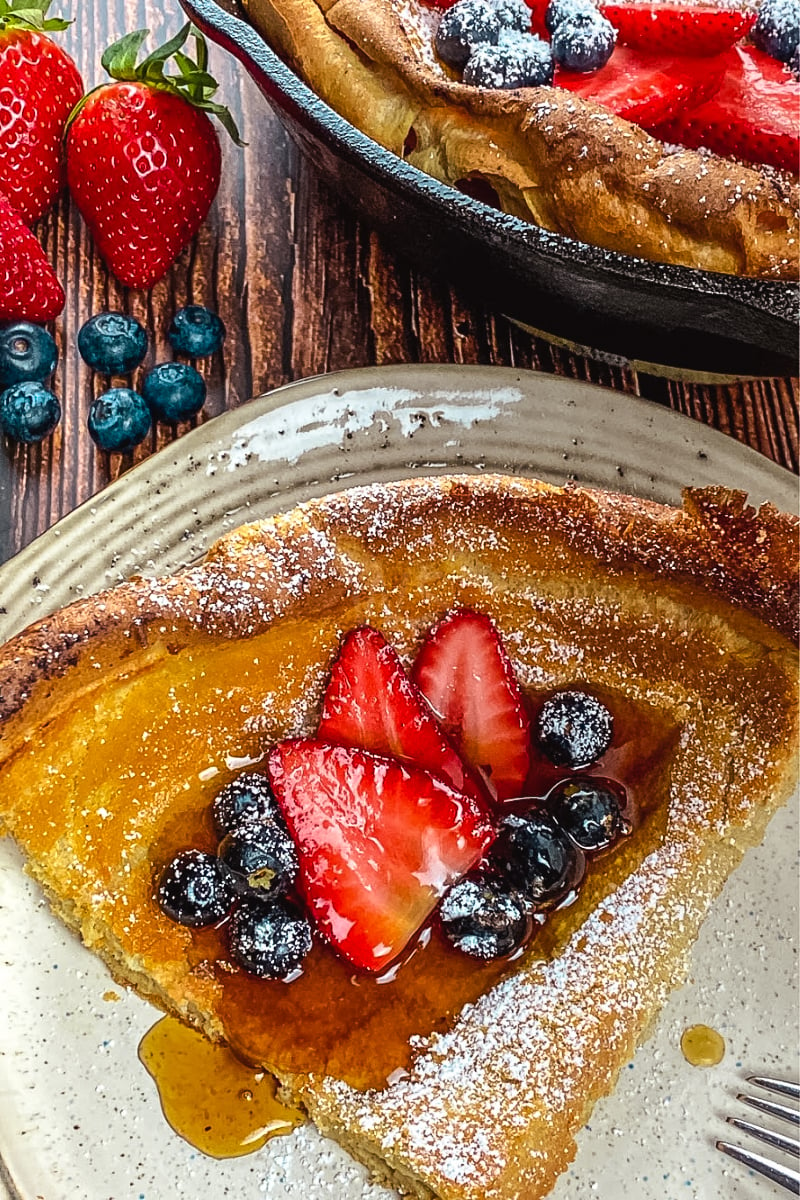
Whether you call it a puff pancake, a German pancake, or a skillet pancake, this easy Dutch Baby Pancake recipe is a brunch game-changer. All you need is a hot oven, a blender, and a well-seasoned cast iron skillet to get started.
Why This Dutch Baby Pancake Recipe Belongs in Your Brunch Rotation
Dutch Baby Pancakes have that dramatic puff and golden finish that screams “weekend brunch.” But unlike traditional pancakes, there’s no flipping, stacking, or babysitting required. J
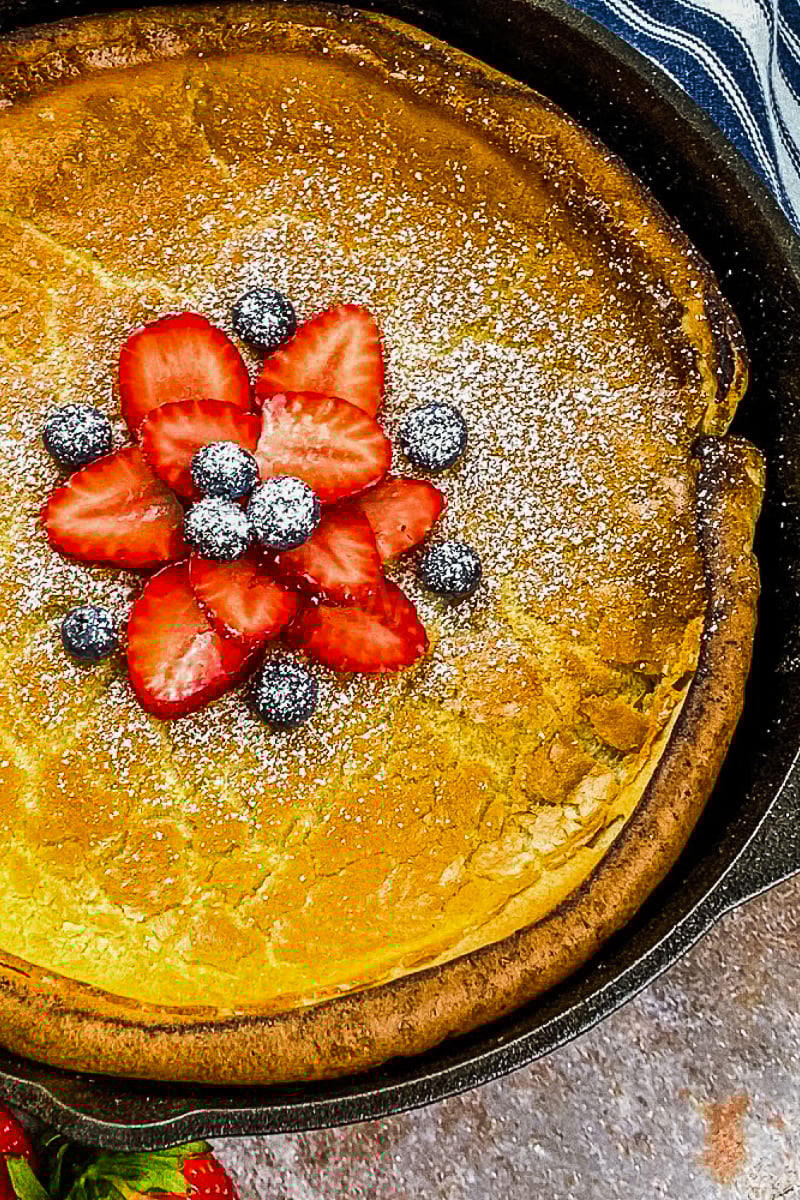
ust mix the batter, pour it into a sizzling hot skillet, and let your oven do the magic. This oven-baked pancake is reliable, fast, and flexible—plus, it’s made with pantry staples like flour, eggs, and milk.
What You’ll Need to Make a Dutch Baby Pancake
To make this cast iron Dutch Baby Pancake, you’ll need a few simple ingredients and one crucial piece of cookware: a 10-inch oven-safe skillet (cast iron is best).
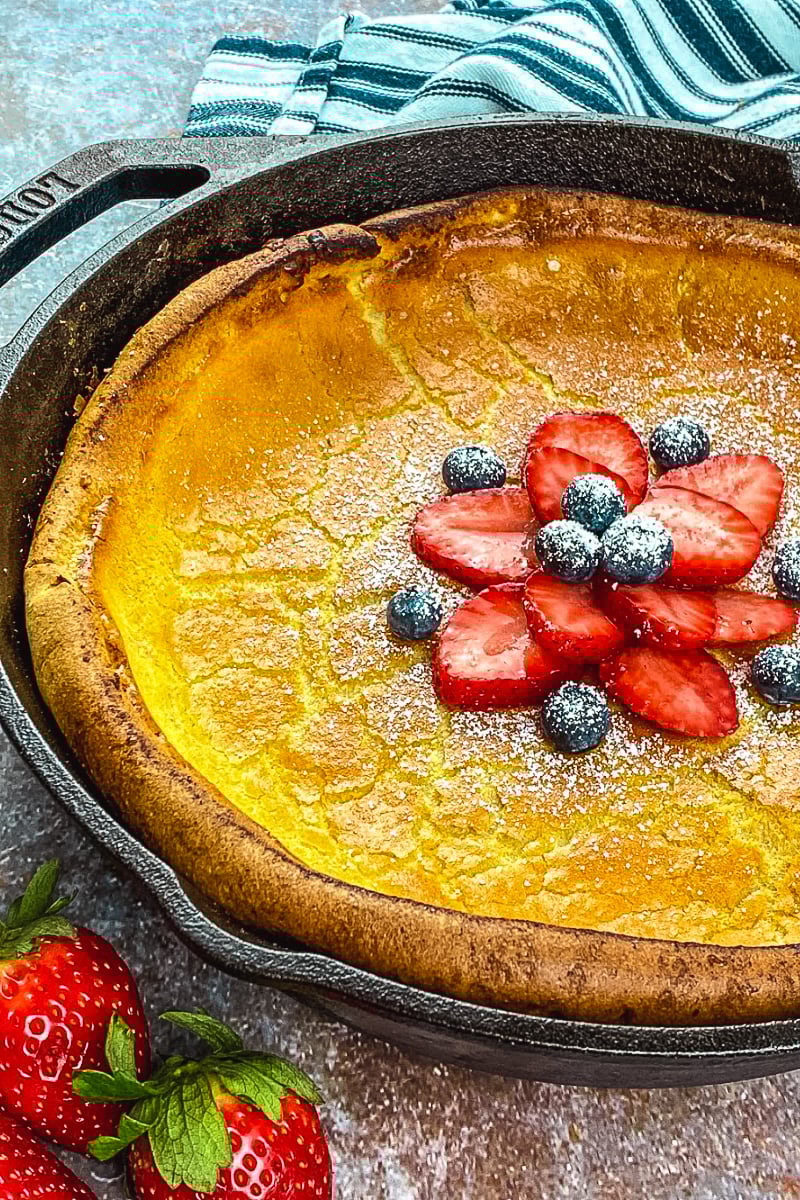
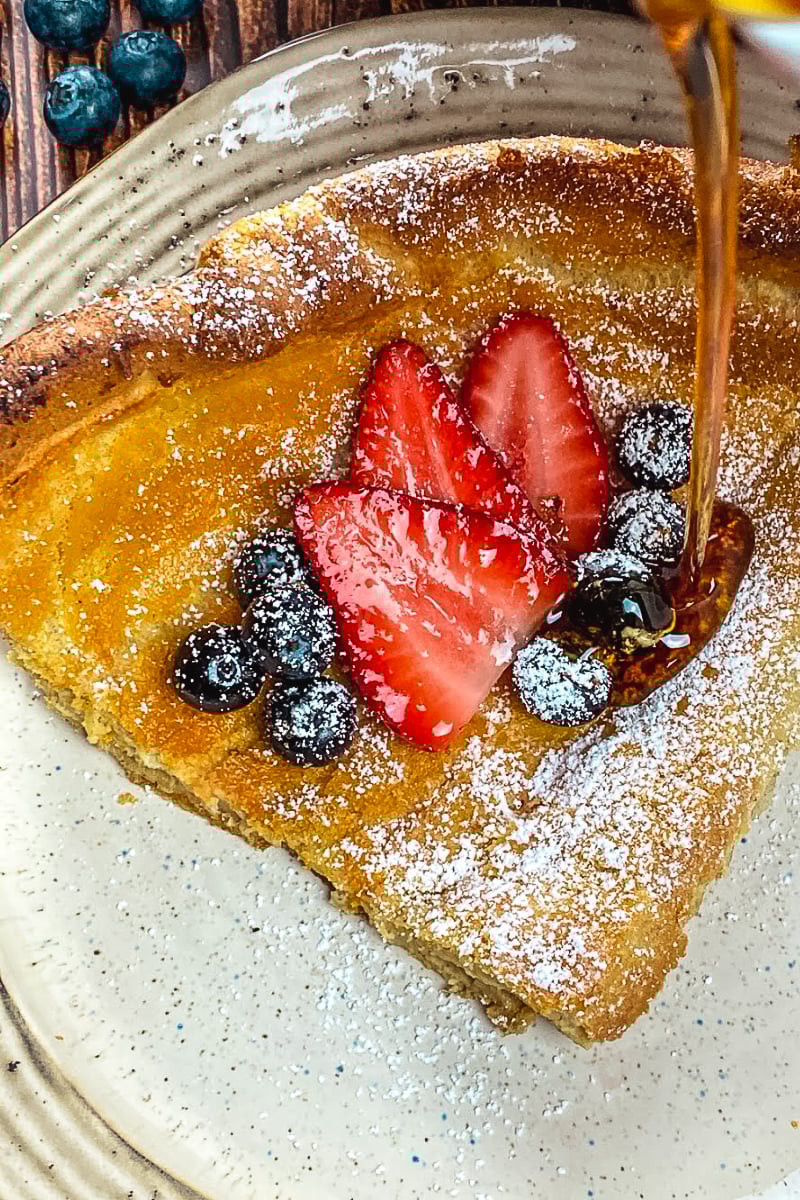
Room temperature eggs and milk help create a smoother, puffier batter. And if you’re feeling sweet? Toppings like powdered sugar, fresh berries, or maple syrup complete the picture.
Dutch Baby Pancake Tips for a Perfect Rise Every Time
Getting that signature puff in a fluffy oven pancake isn’t difficult—but there are a few tips to guarantee success:
- Use a preheated skillet and oven.
- Blend the batter well to eliminate flour clumps.
- Let eggs and milk come to room temperature before blending.
- Do not swirl the melted butter with the batter—let it naturally push to the edges for an even rise.
📋 RECIPE AT A GLANCE
| Detail | Time / Amount |
|---|---|
| Prep time | 10 minutes |
| Cook time | 20–25 minutes |
| Total time | 30–35 minutes |
| Yield | 1 large Dutch Baby (serves 4) |

Step-by-Step Instructions: How to Make a Dutch Baby Pancake
Follow this German pancake recipe step-by-step for perfect results every time.
Ingredients:
- ½ cup all-purpose flour
- 3 large eggs, room temperature
- ½ cup whole milk, room temperature
- ½ teaspoon ground cinnamon
- ½ tablespoon vanilla extract
- 1 tablespoon sugar
- ½ teaspoon salt
- 3 tablespoons unsalted butter, cut into chunks
To serve: powdered sugar, sliced fruit, and/or maple syrup
DETAILED STEP-BY-STEP INSTRUCTIONS
Yield: Serves 4 • Oven: 425°F (218°C) — rack just above center • Skillet: 10-inch oven-safe skillet (cast iron recommended)
Quick Steps (for scanning)
- Bring eggs & milk to room temp (20–30 min).
- Preheat oven to 425°F and heat the skillet in the oven (10–15 min).
- Mix dry ingredients, add eggs & milk, then blend until smooth (45–60 sec).
- Melt butter in the hot skillet, pour batter, do not stir.
- Bake 18–22 minutes until puffed and golden; rest 5 minutes in the oven; serve hot.
Detailed Steps
- Bring ingredients to room temperature — 20–30 minutes.
Remove 3 large eggs and ½ cup whole milk from the fridge. If short on time, put eggs in warm (not hot) water for 5–7 minutes. - Measure & prep; heat the skillet.
Measure: ½ cup all-purpose flour, 3 eggs, ½ cup whole milk, ½ teaspoon ground cinnamon, ½ tablespoon vanilla extract, 1 tablespoon sugar, ½ teaspoon salt, 3 tablespoon unsalted butter (cut into chunks). Place a 10-inch cast-iron skillet on the oven rack and let it heat while you preheat the oven. - Preheat oven to 425°F (218°C).
Position rack just above center. Let the oven and skillet heat at least 10–15 minutes so the pan is very hot. - Combine the batter (bowl + blender method).
In a bowl whisk together flour, salt, cinnamon, and sugar. Add eggs, milk, and vanilla, whisk until mostly combined. Pour into a blender and blend 45–60 seconds until smooth and slightly aerated — batter should be a bit thinner than pancake batter, like heavy cream. - Melt butter in the hot skillet.
Using oven mitts, carefully remove the skillet and add the butter. Tilt and swirl so the butter coats the bottom and lower sides. (If the butter browns lightly, that’s fine.) - Pour batter into the hot skillet — do NOT stir.
Pour in one steady motion; you should hear a slight sizzle. Leave the batter undisturbed so it can set and puff evenly. - Bake until puffed & golden — about 18–22 minutes.
Check visually at 16–17 minutes. Look for dramatically puffed edges and a set (slightly custardy) center. If center is wet, add 1–2 minutes at a time. - Turn off oven; rest 5 minutes with door closed.
This stabilizes the puff and prevents a sudden collapse when you open the oven. - Remove, cool briefly, and serve.
Use oven mitts to transfer the skillet to a trivet. Let sit 1–2 minutes, slice into 4 wedges, top with fruit / powdered sugar / syrup and serve hot.
Tips & Troubleshooting (short bullets)
- If it deflates quickly, don’t panic — it’s normal as it cools. Serve immediately for best texture.
- For extra crisp edges, bake at full temp and avoid opening the door early.
- Make it savory: omit sugar and cinnamon; add grated cheese and herbs.
🛠️ Essential Tools for Making Dutch Baby Pancakes
- Mixing Bowls — Medium and large bowls to whisk ingredients smoothly.
- Measuring Cups & Spoons — For precise measurement of flour, milk, sugar, and spices.
- Whisk — To blend wet and dry ingredients without lumps.
- Blender or Immersion Blender — For a smooth, aerated batter that helps the pancake puff.
- 10-inch Oven-Safe Skillet (Cast Iron Recommended) — For baking the pancake evenly with crispy edges.
- Oven Mitts — To safely handle the hot skillet and oven trays.
- Spatula or Sharp Knife — For slicing and serving the finished pancake.
- Cooling Rack or Heatproof Surface — To rest the hot skillet safely after baking.
What Makes This Dutch Baby Pancake Recipe So Versatile?
This oven-baked Dutch Baby Pancake is a blank canvas for sweet or savory toppings. Serve with strawberries and whipped cream for brunch, or make it savory with crispy bacon and fresh herbs.
WHAT TO SERVE WITH DUTCH BABY PANCAKES
- Fresh fruit salad or berry compote
- Crispy bacon or breakfast sausage
- Greek yogurt or crème fraîche
- Scrambled eggs or poached eggs
- Freshly brewed coffee or mimosas
VARIATIONS AND INGREDIENT SWAPS
Sweet versions:
- Lemon zest in the batter + lemon curd topping
- Caramelized apples with cinnamon
- Nutella drizzle with crushed hazelnuts
Savory versions:
- Omit sugar and cinnamon
- Mushrooms + gruyère cheese
- Pancetta + fresh herbs
- Fried egg + avocado slices
Ingredient swaps:
- Oat milk or almond milk instead of whole milk
- Gluten-free flour blend in place of all-purpose flour
- Pinch of nutmeg or cardamom for extra warmth
FINAL THOUGHTS
If you’ve never made a Dutch Baby Pancake at home, this is your moment. With minimal effort and maximum wow-factor, this fluffy, golden pancake is perfect for lazy weekends, holidays, or even dessert.
Delicious Breakfast Recipes to Try Next
Classic Ham and Cheese Quiche > It’s the kind of dish that’s made for family brunches, holiday mornings, and Sunday meal prep.
Poached Egg and Avocado Toast > Whether you're looking for a quick weekday breakfast, a leisurely weekend brunch, or even a light lunch, this meal delivers flavor, texture, and satisfaction in every bite
Breakfast Pizza with Baked Eggs and Greens > It’s satisfying, seasonal, healthy(ish), and a bit of a showstopper. Think: jammy eggs baked into bubbling cheese, bright leafy greens that add a fresh twist,
PrintDutch Baby Pancakes: Light, Puffy, and Perfectly Oven-Baked
Ingredients
Instructions
DETAILED STEP-BY-STEP INSTRUCTIONS
Yield: Serves 4
Oven: 425°F (218°C) — rack positioned just above center
Skillet: 10-inch oven-safe skillet (cast iron recommended)
1. Bring ingredients to room temperature (20–30 minutes)
-
Remove 3 large eggs and ½ cup whole milk from the fridge and let them sit at room temperature for about 20–30 minutes.
-
Why: room-temperature eggs and milk blend more smoothly and help the Dutch Baby puff evenly.
-
Tip: If you forgot to plan ahead, place the eggs in warm (not hot) water for 5–7 minutes to take the chill off.
-
2. Measure and prep ingredients & equipment
-
Measure out all ingredients and set them on the counter: ½ cup all-purpose flour, 3 eggs, ½ cup whole milk, ½ teaspoon ground cinnamon, ½ tablespoon vanilla extract, 1 tablespoon sugar, ½ teaspoon salt, 3 tablespoon unsalted butter (cut into chunks).
-
Place a 10-inch cast-iron or oven-safe skillet in the oven (on the rack positioned just above center) so the pan can heat while the oven preheats.
-
Safety: Use an oven mitt when handling the hot pan later.
-
3. Preheat the oven & pan
-
Preheat the oven to 425°F (218°C) with the designated rack in place. Leave the skillet in the oven during preheating — it should be very hot when you take it out.
-
Expected time: allow at least 10–15 minutes for the skillet and oven to reach temperature.
-
4. Combine the batter (bowl + blender method)
-
In a medium mixing bowl, add ½ cup flour, ½ teaspoon salt, ½ teaspoon ground cinnamon, and 1 tablespoon sugar. Whisk once or twice to distribute the dry ingredients.
-
Add the 3 room-temperature eggs, ½ cup milk, and ½ tablespoon vanilla extract to the bowl. Using a whisk, stir gently until the mixture is just combined — no large dry streaks remain. Do not overmix in the bowl.
-
Note: This pre-mix in the bowl helps incorporate the flour before blending and reduces splatting in the blender.
-
-
Pour the mixture into a blender (or use an immersion blender in a tall container). Blend on medium-high for about 45–60 seconds until the batter is smooth, aerated, and free of lumps. The desired consistency is slightly thinner than pancake batter — similar to heavy cream — so it will spread in the pan.
-
Turn off the blender and check the batter: if you see any stubborn lumps, pulse 5–10 more seconds, then stop. Scrape down the sides into the center, but don’t overwork it.
5. Melt the butter in the hot skillet
-
Using oven mitts, carefully remove the hot skillet from the oven and place it on a heatproof surface. Add the 3 tablespoon butter chunks to the skillet.
-
Tilt the skillet slightly and swirl the hot butter so it melts and coats the bottom and lower sides of the skillet evenly. You are coating the pan before adding batter — do not swirl the butter after the batter is in the pan.
-
Time: butter should be fully melted within 15–30 seconds in a preheated skillet. If the butter browns, that’s okay — very dark brown means it was left too long; reduce future pan temperature or remove sooner.
-
6. Pour the batter into the hot skillet (do not stir)
-
With the skillet ready and butter melted, pour the blended batter into the center of the hot skillet in one steady motion. The hot pan will cause the batter to sizzle slightly — this is expected.
-
Important — do NOT stir, swirl, or agitate the batter once it is in the skillet. Stirring after pouring creates fissures and prevents a uniform rise. Let the batter naturally push the butter to the edges as it heats.
7. Bake until puffed and golden
-
Immediately return the skillet to the oven and bake on the rack just above center. Avoid opening the oven door during the first part of baking — sudden temperature changes can cause the Dutch Baby to collapse.
-
Bake time guidance: Check visually at 16–17 minutes. Most ovens will finish at about 20 minutes. Look for these signs:
-
The edges are dramatically puffed and golden brown.
-
The center is set but may still be slightly custardy (a slight jiggle is okay).
-
-
If the edges are puffed but the center is still very wet, continue baking in 1–2 minute increments. Ovens vary; total time typically ranges from 18–22 minutes.
8. Turn off the oven and let it set
-
When the pancake is puffed and golden, turn the oven off and leave the skillet inside with the door closed for 5 minutes. This brief resting time stabilizes the structure and reduces the chance of a sudden collapse the moment you open the door.
9. Remove, cool briefly, and serve
-
Using oven mitts, remove the skillet from the oven and place it on a heatproof trivet or towel. Let the Dutch Baby cool 1–2 minutes — long enough to be safe to slice but still warm for serving.
-
Use a spatula or sharp knife to cut into 4 wedges (or more for smaller portions). Top with sliced fruit, a dusting of powdered sugar, and/or maple syrup, or choose savory toppings if you omitted the sugar. Serve immediately — the Dutch Baby is best hot and fresh.


Leave a Reply