

That first forkful of homemade sauerkraut has a way of waking up your taste buds. It's tangy, pleasantly salty, a little crunchy, and especially good next to a juicy pork roast or sausage.
And if you've ever piled sauerkraut onto a hot dog, you've already experienced one of the reasons this humble fermented cabbage has remained so popular.
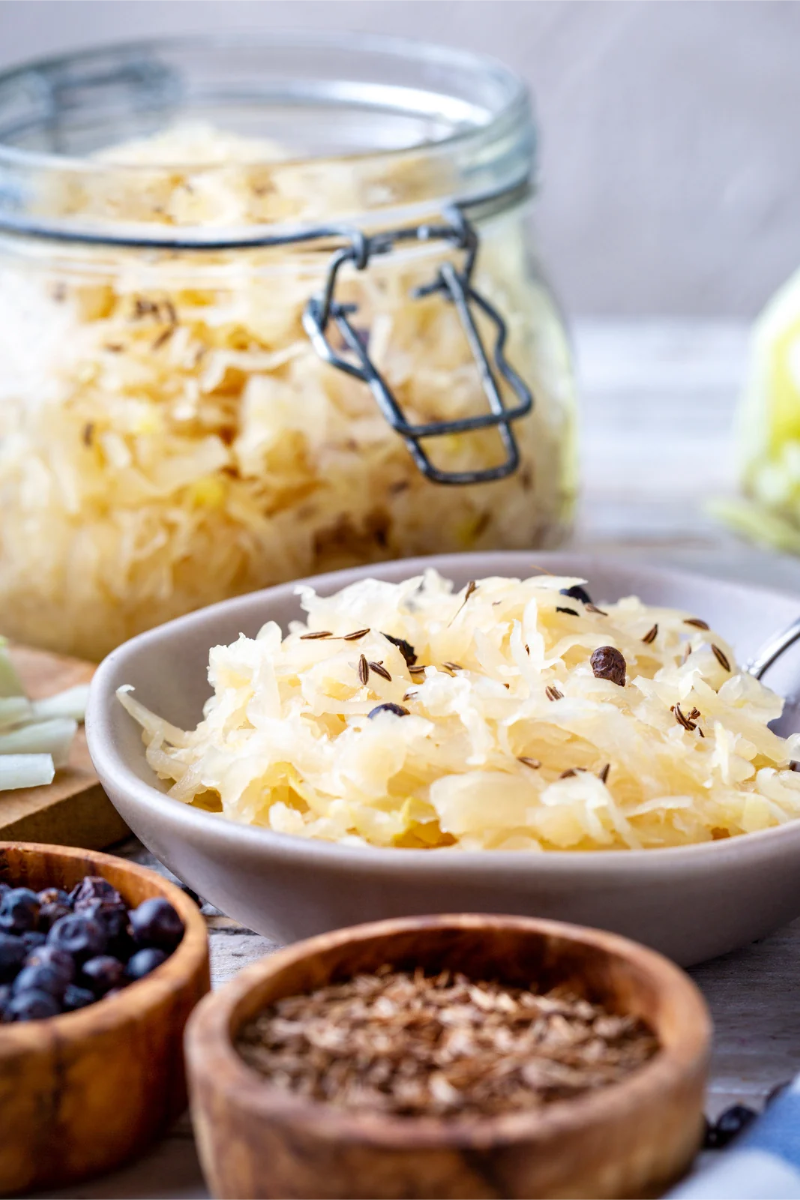
But there's more to sauerkraut than hot dogs.
In many German-American and Pennsylvania Dutch families, pork and sauerkraut are a New Year's Day tradition, served to welcome good luck and prosperity. With January 1 approaching, now is a wonderful time to start a batch.
You don't need vinegar, sugar, or complicated equipment. Traditional fermented sauerkraut begins with cabbage and salt. From there, you can keep it simple, add caraway seeds, or give it a more aromatic German-style flavor with juniper berries and bay leaves.
I'll show you how to prepare the cabbage, keep it safely beneath its brine, recognize the changes during fermentation, and turn your finished sauerkraut into something you'll want to serve long after New Year's Day.
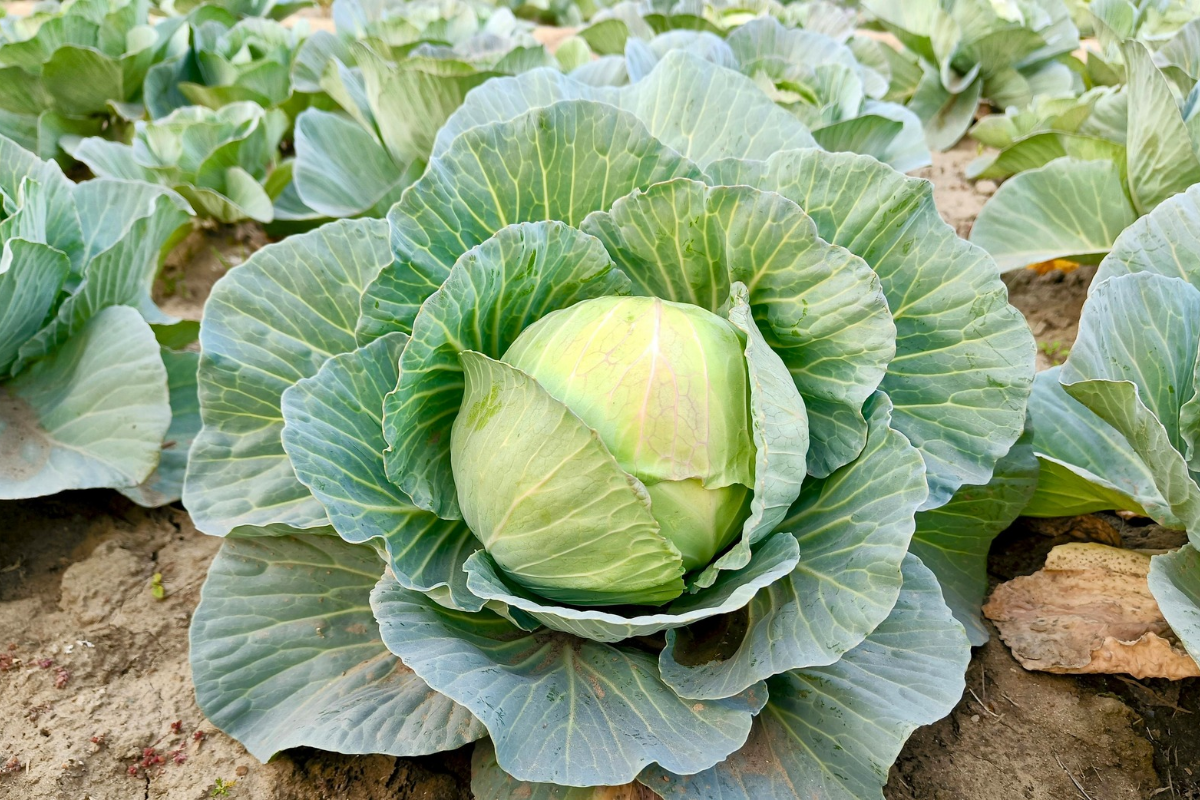
❤️ Homemade German Sauerkraut at a Glance
| What is it? | Naturally fermented shredded cabbage |
| Flavor | Tangy, savory, pleasantly sour |
| Texture | Tender with a little crunch |
| Preparation | About 45 minutes |
| Fermentation | Approximately 3–4 weeks at 70–75°F |
| Main ingredients | Green cabbage and canning or pickling salt |
| Optional seasonings | Caraway, juniper berries, bay leaves |
| Best with | Pork, sausages, hot dogs, potatoes |
| Make ahead? | Absolutely — plan several weeks ahead |
| Storage | Refrigerate after fermentation |
Planning for New Year's Day? Start your sauerkraut in late November or early December. Fermentation takes time, and you don't want to rush a batch just because January 1 is approaching.
🍀 Why Do Germans Eat Pork and Sauerkraut on New Year's Day?
In many German-American households, especially those with Pennsylvania Dutch roots, New Year's Day means one thing at the dinner table: pork and sauerkraut.
It's a tradition associated with good fortune, prosperity, and starting the year on the right foot.
According to popular folklore, pigs represent forward movement and abundance. Cabbage, with its green leaves, has also become associated with prosperity.
But the tradition has practical roots, too.
Long before modern refrigeration, fermenting cabbage helped families preserve their autumn harvest for winter. Pork was another familiar cold-weather food, especially in communities where hog butchering took place during the colder months.
Together, pork and sauerkraut made a satisfying winter meal.
The custom is particularly associated with German-American and Pennsylvania Dutch communities; it isn't a universal New Year's tradition throughout Germany.
What should you serve with New Year's sauerkraut?
A pork roast is a classic choice, but you have options.
Our Herb-Kissed Grilled Pork Chops offer a savory pairing, while Brown Sugar Pineapple Ham brings sweetness that contrasts beautifully with the cabbage's acidity.
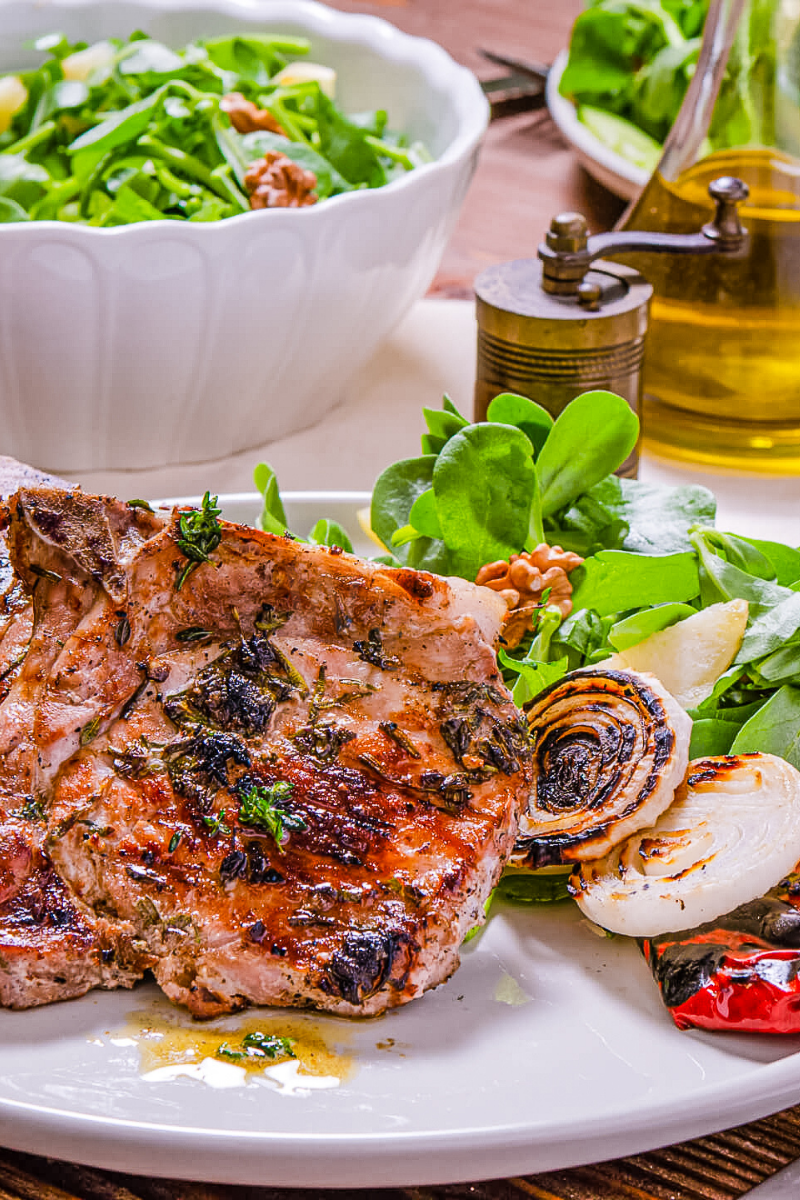
Add a generous serving of Homemade Scalloped Potatoes, and you've got a comforting holiday dinner.
There's another interesting American New Year's tradition involving black-eyed peas with vegetables and sausage, particularly in the South. Different foods, similar wishes for good fortune.

🛒 Ingredients for Homemade German Sauerkraut
The ingredient list is short, but choosing the right cabbage and measuring the salt carefully are important.
Fresh green cabbage
Look for firm, heavy heads with tightly packed leaves.
Fresh cabbage releases moisture when salted. That moisture becomes the brine that surrounds the cabbage during fermentation.
For our recipe, you'll need 5 pounds of prepared cabbage, weighed after removing the core and damaged leaves.
Canning or pickling salt
Salt draws water from the cabbage and helps establish the conditions needed for lactic acid fermentation.
Use the specified amount of canning or pickling salt. Different salts have different crystal sizes, so don't casually substitute another salt using the same tablespoon measurement.
Optional German-style seasonings
This is where you get to choose your favorite flavor.
Caraway seeds: Warm, earthy, and slightly peppery. They give sauerkraut a familiar Central European character.
Juniper berries: Piney and aromatic, with a subtle peppery quality. They pair especially well with pork.
Bay leaves: Add a gentle herbal aroma that complements the cabbage without overpowering it.
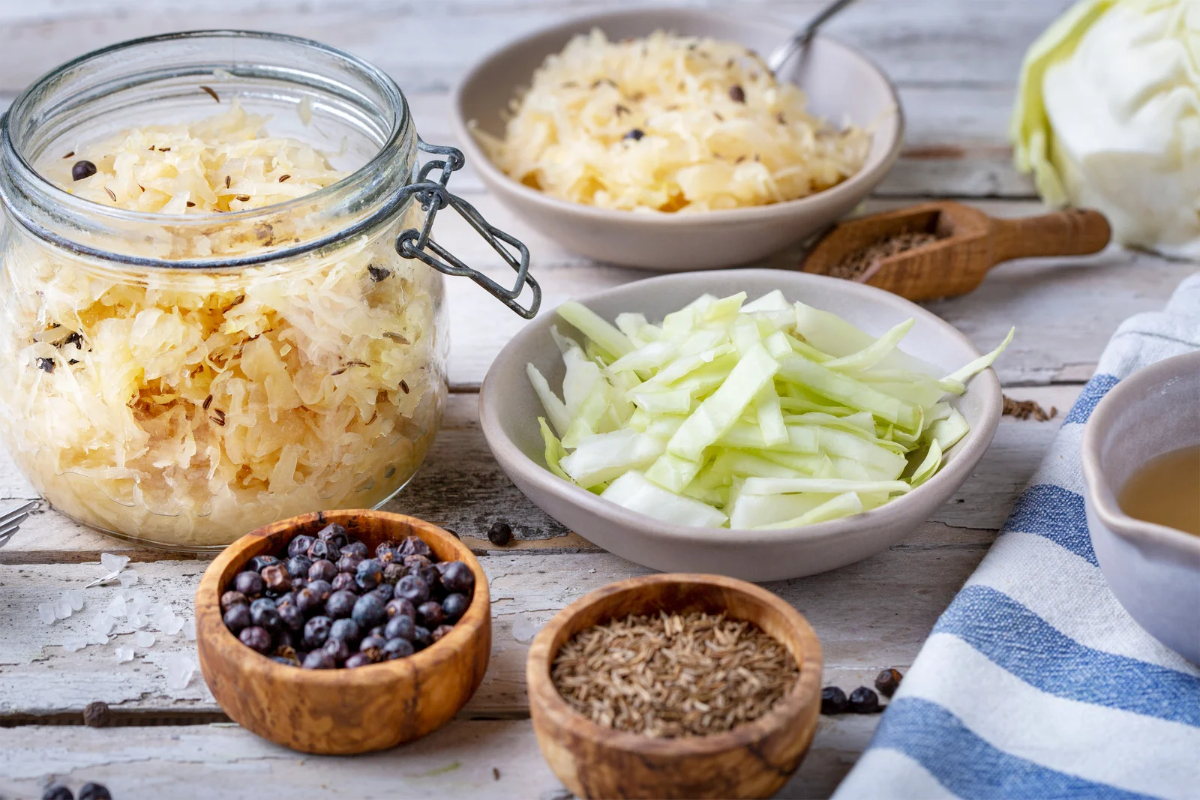
🌶️ Make It Your Own — Three Flavor Choices
| Style | Seasonings |
|---|---|
| Simple Traditional | Cabbage and salt only |
| Classic Caraway | Add 1 teaspoon caraway seeds |
| Aromatic German-Style | Add 1 teaspoon caraway, 3 lightly crushed juniper berries, and 2 bay leaves |
All three begin with the same cabbage-and-salt foundation.
The seasonings are optional flavor variations, not separate tested preservation formulas. If you prefer to follow the tested fermentation recipe without modification, use the plain version and add seasonings after fermentation.
Flash Tip: If you've never tasted juniper berries, start with the caraway version. You can always explore the more aromatic flavor next time.
🔪 How to Make German Fermented Sauerkraut
The hands-on work happens at the beginning. After that, the cabbage needs the right conditions and enough time to ferment.
Step 1: Prepare the cabbage
Remove any damaged outer leaves and rinse the cabbage.
Cut each head into quarters, remove the core, and shred the cabbage into thin strips, approximately ⅛ inch wide.
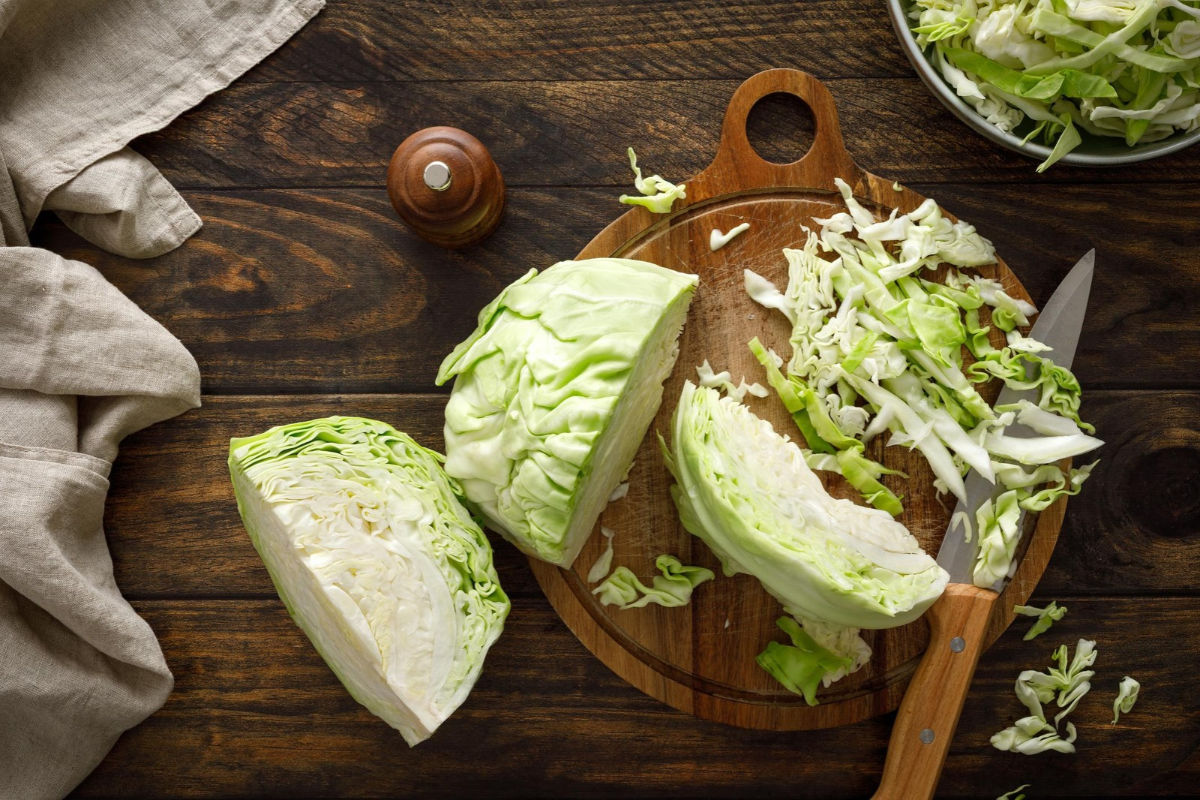
A sharp knife works perfectly well, although a mandoline or cabbage shredder makes the job faster.
Weigh out 5 pounds of prepared cabbage.
Why thin slices? They make it easier for the salt to draw out moisture and help the finished sauerkraut develop a pleasant, consistent texture.
Step 2: Salt the cabbage
Place the shredded cabbage in a large, clean mixing bowl.
Sprinkle 3 level tablespoons of canning or pickling salt evenly over the 5 pounds of cabbage.
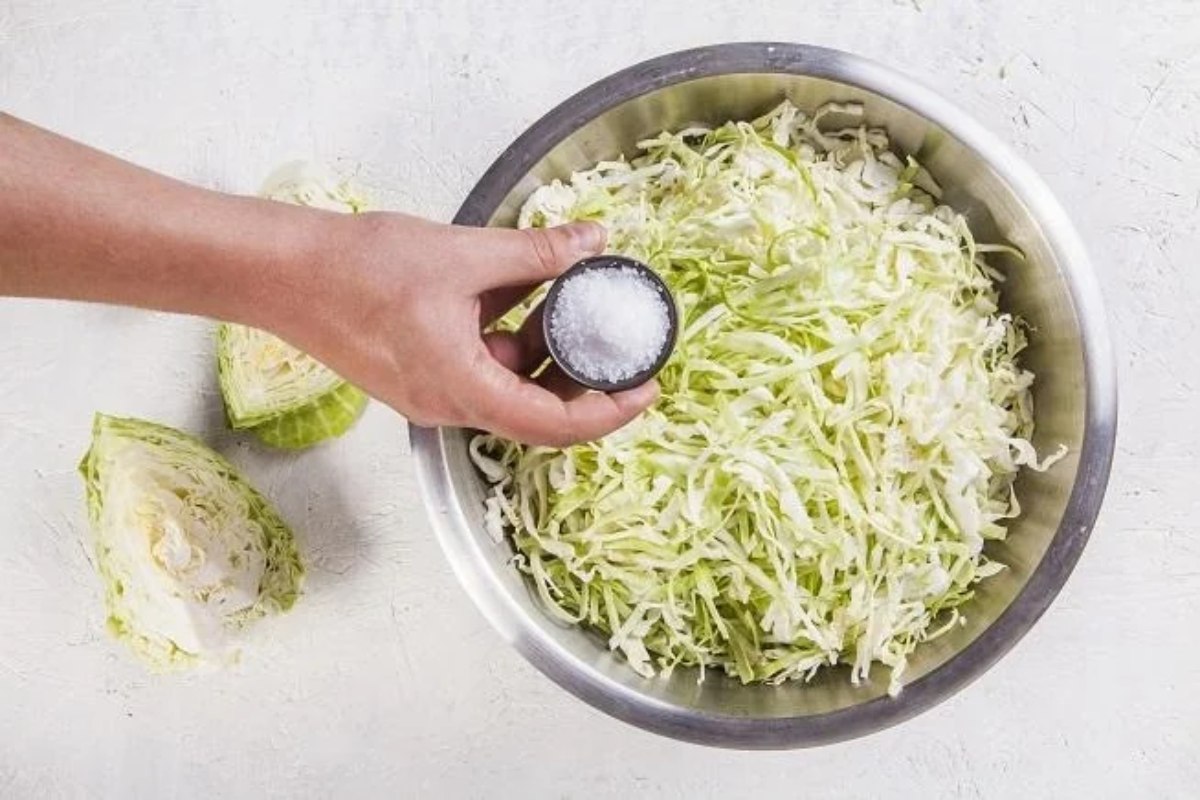
Toss thoroughly so the salt reaches all the shredded leaves.
Let the cabbage rest for about 10 minutes.
You'll begin to notice moisture collecting in the bowl.
Step 3: Massage until the cabbage releases its juice
With clean hands, squeeze and knead the cabbage.
The leaves will gradually soften, shrink in volume, and release more liquid.
Continue until you have plenty of juice collecting at the bottom.
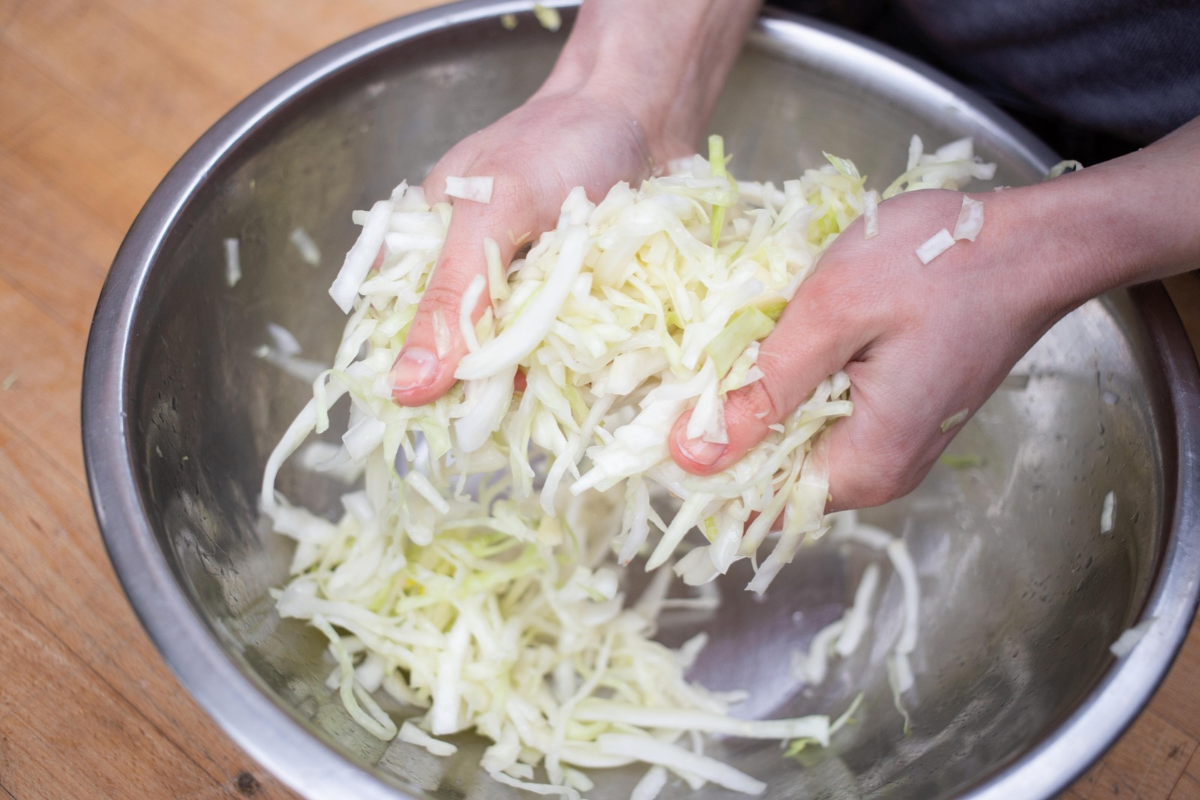
Don't discard that liquid!
It's the natural brine you'll need for fermentation.
🔥 Flash Tip: If your hands get tired, give the cabbage another short rest. The salt will continue drawing out moisture.
Step 4: Add Your Seasonings, If Desired
Keeping things simple? Skip the seasonings and continue to the next step.
For a classic German flavor, gently mix the caraway seeds into your salted cabbage.
Want something a little more aromatic? Add lightly crushed juniper berries and bay leaves along with the caraway seeds.
Whichever version you choose, distribute the seasonings evenly throughout the cabbage.
Flash Tip: Start with a light hand when adding spices. The natural tang of fermented cabbage should remain the star of your homemade sauerkraut.
Step 5: Pack the cabbage firmly
Transfer the cabbage into a clean, food-safe fermentation crock or other suitable fermentation vessel.
Pack it down firmly in layers.
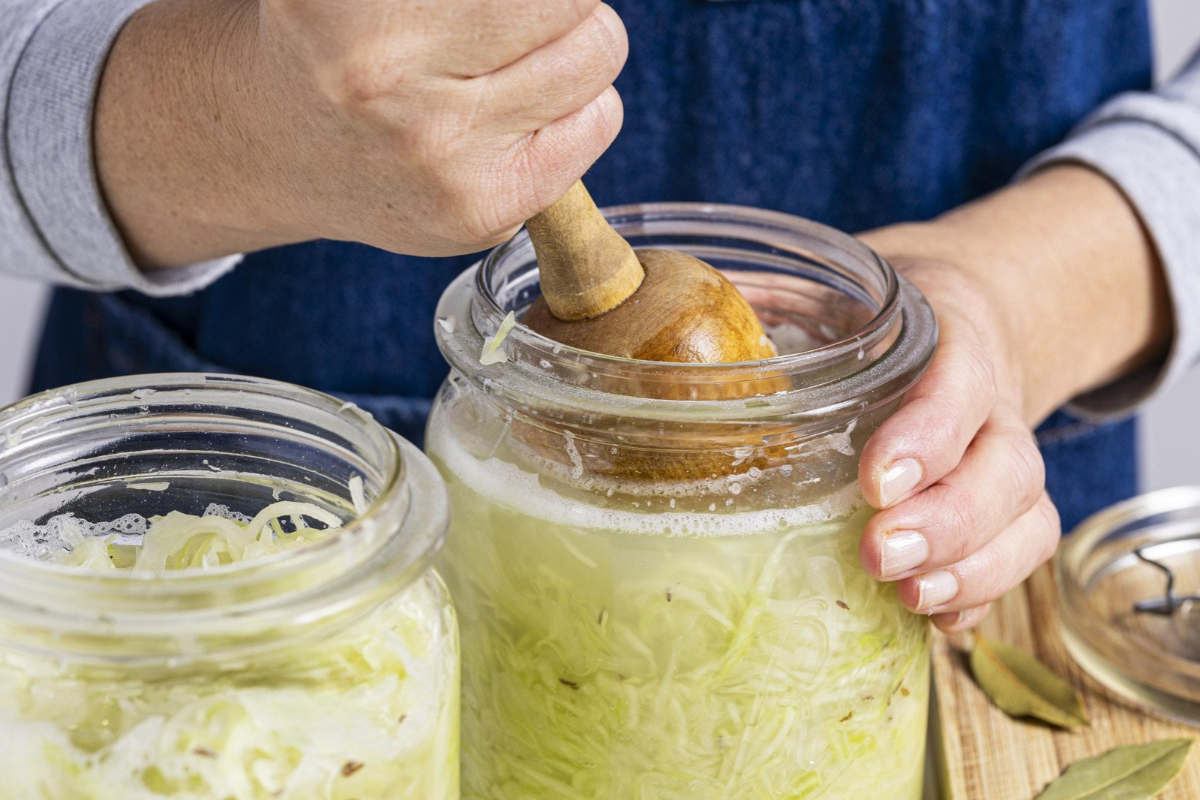
Use a clean tamper or your fist to compress the cabbage, pressing out trapped air pockets and encouraging the brine to rise.
Pour in all the liquid left in the mixing bowl.
The cabbage should be covered by its brine, with enough headspace to accommodate fermentation activity.
Step 6: Keep everything beneath the brine
Place a suitable food-safe fermentation weight over the cabbage.
A reserved clean cabbage leaf can help keep small shreds from floating, but it also needs to remain submerged.
Keeping the cabbage beneath the brine is essential.
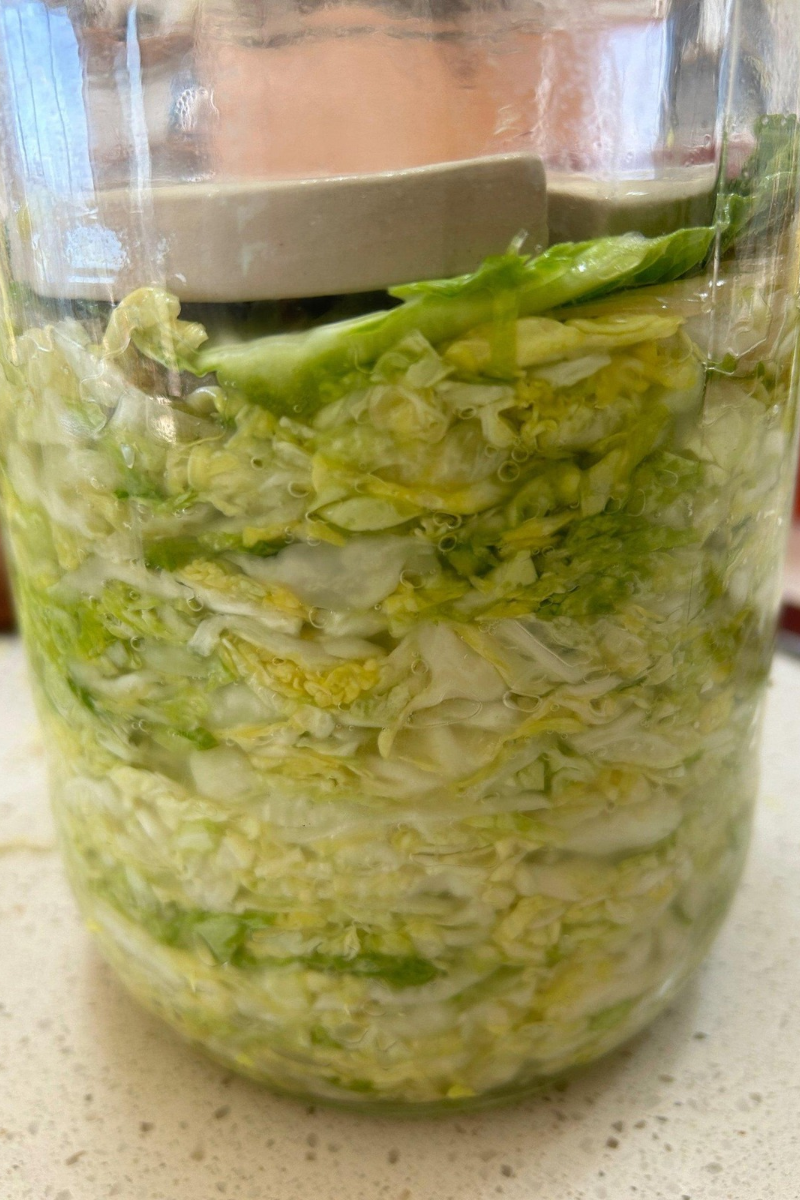
If the cabbage doesn't release enough liquid to cover itself, prepare the supplemental salt brine described in the recipe card.
Never simply pour plain water into the ferment to top it up.
Step 7: Cover and ferment
Cover the vessel using an appropriate fermentation lid, airlock, or the covering system recommended for your equipment.
Place the container on a tray in case some brine overflows.
Keep it away from direct sunlight.
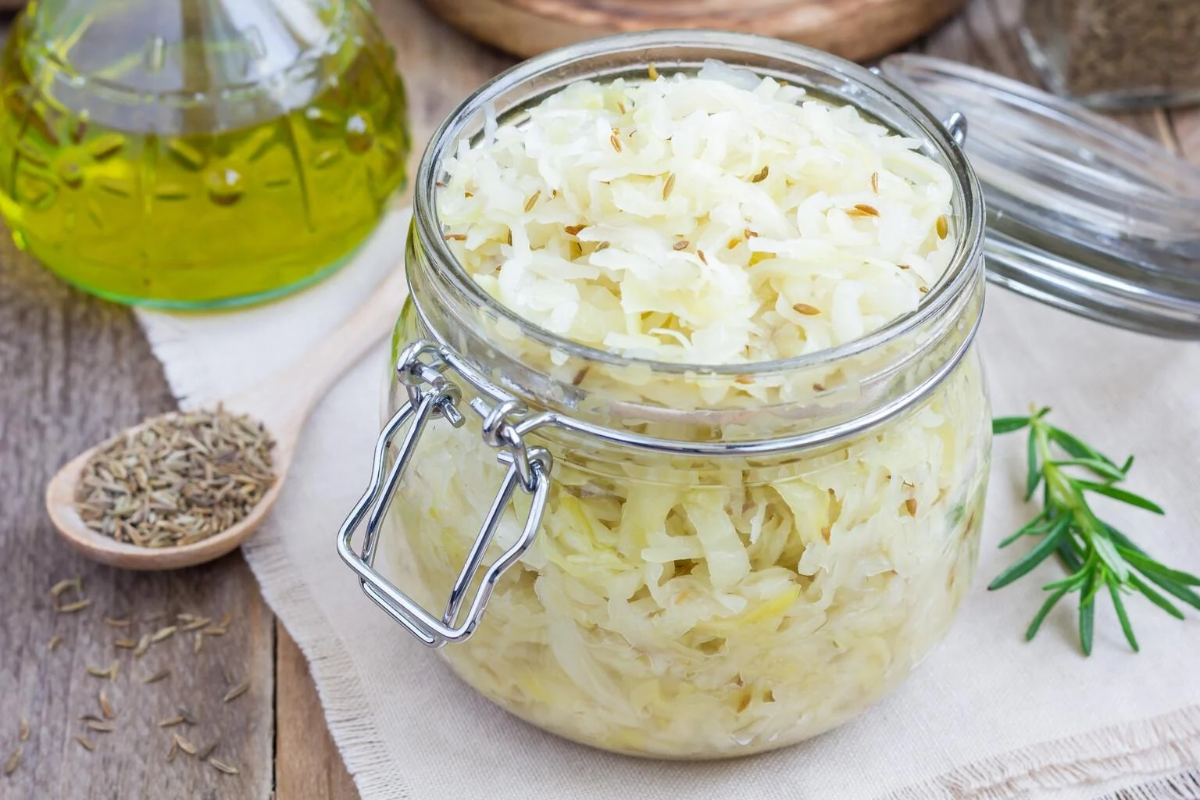
For this recipe, aim for a steady temperature of 70–75°F.
Over the next several days, you may notice bubbles forming.
That's one sign of fermentation activity.
Step 8: Monitor the cabbage
Check the ferment according to the instructions for your fermentation equipment.
Make sure the cabbage stays beneath its brine.
The smell should gradually become pleasantly sour as fermentation progresses.
If the batch develops visible mold, a rotten odor, or a slimy texture, discard it. Do not taste questionable sauerkraut to decide whether it is safe.
Step 9: Let the fermentation finish
At 70–75°F, fully fermented sauerkraut generally takes about 3–4 weeks.
Cooler temperatures can make the process considerably slower.
The finished cabbage should have a characteristic sour aroma and flavor, with a tender but still slightly crisp texture.
Once fermentation is complete, transfer it to clean containers if needed, cover with brine, and refrigerate.
Now you've got homemade German sauerkraut ready for hot dogs, pork dinners, sandwiches, and more.
🧠 Why Does Cabbage Turn Sour Without Vinegar?
Here's what makes traditional sauerkraut different from quick-pickled cabbage.
You don't pour vinegar over the cabbage to make it sour.
Instead, naturally occurring lactic acid bacteria ferment sugars in the cabbage, producing lactic acid.
As the acidity develops, the cabbage gradually takes on the tangy flavor we recognize as sauerkraut.
Salt, proper temperature, time, and keeping the cabbage submerged all play important roles.
This is also why fermented cabbage and vinegar-pickled cabbage aren't interchangeable methods.
If you're curious about the bigger picture, our guide to fermented foods explores other foods made through fermentation.
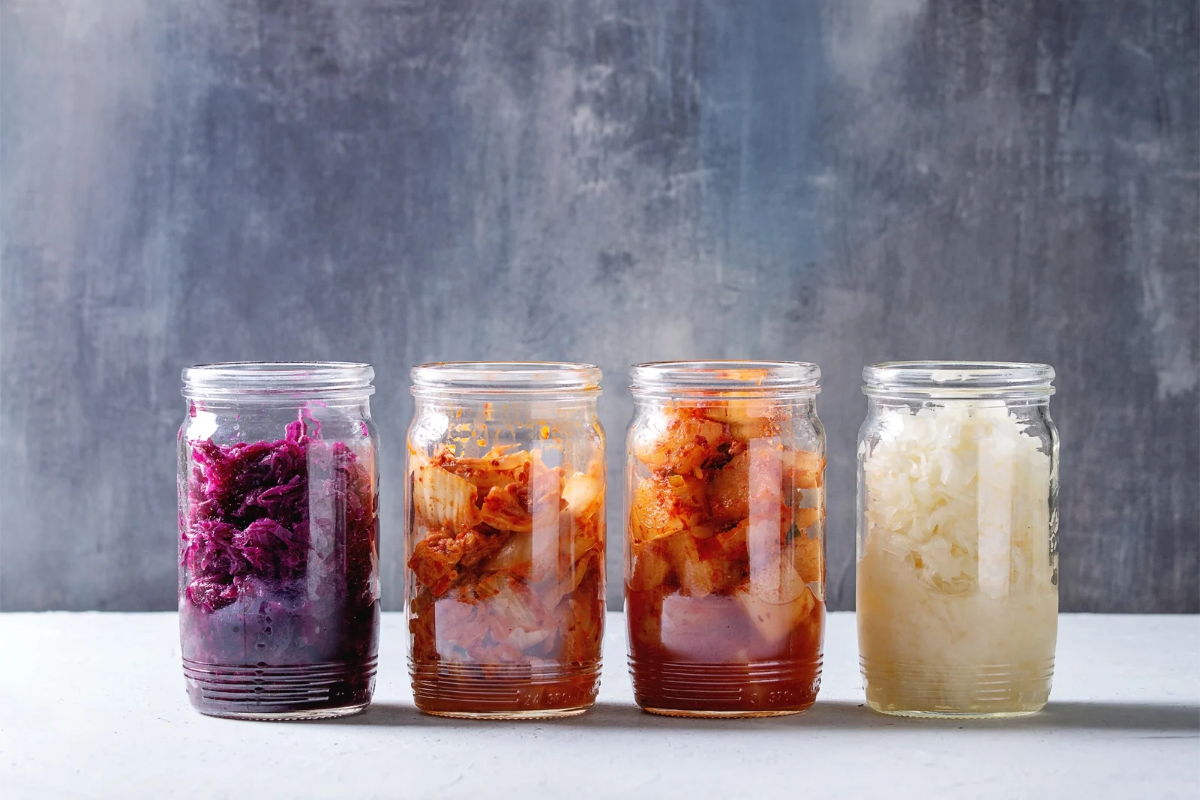
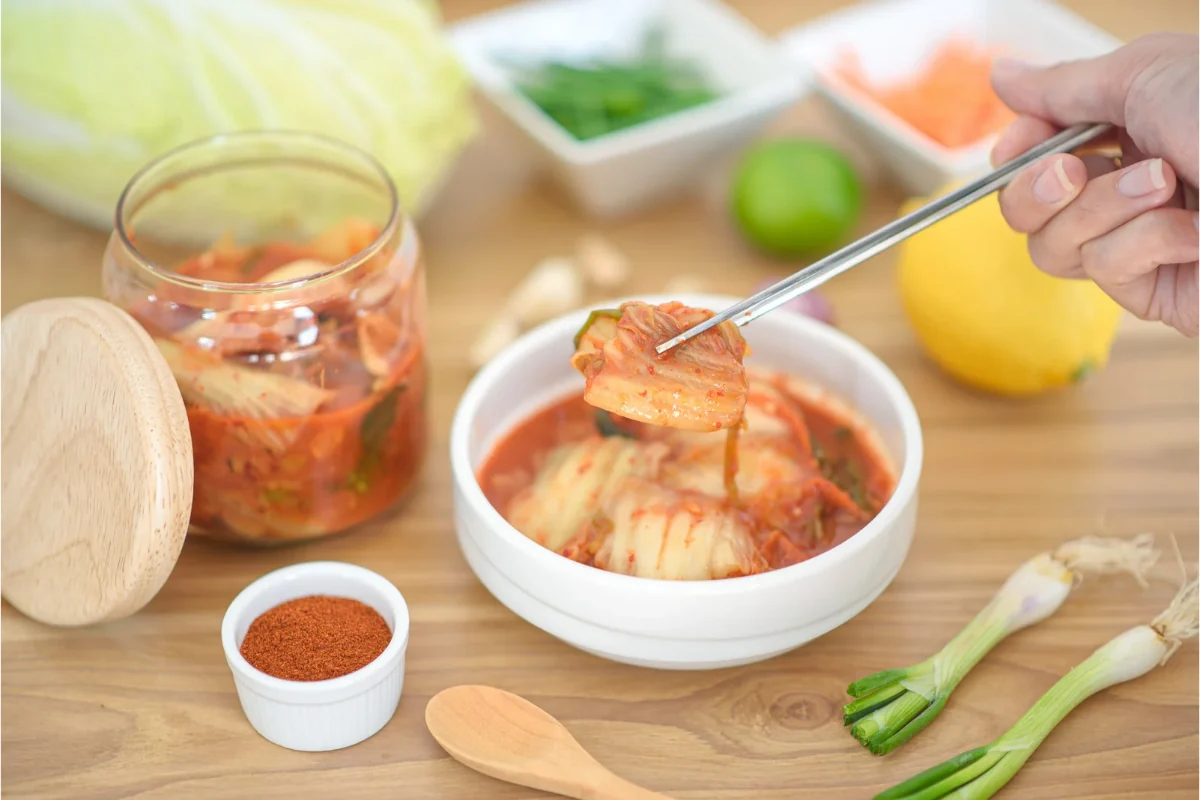
And if you'd like to try another fermented cabbage dish with a completely different flavor, take a look at our Easy Homemade Kimchi.
🌭 Why Is Sauerkraut Such a Popular Hot Dog Topping?
Think about the last hot dog you ate with sauerkraut.
You had the soft bun, the juicy sausage, and that tangy pile of cabbage on top.
Why does it work so well?
Because sauerkraut balances the richness of the hot dog.
Hot dogs are savory, fatty, and often quite salty. Sauerkraut contributes acidity, which makes the rich flavors seem brighter and less heavy.
Then there's the texture.
The sausage is tender, the bun is soft, and the cabbage adds a welcome little bite.
It's a combination of contrasting flavors and textures that makes sense the moment you taste it.
How did sauerkraut become a hot dog topping?
Sauerkraut and sausages were already familiar companions in Central European cooking.
German immigrants brought those food traditions to America, where sausages, hot dogs, and sauerkraut became part of regional food culture.
Sauerkraut eventually became especially familiar on New York-style hot dogs, although not every American hot dog style includes it.
The pairing survived because people enjoyed it.
Should you put hot or cold sauerkraut on a hot dog?
Either works, depending on the result you're after.
Warm sauerkraut: Softer, mellower, and more like the topping you might find at a hot dog stand.
Cold sauerkraut: Brighter, tangier, and slightly crunchier.
If you're using homemade fermented sauerkraut, you can gently warm a portion before serving. Heating will reduce or eliminate many of the live microorganisms present, but it's perfectly fine if you're enjoying sauerkraut primarily for its flavor.
🔥 Flash Tip: Drain off a little excess brine before putting sauerkraut on your hot dog. You'll get the tangy flavor without soaking the bun.
And don't forget the mustard!
A little mustard alongside sauerkraut adds another sharp, savory note that works beautifully with sausage.
🔥 Why This Sauerkraut Recipe Works
Salt draws out natural moisture. The cabbage creates much of its own brine, so there's usually no need to add large amounts of water.
Firm packing helps eliminate air pockets. Compressing the cabbage helps the brine rise around it.
Submersion matters. Keeping the cabbage beneath the brine helps maintain the conditions needed for fermentation.
Temperature controls the pace. A stable environment allows the fermentation process to progress predictably.
Time develops the tang. The cabbage gradually changes from fresh and mildly sweet to pleasantly sour.
Seasonings give readers a choice. You can keep the traditional cabbage flavor or introduce the earthy and aromatic notes of caraway, juniper, and bay leaves.
⏳ How Long Does Homemade Sauerkraut Take to Ferment?
Fermentation isn't something you can reliably speed up just because dinner is approaching.
Temperature makes a big difference.
| Fermentation temperature | Approximate time |
|---|---|
| 70–75°F | 3–4 weeks |
| 60–65°F | 5–6 weeks |
| Below 60°F | Fermentation may not proceed properly |
| Above 80°F | Greater risk of softening and spoilage |
These are general expectations, not a substitute for proper fermentation conditions.
For New Year's Day, plan ahead.
If you begin in early December, you'll have a better chance of having a properly fermented batch ready for January 1.
🍽️ What to Serve With Homemade Sauerkraut
Sauerkraut isn't limited to New Year's dinner or hot dogs.
Its acidity makes it especially useful alongside rich, savory meals.
Pork and sausage dinners
Try it with pork chops, roasted pork, bratwurst, or other sausages.
For a comforting cabbage-and-sausage meal, our Cabbage, Potatoes and Sausage Foil Packets are another family-friendly idea.

You might also enjoy our Pork and Cabbage Skillet when you're in the mood for a hearty one-pan dinner.
German-inspired comfort food
Sauerkraut is wonderful with potatoes, warm bread, and sausage.
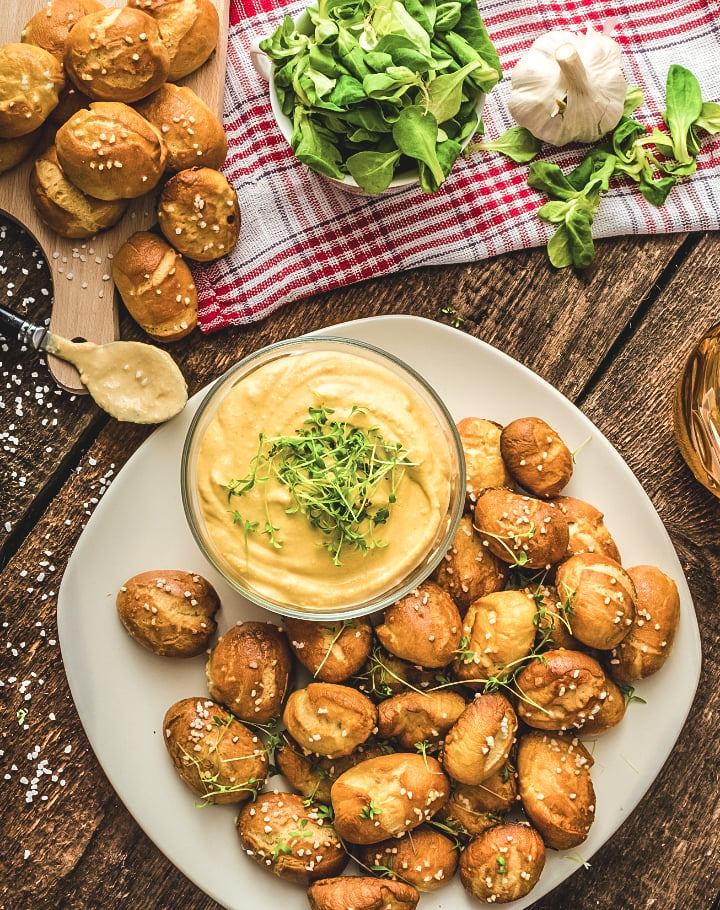
Serve it alongside our Soft Pretzel Rolls with Warm Cheese Dip for a casual German-inspired supper.
Soups and cabbage dishes
Fermented cabbage can also be used in cooked dishes.
Our Polish Cabbage Soup (Kapuśniak) offers another way to explore the comforting flavors of cabbage in Central and Eastern European cooking.
Sandwiches and everyday meals
Add a small serving of sauerkraut to sandwiches, grain bowls, or a plate of roasted potatoes.
You don't need a special occasion to enjoy it.
❄️ How to Store Homemade Sauerkraut
Once fermentation is complete, transfer the sauerkraut to clean, covered containers if necessary.
Keep the cabbage beneath its brine and refrigerate promptly.
Use clean utensils whenever removing a portion.
Properly fermented sauerkraut can keep refrigerated for several months when stored and handled correctly.
For longer storage, freezing is possible, although the cabbage may soften after thawing.
If you want shelf-stable sauerkraut, follow a tested canning process. Simply sealing fermented cabbage in a jar doesn't make it safe for pantry storage.
🧠 A Little More About Sauerkraut
One of the things I like about sauerkraut is how much it teaches us about traditional food preservation.
Before refrigerators and freezers, fermentation helped people make use of seasonal harvests.
Cabbage was particularly well suited to this method because it was inexpensive, plentiful, and could be preserved for winter meals.
And while sauerkraut is often discussed in connection with gut health, it's worth keeping expectations realistic.
Raw, unpasteurized sauerkraut may contain live microorganisms from fermentation, but the types and amounts vary. Not every microorganism is a proven probiotic, and sauerkraut isn't a treatment for digestive or other medical conditions.
It's also relatively high in sodium because salt is essential to the fermentation method.
What we can say confidently is that sauerkraut brings a distinctive flavor, texture, and long culinary history to the table.
And that's reason enough to enjoy it.
❓ Frequently Asked Questions
Is homemade German sauerkraut supposed to be crunchy?
Yes, it can retain a pleasant crunch even after fermentation. It should become more tender than fresh cabbage without turning unpleasantly mushy.
Do I have to use caraway seeds?
No. Cabbage and salt are the foundation of traditional sauerkraut. Caraway, juniper, and bay leaves are optional.
Is German sauerkraut always cooked?
No. Sauerkraut is fermented cabbage that can be eaten without cooking once fermentation is properly completed. It is also frequently cooked or warmed for traditional dishes.
Can I make sauerkraut with red cabbage?
Red cabbage can be fermented, but this recipe's tested preservation proportions and instructions are specifically presented for green cabbage. Follow an appropriate tested method for other preparations.
Why isn't my sauerkraut bubbling?
Visible bubbling varies throughout fermentation. Some batches bubble more noticeably than others, and bubbling often slows as fermentation progresses.
Lack of visible bubbles alone doesn't determine whether the sauerkraut is safe or fully fermented.
What if the brine level drops?
Press the cabbage down and check the weight. If necessary, add properly prepared supplemental salt brine rather than plain water.
Can I remove mold and eat the rest?
For this home recipe, discard a batch with visible mold. Do not taste or attempt to rescue moldy sauerkraut.
Does sauerkraut need vinegar?
No. Traditional fermented sauerkraut develops its sour flavor naturally through lactic acid fermentation.
Why do people eat sauerkraut with pork?
The flavors complement one another: the acidity of sauerkraut balances rich pork. In German-American New Year's traditions, the pairing also carries symbolism associated with prosperity and good fortune.
Can I make sauerkraut in time for New Year's Day?
Yes, provided you start early enough and maintain proper fermentation conditions. Allow several weeks rather than relying on a rushed batch.
❤️ A Tradition Worth Bringing to Your Table
Homemade sauerkraut asks for a little patience, but not much fuss.
You begin with fresh cabbage and salt, choose the seasonings you enjoy, and let fermentation do its work.
A few weeks later, you've got a jar of tangy cabbage that can brighten a hot dog, balance a pork dinner, or become part of your family's New Year's celebration.
And maybe that's the nicest part of making sauerkraut at home.
You're not just preparing a condiment. You're learning a traditional way of preserving food and bringing a little culinary history to your table.
Whether you choose plain, caraway, or aromatic German-style sauerkraut, I hope you enjoy every crunchy, tangy bite.
Here's to good food and a wonderful New Year!
Print
Homemade German Sauerkraut (Traditional Fermented Recipe)
- Total Time: Approximately 21–28 days plus preparation
- Yield: Approximately 2 quarts, depending on cabbage and packing 1x
- Diet: Gluten-Free, Vegetarian
Description
Learn how to make naturally fermented German sauerkraut with fresh cabbage, salt, and optional caraway, juniper berries, or bay leaves. Perfect with pork, sausages, hot dogs, and New Year's dinner.
Ingredients
Ingredients
- 5 pounds fresh green cabbage, weighed after trimming and coring
- 3 level tablespoons canning or pickling salt
Optional flavor additions — choose one
- Plain: No added seasonings
- Caraway: 1 teaspoon caraway seeds
- Aromatic: 1 teaspoon caraway seeds, 3 lightly crushed juniper berries, and 2 bay leaves
Supplemental brine, if needed
- 1 quart water
- 1½ tablespoons canning or pickling salt
Instructions
Instructions
- Remove damaged cabbage leaves, rinse, quarter, and core the cabbage. Shred into thin strips, approximately ⅛ inch wide.
- Weigh 5 pounds of prepared cabbage and place it in a large clean bowl.
- Sprinkle with 3 level tablespoons canning or pickling salt. Mix thoroughly and allow to rest for about 10 minutes.
- Massage and squeeze the cabbage until it softens and releases a generous amount of liquid.
- Add optional seasonings, if using, and mix evenly.
- Pack the cabbage firmly into a clean, suitable fermentation vessel, adding all accumulated liquid. Press down to remove air pockets.
- Place a food-safe fermentation weight over the cabbage, keeping it submerged beneath its brine.
- If additional brine is required, dissolve 1½ tablespoons canning or pickling salt in 1 quart water by boiling, then cool completely before adding enough to cover the cabbage.
- Cover using a suitable fermentation system and place the vessel away from sunlight at 70–75°F.
- Maintain the brine level and monitor the ferment. Discard the batch if visible mold, sliminess, or a rotten odor develops.
- Allow approximately 3–4 weeks for complete fermentation at the recommended temperature.
- Once properly fermented, transfer to clean containers if needed, keep covered with brine, and refrigerate.
Notes
Recipe Notes
Salt: The cabbage-to-salt measurement follows the five-pound batch guidance of the National Center for Home Food Preservation. Use canning or pickling salt rather than substituting an unverified volume of another salt.
Fermentation temperature: Cooler temperatures may require five or six weeks. Temperatures above 80°F increase the risk of softening and spoilage.
Seasonings: Optional spices provide flavor variations; the plain cabbage-and-salt preparation is the tested preservation baseline.
Serving: Enjoy cold or warm gently for pork dinners, sausages, and hot dogs.
Storage: Refrigerate finished sauerkraut in clean, covered containers, keeping it beneath the brine.
Safety: Follow tested fermentation and storage procedures. Do not use this recipe as a substitute for tested shelf-stable canning instructions.
- Prep Time: 45 min
- Cook Time: Fermentation Time: 21–28 days at 70–75°F
- Category: condiment, Side Dish
- Method: Fermentation
- Cuisine: German-American


Leave a Reply