
⭐ QUICK ANSWER
Brown ground pork, add shredded cabbage, onions, garlic, and simple seasonings, then sauté everything together until tender and flavorful.
The formula is: brown → toss → season → simmer → serve.
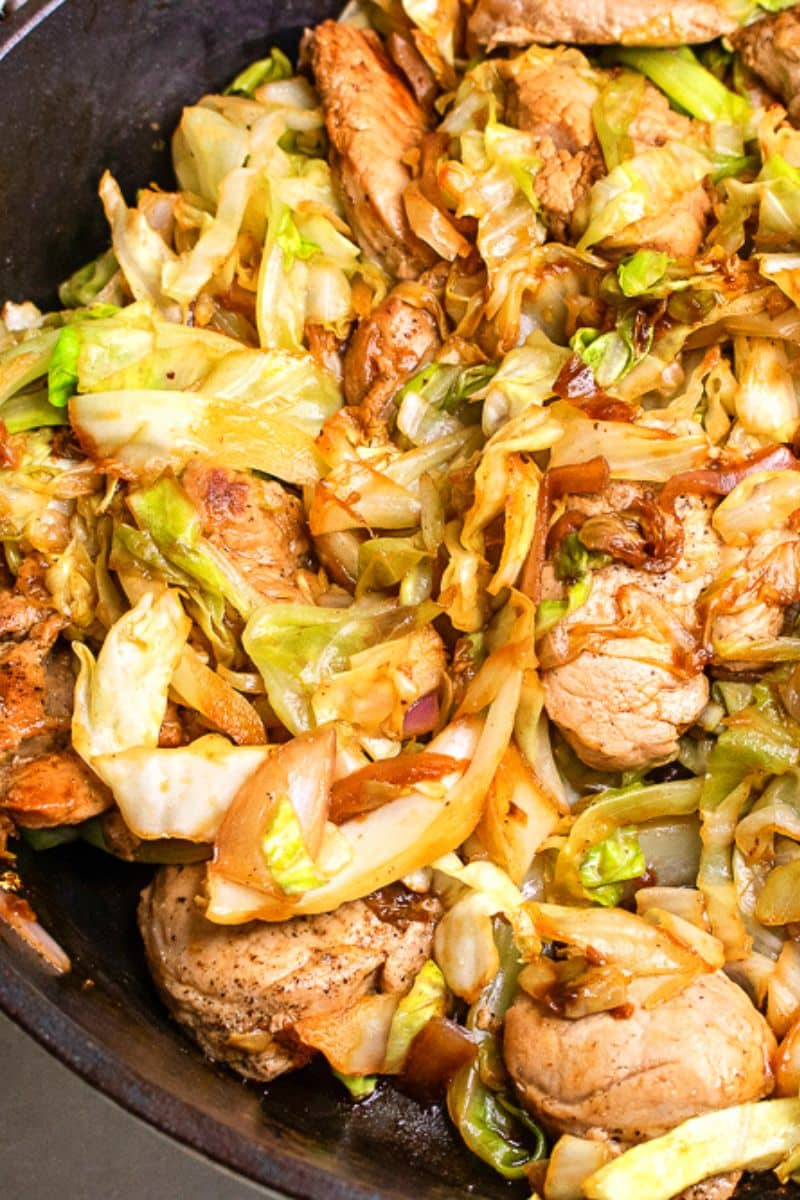
📝 QUICK STEPS
🥩 Brown ground pork in a hot skillet until crispy edges form.
🧅 Add sliced onions and garlic; sauté until fragrant.
🥬 Stir in shredded cabbage and cook until softened.
✨ Season with soy sauce, paprika, pepper, or your favorite spices.
🔥 Simmer a few minutes until everything is tender and well combined.
🌿 Finish with green onions or sesame seeds if you want extra flavor.
🛒 QUICK INGREDIENT LIST
🥩 Ground pork
🥬 Shredded cabbage
🧅 Onion
🧄 Garlic
🧂 Salt, pepper, spices (paprika/soy sauce optional)
🌿 Green onions or sesame seeds (optional)
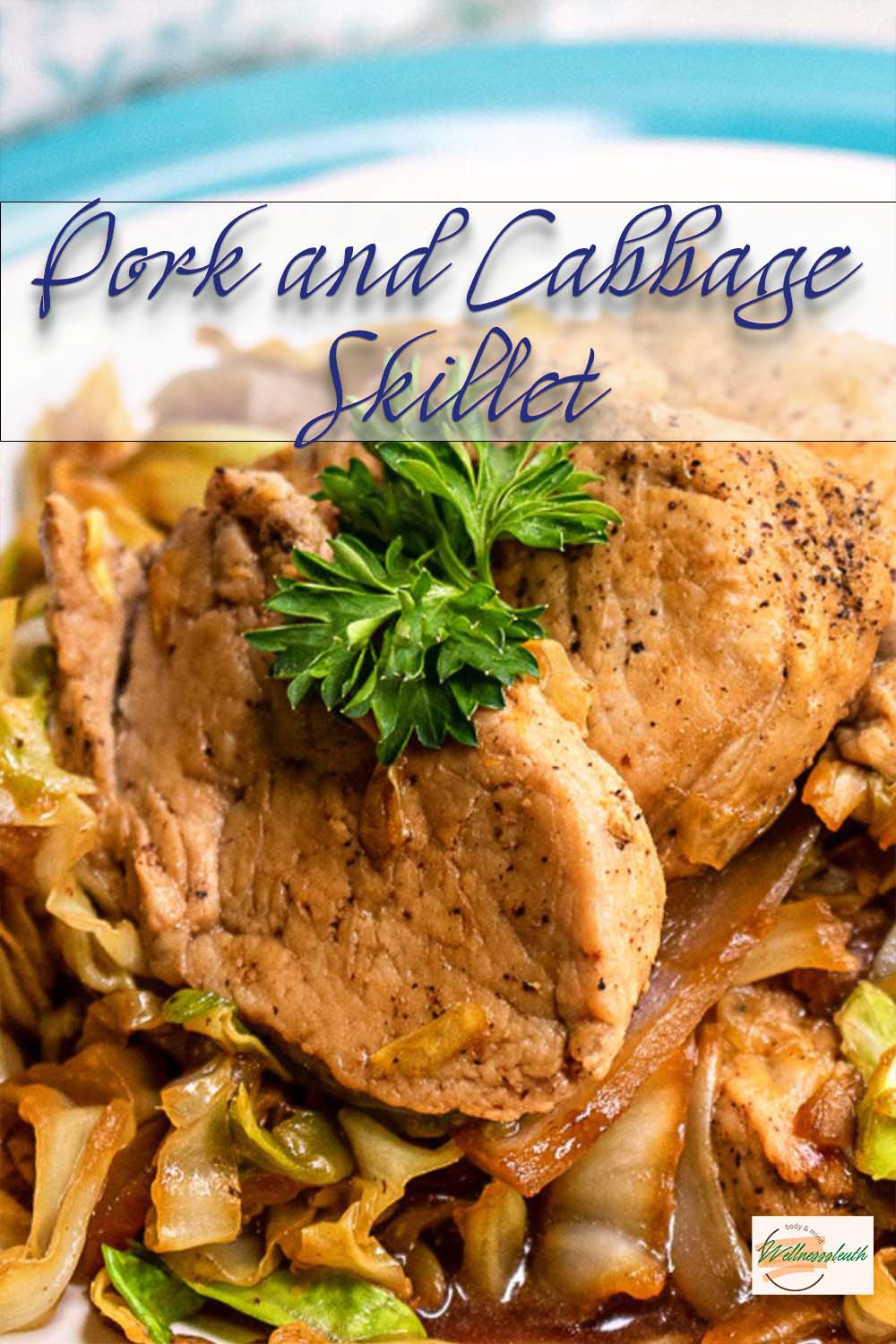
Pork and Cabbage Skillet. Not only is it a breeze to prepare, but it's a very healthy option too!
If you're looking for something tasty and hearty to make for dinner tonight, look no further than this scrumptious Pork and Cabbage Skillet. Not only is it a breeze to prepare in just one skillet, but it's a very healthy option too! This dish utilizes nutritious ingredients such as lean pork tenderloin, cabbage, onion, garlic, and seasonings.
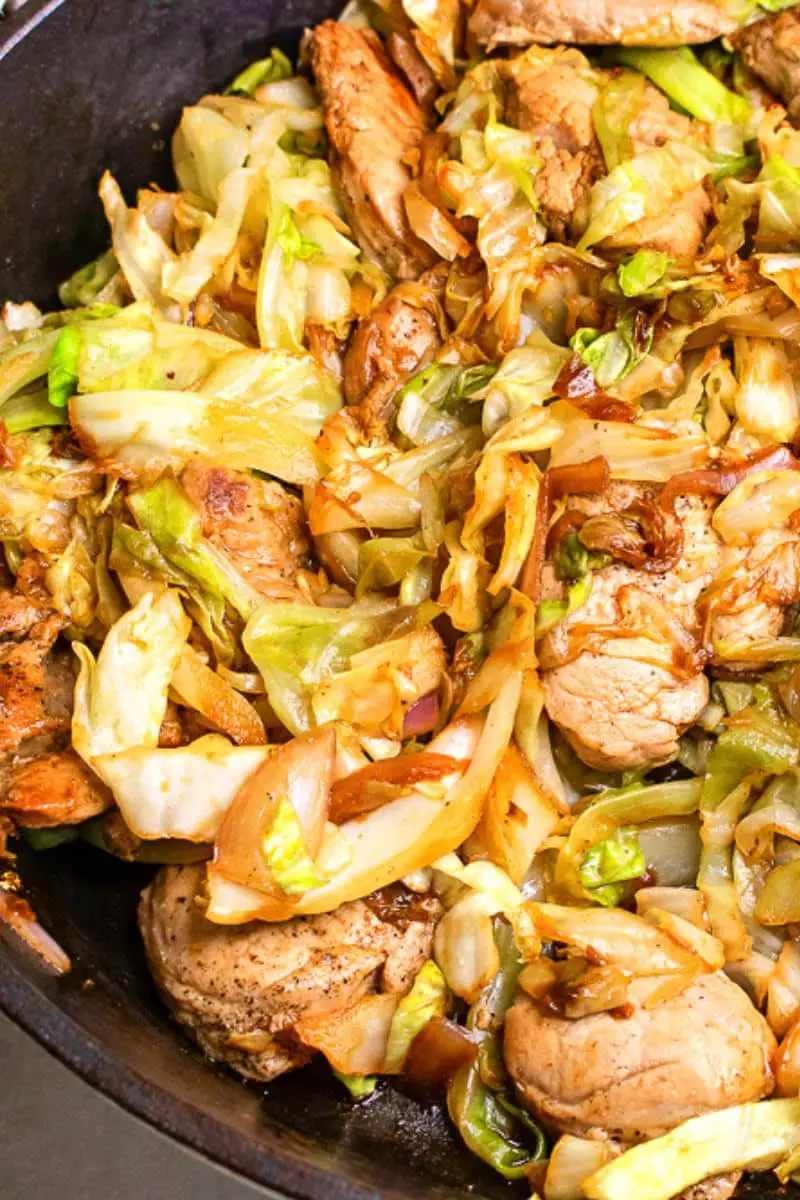
With Pork and Cabbage Skillet the flavors blend together deliciously
The flavors blend together deliciously with the help of a little olive oil and balsamic vinegar. The pork is cooked until tender perfection while the cabbage adds a lovely crunch. With its simple yet delectable flavor, this will surely be one recipe that you'll make over and over again!
Pork and Cabbage Skillet is a classic family favorite that is both healthy and hearty.
Pork and Cabbage Skillet is a classic family favorite that is both healthy and hearty. It's essentially comfort food in a one-skillet recipe, which means the cleanup is a breeze! Not only is it super easy to make, but it's absolutely delicious. This mouthwatering mix of pork, cabbage and onion simmered in a savory broth has been known to win over even the pickiest of eaters. No wonder this simple meal has become so well-liked!
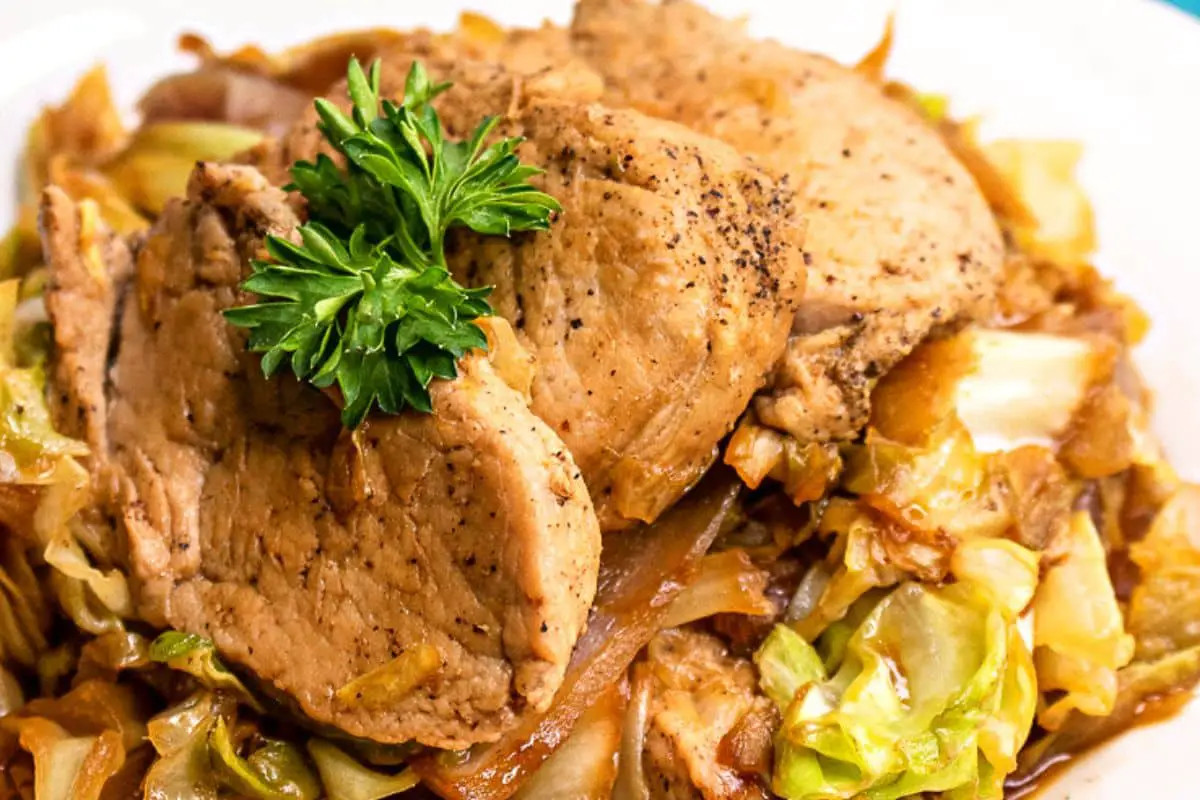
This was inspired by my other recipe on this site, and pairs well with this amazing sidedish recipe.
Prep time: 10 minutes
Cook time: Approximately 25-30 minutes
Serves: 4
Jump to:
- ⭐ QUICK ANSWER
- 📝 QUICK STEPS
- 🛒 QUICK INGREDIENT LIST
- Pork and Cabbage Skillet. Not only is it a breeze to prepare, but it's a very healthy option too!
- With Pork and Cabbage Skillet the flavors blend together deliciously
- Pork and Cabbage Skillet is a classic family favorite that is both healthy and hearty.
- Ingredients needed to make Pork and Cabbage Skillet
- Detailed, Step-by-Step Instructions — Pork & Cabbage Skillet
- Prep (5–10 minutes)
- 1 — Heat the skillet & add pork (6–8 minutes; may be done in batches)
- 2 — Deglaze & start the vegetables (1–2 minutes)
- 3 — Cook the onion & cabbage until tender and glossy (15–20 minutes)
- 4 — Recombine pork + finish with tamari/coconut aminos (3–4 minutes)
- 5 — Taste, rest briefly, and serve (2–3 minutes)
- Quick troubleshooting & pro tips
- Storage & reheating
- 🔄 Variations for Pork and Cabbage Skillet
- 🥡 How to Store Pork and Cabbage Skillet
- 💡 Top Tip for the Perfect Pork and Cabbage Skillet
- Related
- Pairing
- Pork and Cabbage Skillet
- Prep (5–10 minutes)
- 1 — Heat the skillet & add pork (6–8 minutes; may be done in batches)
- 2 — Deglaze & start the vegetables (1–2 minutes)
- 3 — Cook the onion & cabbage until tender and glossy (15–20 minutes)
- 4 — Recombine pork + finish with tamari/coconut aminos (3–4 minutes)
- 5 — Taste, rest briefly, and serve (2–3 minutes)
- Quick troubleshooting & pro tips
- Storage & reheating
Ingredients needed to make Pork and Cabbage Skillet
1 lb. pork loin, cut into thin medallions
1 T. extra virgin olive oil
1 medium red onion, thinly sliced
1 head of green cabbage, thinly sliced
3 T. tamari or coconut aminos
Optional:
Sea salt and black pepper, to taste
Detailed, Step-by-Step Instructions — Pork & Cabbage Skillet
Below is a copy-paste ready, fully detailed set of instructions with exact timings, sensory cues, safety notes, batch tips, and quick troubleshooting so anyone can make this dish perfectly.
Yield idea: about 3–4 servings (adjust ingredient amounts as needed)
Equipment: large, high-sided 12-inch skillet (or 10–12" heavy skillet), tongs or spatula, sharp knife, cutting board, instant-read thermometer (optional but recommended)
Prep (5–10 minutes)
- Trim and cut the pork. Pat the pork dry with paper towels. Cut into bite-sized pieces (about 1″ cubes or ¼–½″ strips). Dry meat sears better — remove excess moisture.
- Tip: If using thin pork cutlets, stack and slice into ¼″ strips. If using ground pork, skip cubing and break into chunks while cooking (see notes).
- Slice the vegetables. Peel and slice 1 medium red onion into thin half-moons. Core and thinly slice cabbage (about 4–6 cups shredded for 1 small/medium head). Thinner slices soften faster and caramelize easier.
- Have seasonings & liquids ready. Measure salt, pepper, and 1–2 tablespoons tamari or coconut aminos. Cut 3–4 tablespoons olive oil (or oil of choice) and set near the stove. Gather tongs, spatula, and a plate for resting the pork.
1 — Heat the skillet & add pork (6–8 minutes; may be done in batches)
- Place the empty skillet over medium heat and let it warm for 1–2 minutes until hot but not smoking. Flick a few drops of water — they should sizzle and evaporate.
- Add 1–2 tablespoons oil and swirl to coat the bottom. When the oil shimmers, add the pork pieces in a single layer (do not overcrowd — brown in batches if necessary).
- Season immediately with a pinch of salt and black pepper. Leave the pork undisturbed for 2–3 minutes to develop a golden crust. Flip pieces with tongs and sear the other sides until most surfaces are golden (total 6–8 minutes, depending on size).
- Sensory cue: You want audible sizzle and a deep golden color — not gray or pale.
- Use tongs to transfer the pork to a plate and set aside. If you cooked in batches, combine all pork on the plate.
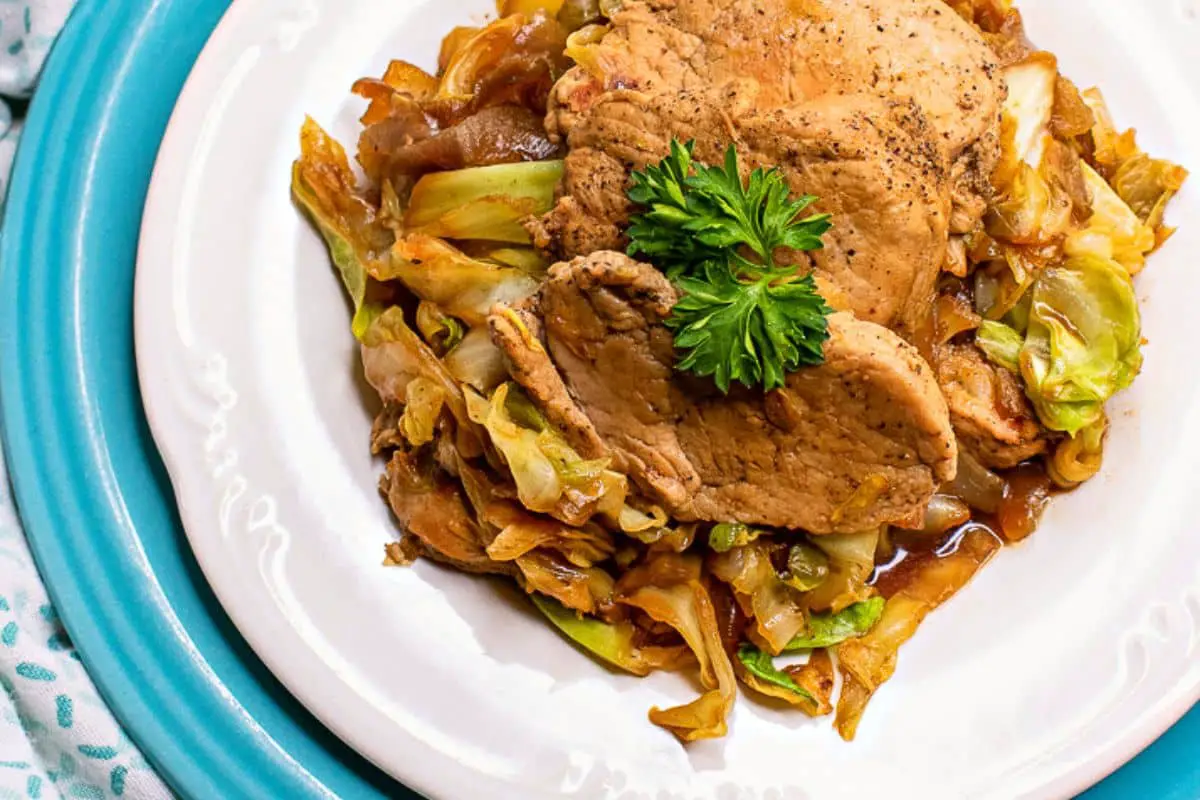
2 — Deglaze & start the vegetables (1–2 minutes)
- With heat still at medium, if the skillet looks dry and there are browned bits (fond) stuck to the pan, add 1–2 tablespoons water, broth, or a splash of tamari and use a wooden spoon or spatula to scrape up the browned bits — this adds big flavor.
- Note: If the pan has plenty of fat from the pork, you may not need extra oil.
3 — Cook the onion & cabbage until tender and glossy (15–20 minutes)
- Add remaining 1–2 tablespoons oil (if needed) to the skillet. Add the sliced red onion. Sauté, stirring occasionally, 3–4 minutes until the onion is translucent and softened.
- Add the shredded cabbage to the skillet. Season with a little salt and black pepper (start light — you’ll adjust later). Toss to combine with onions and scrape up any remaining fond.
- Cooking method options:
- Low & slow (best for tender, slightly caramelized cabbage): Reduce heat to medium-low, cover the skillet partially, and cook 12–18 minutes, stirring every 3–4 minutes. The cabbage will soften, lose raw edge, and take on some golden bits.
- Faster method (if you’re short on time): Add 2–3 tablespoon water and cover for 5–7 minutes to steam the cabbage, then uncover and cook 3–5 more minutes to evaporate excess liquid and brown edges.
- Sensory cue: The cabbage should become soft, slightly glossy, and a little sweet. Avoid long, high-heat cooking that chars the cabbage into bitterness.
4 — Recombine pork + finish with tamari/coconut aminos (3–4 minutes)
- Return the reserved pork pieces to the skillet, nestling them into the cabbage mixture. Stir to combine.
- Sprinkle 1–2 tablespoons tamari or coconut aminos evenly over the skillet (adjust to taste; use low-sodium if desired). Toss and cook 2–4 minutes over medium heat until the pork is fully cooked through and the sauce reduces to a shiny glaze that coats the pork and cabbage.
- Safety / doneness check: For whole pieces, pork should reach 145°F (63°C) with an instant-read thermometer, followed by a 3-minute rest. Ground pork should reach 160°F (71°C).
- Sensory cue: You want a sticky, slightly glossy coating on the pork and cabbage — not a soupy sauce.
5 — Taste, rest briefly, and serve (2–3 minutes)
- Remove the skillet from heat. Taste and adjust seasoning with salt, pepper, or an extra splash of tamari if needed. If the pan is too salty, add a squeeze of fresh lemon juice or a splash of water to balance.
- Let the skillet rest 1–2 minutes off the heat — this helps flavors settle. Garnish if desired with chopped green onions, toasted sesame seeds, or a drizzle of sesame oil. Serve hot.
Quick troubleshooting & pro tips
- If pork is gray and not browned: pan wasn’t hot enough or meat was too crowded. Next time increase heat slightly and brown in batches.
- If the cabbage is watery: cook uncovered for a few minutes to evaporate liquid; increase heat to medium for browning. Drain excess liquid if needed.
- If the pork is dry/tough: likely overcooked — reduce cook time and check temperature earlier. Slice pork thicker for juicier bites next time.
- Want deeper flavor: add 1–2 smashed garlic cloves with the onions, or 1 teaspoon grated fresh ginger for an Asian twist. Add 1 teaspoon sugar or 1 small grated apple while cooking cabbage to encourage caramelization.
- Make it a one-pan meal: toss in cooked rice or cooked noodles at the end and stir to heat through; add a splash of broth if needed.
Storage & reheating
- Store leftovers in an airtight container in the fridge for 3–4 days.
- Reheat gently in a skillet over medium-low heat (add a splash of water/broth) or microwave covered in 30-second intervals until warm.
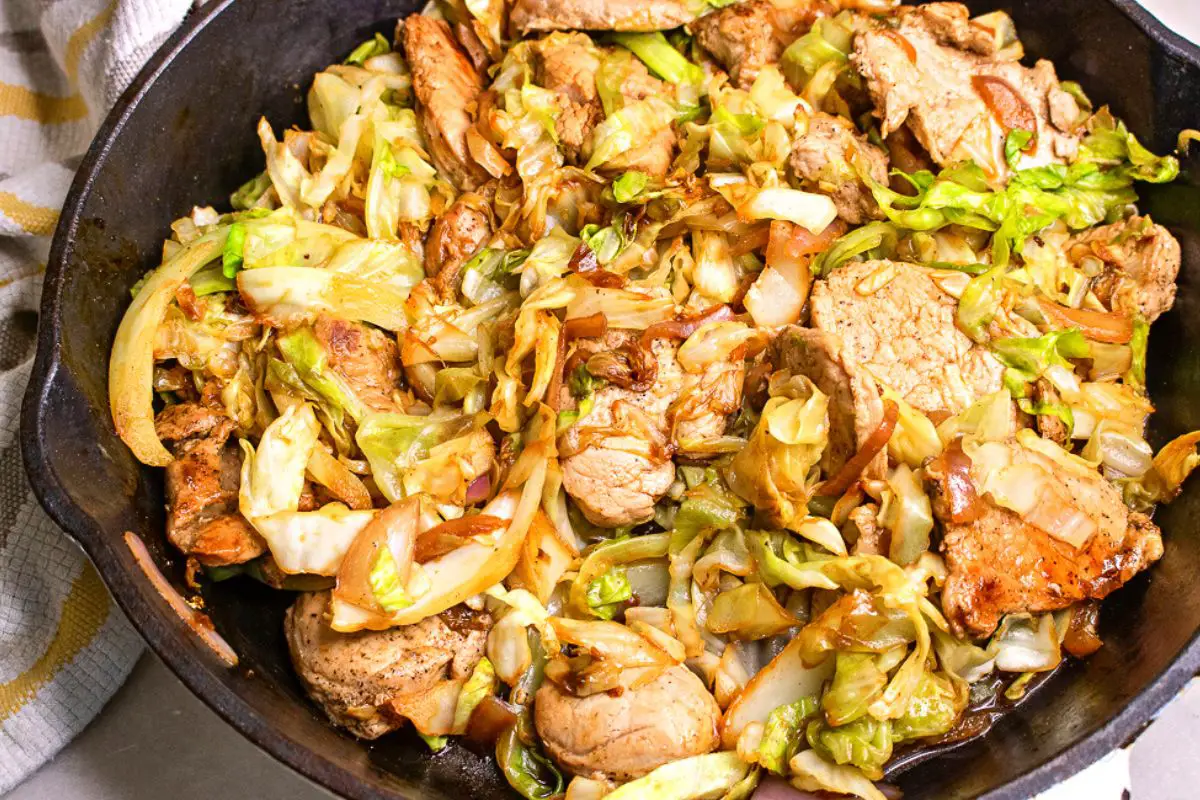
🔄 Variations for Pork and Cabbage Skillet
This Pork and Cabbage Skillet is a flexible, hearty one-pan meal you can easily customize to your taste or dietary needs:
- Swap the protein: Use ground turkey, ground chicken, or thinly sliced beef instead of pork for different flavors and textures.
- Change the veggies: Substitute cabbage with kale, Brussels sprouts, broccoli, or diced butternut squash for seasonal variety and extra nutrients.
- Add aromatics: Boost flavor with minced garlic, freshly grated ginger, or sliced green onions.
- Cheese it up: Sprinkle with mild feta, goat cheese, or sharp cheddar before serving for a creamy finish.
- Make it spicy: Add red pepper flakes, sliced fresh chili, or a drizzle of hot sauce to turn up the heat.
No matter how you customize, keeping the pork and cabbage base ensures a hearty, satisfying meal every time.
🥡 How to Store Pork and Cabbage Skillet
Proper storage helps keep your Pork and Cabbage Skillet fresh, flavorful, and safe to eat for days:
- Cool completely before storing to prevent condensation and sogginess.
- Store leftovers in airtight containers—glass or BPA-free plastic work best.
- Refrigerate promptly and enjoy within 3 days for optimal freshness.
- To reheat, warm gently on the stove over medium-low heat, stirring occasionally, or microwave in 30-second bursts until heated through.
- Avoid freezing cabbage-heavy dishes, as cooked cabbage can become watery and lose texture after thawing.
Meal prep made easy — enjoy this healthy, one-pan dinner all week long!
💡 Top Tip for the Perfect Pork and Cabbage Skillet
If you want your Pork and Cabbage Skillet to turn out flavorful, tender, and packed with nutrients, a few simple tricks make all the difference:
- Sear the pork first for maximum flavor – Heat olive oil in your skillet, season pork with salt and pepper, and sear until golden brown. This locks in juices and adds a delicious crust.
- Layer your vegetables – Start with onions and mushrooms for depth of flavor, then add cabbage last to keep it slightly crisp and vibrant.
- Use the right seasoning sauce – A splash of soy sauce, tamari, or teriyaki glaze adds a savory umami boost that ties the dish together.
- Don’t overcrowd the pan – Giving each ingredient space ensures even browning instead of steaming.
- Finish with a garnish – Fresh parsley, sesame seeds, or a squeeze of lime can brighten the flavors before serving.
With these top tips, you’ll have a healthy, one-pan pork skillet dinner ready in under 30 minutes — perfect for busy weeknights.
Related
Looking for other recipes like this? Try these:

Pairing
These are my favorite dishes to serve with [this recipe]:




Pork and Cabbage Skillet
- Total Time: 40 minutes
- Yield: 4 1x
Description
If you're looking for something tasty and hearty to make for dinner tonight, look no further than this scrumptious Pork and Cabbage Skillet. Not only is it a breeze to prepare in just one skillet, but it's a very healthy option too! This dish utilizes nutritious ingredients such as lean pork tenderloin, cabbage, onion, garlic, and seasonings.
Ingredients
Ingredients:
1 lb. pork loin, cut into thin medallions
1 T. extra virgin olive oil
1 medium red onion, thinly sliced
1 head green cabbage, thinly sliced
3 T. tamari or coconut aminos
Optional:
Sea salt and black pepper, to taste
Instructions
Detailed, Step-by-Step Instructions — Pork & Cabbage Skillet
Below is a copy-paste ready, fully detailed set of instructions with exact timings, sensory cues, safety notes, batch tips, and quick troubleshooting so anyone can make this dish perfectly.
Yield idea: about 3–4 servings (adjust ingredient amounts as needed)
Equipment: large, high-sided 12-inch skillet (or 10–12" heavy skillet), tongs or spatula, sharp knife, cutting board, instant-read thermometer (optional but recommended)
Prep (5–10 minutes)
-
Trim and cut the pork. Pat the pork dry with paper towels. Cut into bite-sized pieces (about 1″ cubes or ¼–½″ strips). Dry meat sears better — remove excess moisture.
-
Tip: If using thin pork cutlets, stack and slice into ¼″ strips. If using ground pork, skip cubing and break into chunks while cooking (see notes).
-
-
Slice the vegetables. Peel and slice 1 medium red onion into thin half-moons. Core and thinly slice cabbage (about 4–6 cups shredded for 1 small/medium head). Thinner slices soften faster and caramelize easier.
-
Have seasonings & liquids ready. Measure salt, pepper, and 1–2 tablespoons tamari or coconut aminos. Cut 3–4 tablespoons olive oil (or oil of choice) and set near the stove. Gather tongs, spatula, and a plate for resting the pork.
1 — Heat the skillet & add pork (6–8 minutes; may be done in batches)
-
Place the empty skillet over medium heat and let it warm for 1–2 minutes until hot but not smoking. Flick a few drops of water — they should sizzle and evaporate.
-
Add 1–2 tablespoons oil and swirl to coat the bottom. When the oil shimmers, add the pork pieces in a single layer (do not overcrowd — brown in batches if necessary).
-
Season immediately with a pinch of salt and black pepper. Leave the pork undisturbed for 2–3 minutes to develop a golden crust. Flip pieces with tongs and sear the other sides until most surfaces are golden (total 6–8 minutes, depending on size).
-
Sensory cue: You want audible sizzle and a deep golden color — not gray or pale.
-
-
Use tongs to transfer the pork to a plate and set aside. If you cooked in batches, combine all pork on the plate.
2 — Deglaze & start the vegetables (1–2 minutes)
-
With heat still at medium, if the skillet looks dry and there are browned bits (fond) stuck to the pan, add 1–2 tablespoons water, broth, or a splash of tamari and use a wooden spoon or spatula to scrape up the browned bits — this adds big flavor.
-
Note: If the pan has plenty of fat from the pork, you may not need extra oil.
-
3 — Cook the onion & cabbage until tender and glossy (15–20 minutes)
-
Add remaining 1–2 tablespoons oil (if needed) to the skillet. Add the sliced red onion. Sauté, stirring occasionally, 3–4 minutes until the onion is translucent and softened.
-
Add the shredded cabbage to the skillet. Season with a little salt and black pepper (start light — you’ll adjust later). Toss to combine with onions and scrape up any remaining fond.
-
Cooking method options:
-
Low & slow (best for tender, slightly caramelized cabbage): Reduce heat to medium-low, cover the skillet partially, and cook 12–18 minutes, stirring every 3–4 minutes. The cabbage will soften, lose raw edge, and take on some golden bits.
-
Faster method (if you’re short on time): Add 2–3 tablespoon water and cover for 5–7 minutes to steam the cabbage, then uncover and cook 3–5 more minutes to evaporate excess liquid and brown edges.
-
-
Sensory cue: The cabbage should become soft, slightly glossy, and a little sweet. Avoid long, high-heat cooking that chars the cabbage into bitterness.
4 — Recombine pork + finish with tamari/coconut aminos (3–4 minutes)
-
Return the reserved pork pieces to the skillet, nestling them into the cabbage mixture. Stir to combine.
-
Sprinkle 1–2 tablespoons tamari or coconut aminos evenly over the skillet (adjust to taste; use low-sodium if desired). Toss and cook 2–4 minutes over medium heat until the pork is fully cooked through and the sauce reduces to a shiny glaze that coats the pork and cabbage.
-
Safety / doneness check: For whole pieces, pork should reach 145°F (63°C) with an instant-read thermometer, followed by a 3-minute rest. Ground pork should reach 160°F (71°C).
-
Sensory cue: You want a sticky, slightly glossy coating on the pork and cabbage — not a soupy sauce.
-
5 — Taste, rest briefly, and serve (2–3 minutes)
-
Remove the skillet from heat. Taste and adjust seasoning with salt, pepper, or an extra splash of tamari if needed. If the pan is too salty, add a squeeze of fresh lemon juice or a splash of water to balance.
-
Let the skillet rest 1–2 minutes off the heat — this helps flavors settle. Garnish if desired with chopped green onions, toasted sesame seeds, or a drizzle of sesame oil. Serve hot.
Quick troubleshooting & pro tips
-
If pork is gray and not browned: pan wasn’t hot enough or meat was too crowded. Next time increase heat slightly and brown in batches.
-
If the cabbage is watery: cook uncovered for a few minutes to evaporate liquid; increase heat to medium for browning. Drain excess liquid if needed.
-
If the pork is dry/tough: likely overcooked — reduce cook time and check temperature earlier. Slice pork thicker for juicier bites next time.
-
Want deeper flavor: add 1–2 smashed garlic cloves with the onions, or 1 teaspoon grated fresh ginger for an Asian twist. Add 1 teaspoon sugar or 1 small grated apple while cooking cabbage to encourage caramelization.
-
Make it a one-pan meal: toss in cooked rice or cooked noodles at the end and stir to heat through; add a splash of broth if needed.
Storage & reheating
-
Store leftovers in an airtight container in the fridge for 3–4 days.
-
Reheat gently in a skillet over medium-low heat (add a splash of water/broth) or microwave covered in 30-second intervals until warm.
- Prep Time: 10 min
- Cook Time: 30 mins