

The first sausage roll rarely makes it all the way to the serving platter.
You break through that crisp, sesame-speckled pastry and find a soft, savory failling with sweet onion, garlic, thyme and just enough harissa warmth to make the next bite difficult to resist.
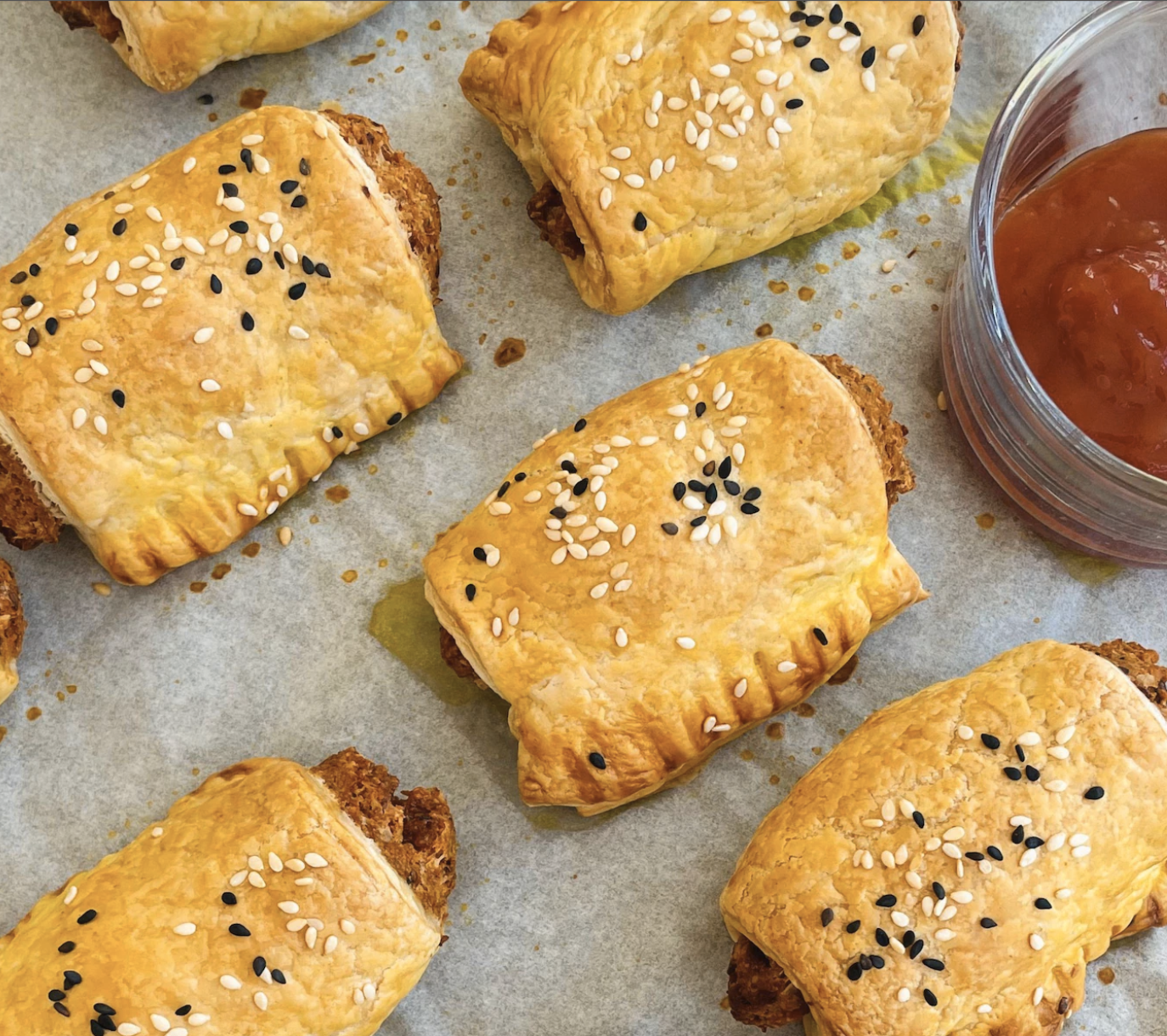
These harissa sausage rolls look like traditional sausage rolls, but there is no meat—or packaged vegan sausage—inside. The filling is made from bread, vegan cheddar and vegan cream cheese, which are blended with the cooked aromatics into something surprisingly substantial.
The puff pastry does most of the visual work. Once the rolls are golden and deeply layered, nobody at the table needs to know how manageable they were to assemble.
They are particularly good for parties because you can form and chill the pastry logs ahead of time, then slice and bake them shortly before everyone is ready to eat.
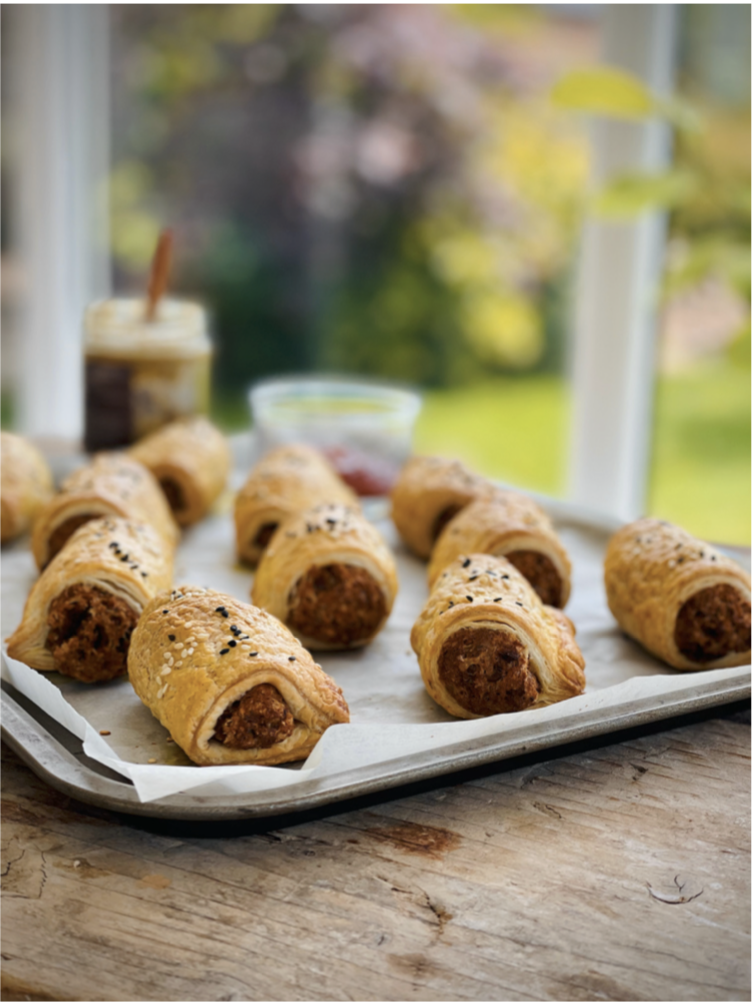
If you are building a larger appetizer table, tuck them into a Mediterranean mezze platter with olives, vegetables and a cool dip. The rolls bring the warm, flaky element that makes the whole table feel more generous.
💡 Lightbulb Tip: Do not skip the 30-minute chill. Cold puff pastry holds its shape better, cuts more cleanly and produces more distinct flaky layers in the oven.
🍽️ Recipe at a Glance
| 🥄 Difficulty | Easy |
| 🔪 Active Prep | About 20 minutes |
| ❄️ Chill | 30 minutes |
| 🔥 Bake | 30 minutes |
| ⏱️ Total | About 1 hour 20 minutes |
| 🍽️ Yield | 12 sausage rolls |
| 🥐 Texture | Crisp, flaky pastry with a soft, savory filling |
| 💡 Best Tip | Chill the filled pastry logs before slicing |
| 🏡 Best For | Parties, appetizer tables, picnics and lunchboxes |
❤️ Why These Vegan Sausage Rolls Work
These vegan sausage rolls look like traditional sausage rolls, but there is no meat—or packaged vegan sausage—inside.
The pastry is light and flaky, while the filling is soft and substantial. Harissa brings smoky chile flavor, but the vegan cream cheese rounds off its sharper edges. Sweet cooked onion balances the heat, and thyme keeps the filling savory rather than allowing it to taste like bread and cheese wrapped in pastry.
The sesame seeds are not merely decorative. They add a little nuttiness and help the tops look properly finished.
There is another practical advantage: the filling contains no raw meat. You can concentrate on getting the pastry crisp and golden rather than worrying about whether a meat filling has cooked safely in the center.
Serve the rolls with something cool and creamy if your harissa is assertive. Roasted red pepper hummus echoes the pepper flavor without adding much more heat, while roasted garlic hummus takes the table in a mellower direction.
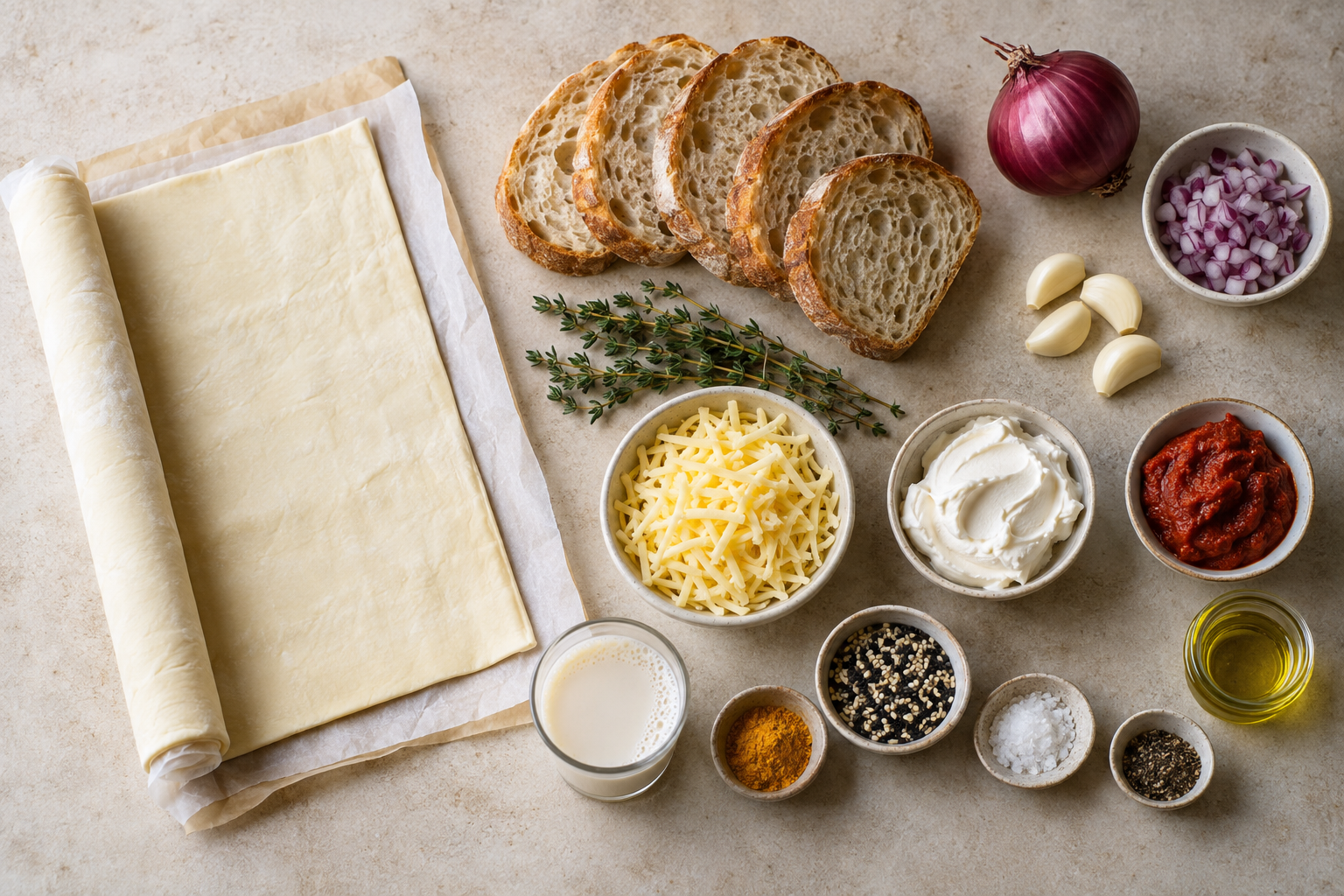
🛒 Ingredients You’ll Need
Red Onion and Garlic
Finely dice one red onion so it softens quickly and disappears into the filling rather than leaving large pieces that tear through the pastry.
Four garlic cloves may sound generous, but they are spread throughout 12 rolls. Cooking the garlic briefly softens its raw edge without removing its savory character.
Fresh Thyme
Use 1 tablespoon fresh thyme leaves or 1 teaspoon dried thyme.
Fresh thyme is gentler, which is why the recipe uses more of it. Add the thyme to the cooked onion and garlic so its flavor travels through the entire filling.
Bread
You will need four thick slices of bread or two large bread rolls.
The bread forms the body of the filling. Once processed with the cheese and cooked aromatics, it becomes soft and cohesive rather than tasting like loose breadcrumbs.
This is also a useful way to use bread that is no longer perfectly fresh, although it should still be good to eat and completely free from mold.
Vegan Cheddar and Vegan Cream Cheese
Use 100 g—approximately 1 cup—grated vegan cheddar and 3 tablespoons vegan cream cheese.
The cheddar adds savory flavor and structure. The cream cheese supplies moisture and helps the bread mixture hold together.
Plant-based cheeses behave differently from one brand to another, so judge the filling by texture. It should feel slightly sticky and hold its shape when pressed. If it remains dry and crumbly, add only a small splash of water.
Harissa Paste
One tablespoon gives the filling a smoky, warmly spiced character without completely dominating it.
Harissa varies considerably between brands. Taste a tiny amount before adding it. If yours is particularly hot, begin with slightly less; you can always add more, but you cannot remove it once the filling has been processed.
Rose harissa can be used for a more aromatic variation. For very mild rolls, replace the harissa with sun-dried tomato paste.
Why a Food Processor Helps With the Filling
A food processor turns the bread, vegan cheeses, harissa and cooked aromatics into an even filling without leaving large pieces that could puncture the pastry.
Use short pulses and stop once the mixture is slightly sticky and holds together when pressed. Processing far beyond that point can make the filling dense and pasty.
A standard food processor is useful here because its wide bowl lets the crumbs circulate and combine evenly. It can also be used for breadcrumbs, pastry dough, dips and vegetable-based fillings, making it a practical tool beyond this one recipe.
Ready-Rolled Puff Pastry
Use one 320–350 g package of ready-rolled puff pastry.
Keep it refrigerated until the filling is ready. Puff pastry becomes sticky and difficult to handle when it warms, and keeping its fat cold helps create those separate layers during baking.
Check the package if the rolls must be strictly vegan. Many ready-rolled puff pastries are vegan, but not every brand is.
Plant Milk, Turmeric and Sesame Seeds
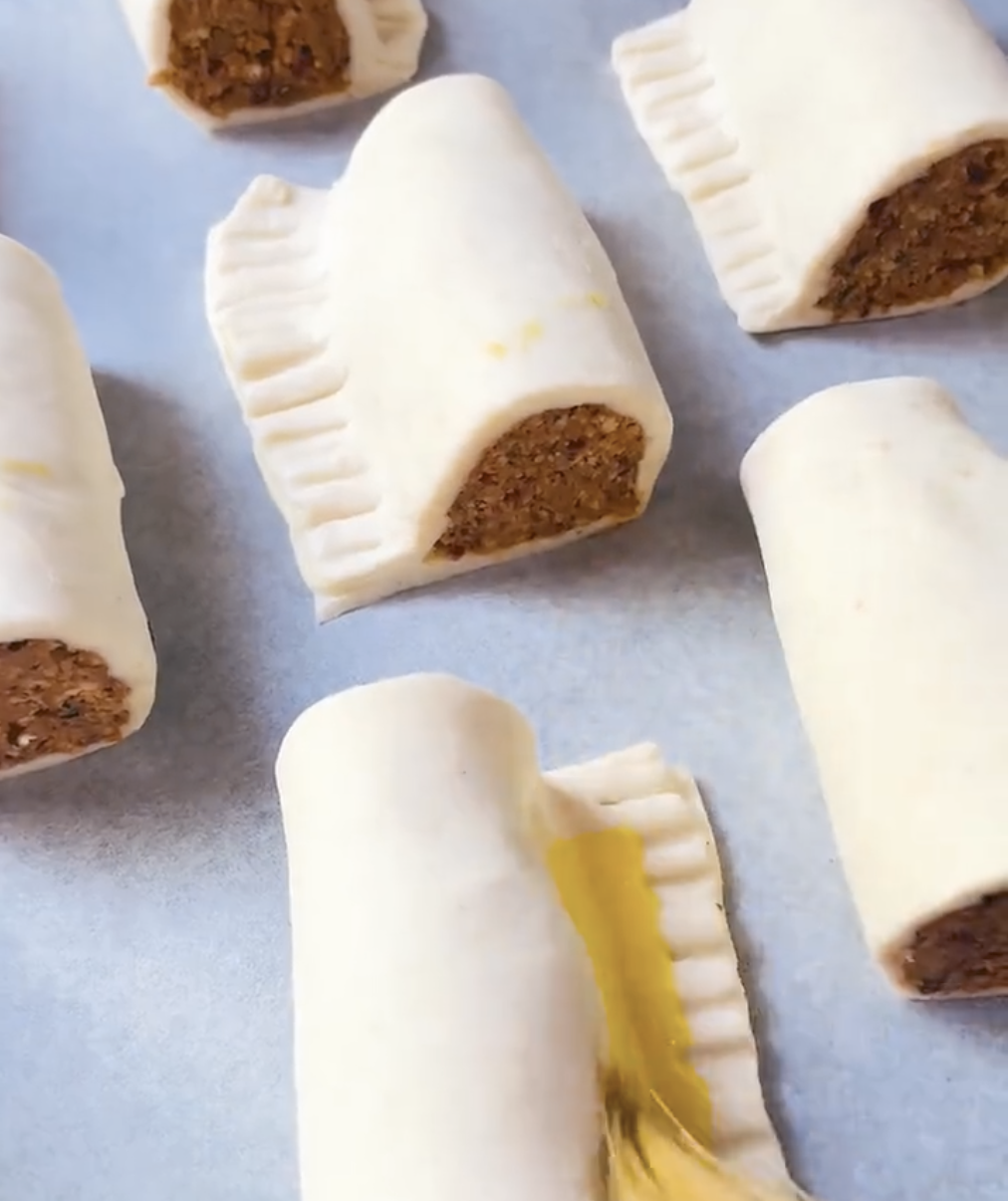
Mix 1 tablespoon plant milk with a small pinch of ground turmeric.
The milk helps the pastry brown, while turmeric gives the baked rolls a richer golden color. Use only a small pinch; too much can leave a noticeable earthy flavor.
Finish with white, black or mixed sesame seeds.
👩🍳 How to Make Harissa Sausage Rolls
Step 1 — Soften the Onion and Garlic
Heat a little olive oil in a skillet over medium heat.
Add the finely diced red onion and cook for approximately 5 minutes, stirring occasionally, until softened. We are not looking for dark caramelization. The goal is to remove the onion’s raw bite and excess moisture.
Add the crushed garlic and thyme, then cook for another minute.
Remove the pan from the heat and let the mixture cool for a few minutes while you prepare the remaining filling ingredients. Avoid putting piping-hot filling onto cold puff pastry.
💡 Lightbulb Tip: If the onions still look wet, give them another minute in the pan. Excess moisture inside the filling can soften the pastry around it.
Step 2 — Make the Harissa Filling
Place the bread, grated vegan cheddar, vegan cream cheese, harissa, cooked onion mixture and a light seasoning of salt and black pepper in a food processor.
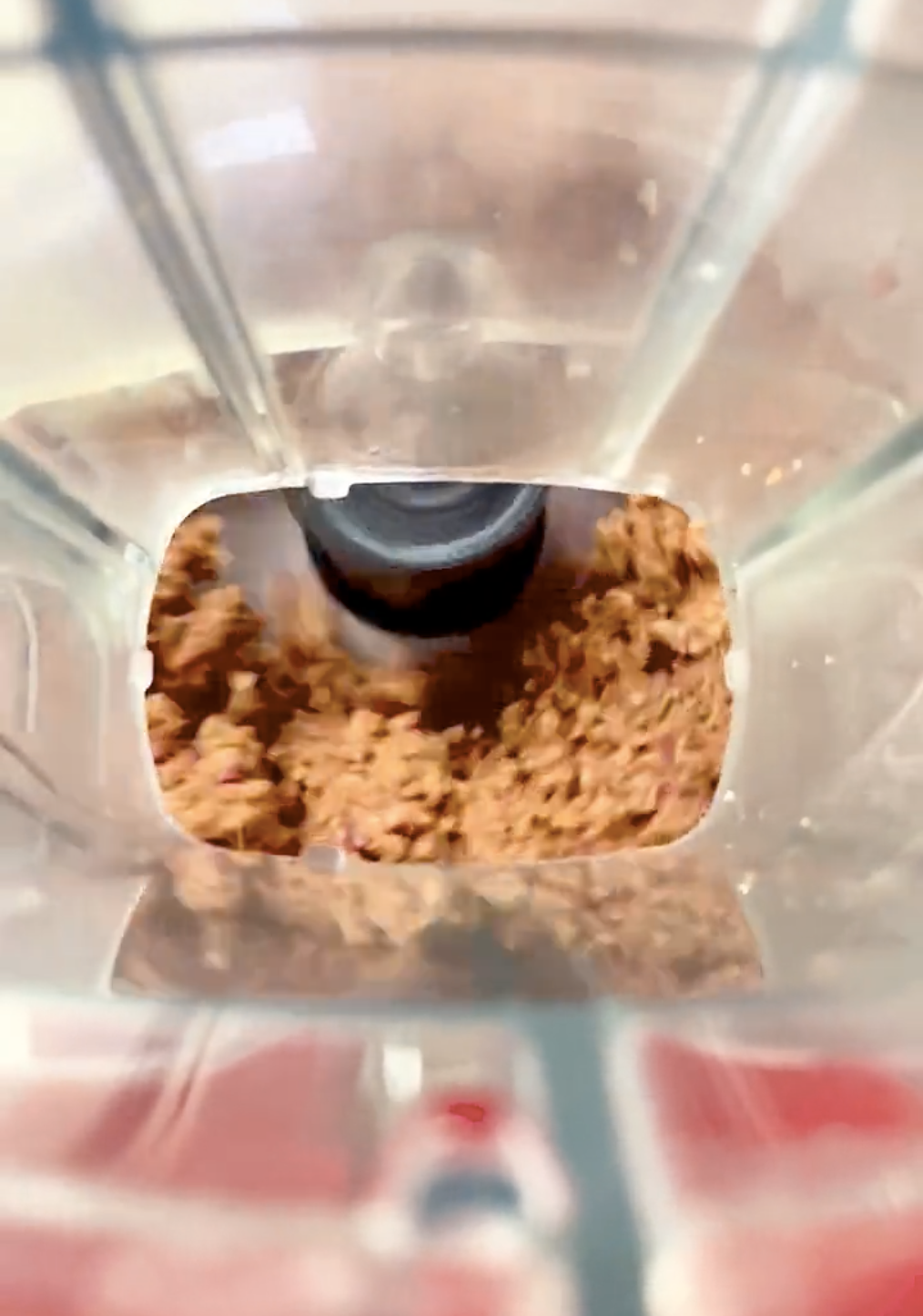
Pulse until everything forms a slightly sticky mixture that holds together when pressed.
Pick up a spoonful and squeeze it gently. If it holds, stop processing. If it falls apart into dry crumbs, pulse in a very small splash of water.
Taste a small amount and adjust the salt, pepper or harissa if needed. There is no raw meat in the mixture, so this is the moment to correct the seasoning.
💡 Lightbulb Tip: Add water cautiously. The filling needs to hold together, but it should remain firm enough to shape into three logs.
Step 3 — Cut the Pastry and Add the Filling
Unroll the puff pastry, keeping it on its paper if the package includes a suitable baking sheet.
With one long edge facing you, cut the pastry lengthwise into three equal strips.
Divide the filling into three equal portions. Shape each portion into a long sausage and place one along the near edge of each pastry strip.
Try to keep the filling an even thickness from end to end. This helps all 12 rolls bake at approximately the same rate.
Step 4 — Roll, Seal and Crimp
Mix the plant milk with the small pinch of turmeric.
Brush a little of this mixture along the far edge of each pastry strip. Roll the pastry over the filling until the two edges meet.
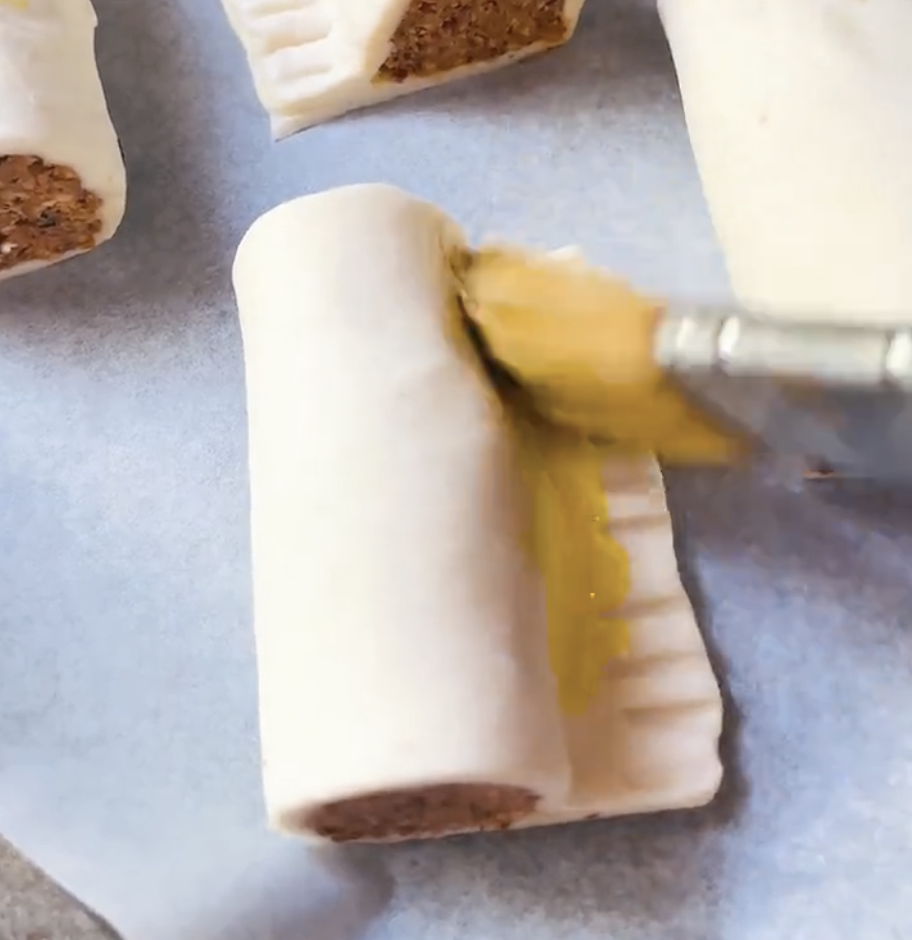
Press the seams together, then crimp them with a fork.
Place the three filled pastry logs seam-side down. Refrigerate for 30 minutes.
This short wait is doing real work. It firms the filling, cools the pastry after handling and makes the rolls easier to slice without crushing their layers.
💡 Lightbulb Tip: If the pastry starts sticking while you work, stop and refrigerate it for 10 minutes. Adding a large amount of flour can interfere with the seal.
Step 5 — Slice and Finish the Tops
Near the end of the chilling time, preheat the oven to 400°F (200°C), or 355°F (180°C) for a fan oven.
Line a large baking tray with parchment paper or a silicone baking mat.
Use a sharp knife and a gentle sawing motion to cut each chilled pastry log into four equal pieces, giving you 12 sausage rolls.
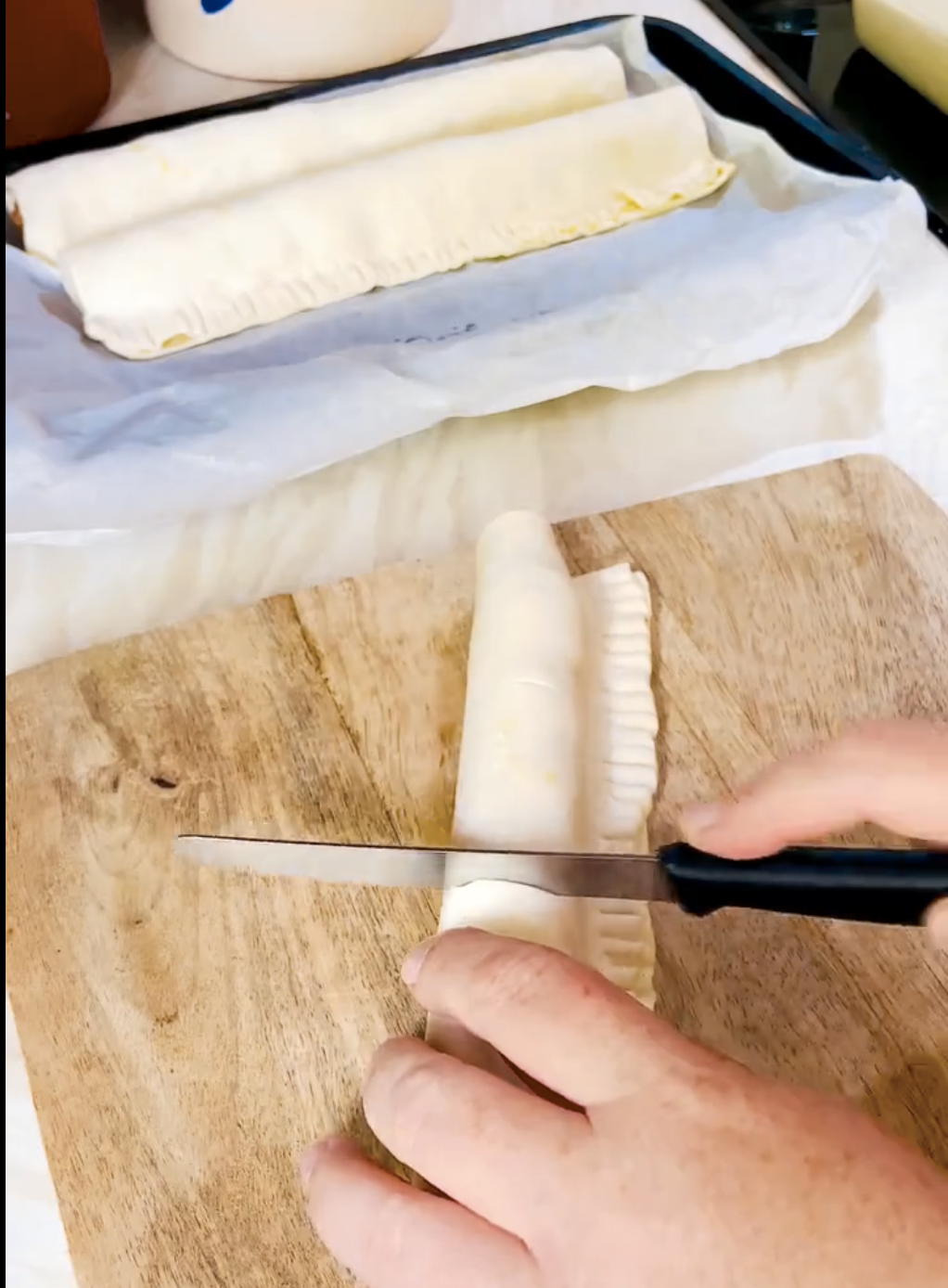
Arrange them on the tray with space between them. Brush the tops with the remaining turmeric milk and sprinkle with sesame seeds.
Do not let the milk run heavily down the cut sides. Keeping those edges relatively clean allows the pastry layers to expand more freely.
Step 6 — Bake Until Crisp and Deeply Golden
Bake for 15 minutes.
Turn the tray so the rolls brown evenly, then continue baking for approximately 15 minutes.
The finished rolls should look puffed, crisp and properly golden—not merely pale and dry. Look underneath one roll as well. The base should feel firm enough to lift from the tray without bending.
Let the rolls stand for 5–10 minutes before serving. The filling will be very hot straight from the oven, and the brief rest lets it settle.
💡 Lightbulb Tip: Use color and texture as your final test. Puff pastry tastes best when the outside has developed a confident golden crust.
🌶️ Are Harissa Sausage Rolls Very Spicy?
Not necessarily.
Harissa is a North African chile paste commonly made with red peppers, spices and oil, but its heat level varies widely by brand. Some versions are smoky and aromatic; others are distinctly hot.
With 1 tablespoon distributed among 12 rolls, the heat should be noticeable without overwhelming the filling. Still, tasting your particular harissa before measuring is the best way to avoid surprises.
For less heat, use a smaller amount or replace it with sun-dried tomato paste. If you want more spice, increase the harissa gradually rather than adding a large amount of red pepper flakes immediately.
A cool, crisp radish and cucumber salad makes a particularly useful companion when serving a hotter batch.
🥐 How Do You Keep Sausage Rolls From Becoming Soggy?
Start by cooking the onion until softened and no longer visibly wet.
Allow the cooked aromatics to cool before adding them to the filling. Hot filling warms the pastry fat prematurely, which works against crisp layers.
Keep the pastry refrigerated until you need it, chill the assembled logs for the full 30 minutes and leave space between the individual rolls on the baking tray.
Finally, bake until the bottoms are firm and the tops are deeply golden. Removing puff pastry while it is still pale often leaves the center layers soft.
Do not cover hot sausage rolls tightly. Trapped steam will soften the pastry you worked to crisp.
🔄 Variations and Substitutions
Make Them Milder
Replace the harissa with sun-dried tomato paste, or use a combination of the two.
Change the Herbs
Replace the thyme with za’atar for a more aromatic filling.
Add Greens
A small amount of finely shredded spinach or kale can be added, but keep moisture under control. Dry the leaves well and avoid adding so much that the filling becomes loose.
Change the Cheese
Try smoked vegan cheese for a deeper flavor or vegan feta for a saltier, tangier filling.
Nutritional yeast, mustard or a little miso can also strengthen the savory character. Make one change at a time and taste before adding more salt.
Try Another Vegetable Filling
Roasted butternut squash can bring sweetness, while peas and mint give the rolls a fresher character.
For another vegetable-centered appetizer with smoky flavor, baba ganoush provides a useful contrast: creamy and cool beside the hot, flaky rolls.
🥗 What to Serve With Harissa Sausage Rolls
For a party, I would not put these beside several more heavy pastry appetizers. Give the table something creamy, something crisp and something fresh.
Roasted red pepper hummus is the most natural dip when you want to continue the pepper theme without repeating the pastry.
Mediterranean charred carrots with labneh add sweetness and roasted flavor. Use the dairy-free variation if you are keeping the entire table vegan.
For lunch, add a cool Mediterranean lentil salad. Omit the feta or use a plant-based alternative when needed.
A Mediterranean roasted eggplant platter works well for a larger gathering because the soft eggplant and fresh garnishes contrast with the crisp rolls.
If you need another appetizer that can wait while the rolls bake, prepare the smoky Mediterranean bread dip first and keep the accompanying bread portions modest—the sausage rolls already supply the flaky, bread-based part of the table.
🕐 Can You Make Harissa Sausage Rolls Ahead?
Yes. The best stopping point is after the pastry logs have been filled and sealed.
Place the three uncut logs in the refrigerator, covered, then slice, brush and bake them when needed.
You can also cut the rolls earlier and refrigerate them on the lined tray. Keep them cold and wait to add the final milk wash and sesame seeds until shortly before baking.
This lets you bring freshly baked rolls to the table without assembling pastry while your guests are already there.
❄️ Storing, Freezing and Reheating
These sausage rolls are best on the day they are baked.
Once cooled, place leftovers in an airtight container and refrigerate for up to 5 days.
Reheat them in an oven or air fryer until hot and crisp. The microwave will warm the filling, but it will leave the pastry noticeably softer.
Freeze the cooled rolls in a single layer until firm, then transfer them to a freezer-safe container for up to 3 months.
Thaw them in the refrigerator before reheating for the most even result.
💡 Lightbulb Tip: Let the rolls cool before closing the storage container. Sealing warm pastry traps steam and softens the crust.
❓ Questions Before You Start
Are these made with vegan sausage?
No. The name describes their familiar sausage-roll shape. The filling is made with bread, vegan cheddar, vegan cream cheese, onion, garlic, thyme and harissa.
Can I make these with regular cheese?
Yes, if the rolls do not need to be vegan. Use cheeses with a similar grated and spreadable texture.
Can I make them gluten-free?
The supplied recipe was not developed as gluten-free. You would need suitable gluten-free bread and gluten-free puff pastry, and every packaged ingredient would need to be checked. Pastry performance and baking time may differ.
Why did my filling crumble?
The bread may have been particularly dry, or the vegan cream cheese may have had a firmer texture. Add a very small splash of water and pulse again. Stop as soon as the mixture holds together.
Why is my pastry difficult to roll?
It has probably become too warm. Refrigerate it for about 10 minutes, then continue once it feels firm but still flexible.
Can I skip the chilling time?
I would not. Chilling helps the filled logs hold their shape and makes them much easier to slice cleanly.
Can I use ordinary milk for the glaze?
Yes, if the recipe does not need to remain vegan. For a vegan batch, use an unsweetened plant milk.
Can I bake the rolls in an air fryer?
The supplied recipe was developed for the oven. An air fryer can reheat the baked rolls, but a separate air-fryer baking time has not been tested here.
Can I serve them cold?
You can, but puff pastry is at its best slightly warm or at room temperature. Remove refrigerated rolls early enough to lose their refrigerator chill, but do not leave them out for an extended period.
❤️ One Last Bite
Put one of these rolls on a plate and it looks neat and self-contained.
Then you bite into it.
The pastry scatters, the sesame seeds toast against the crust, and the filling brings onion, garlic, herbs and a warm streak of harissa all at once.
That is why I would serve them warm and within reach of everybody at the table. Add one cool dip, something crisp on the side and enough napkins for the pastry flakes.
And take one for yourself before the tray starts making its way around the room.
PrintVegan Harissa Sausage Rolls
- Total Time: 1 hour 20 minutes
- Yield: 12 sausage rolls 1x
- Diet: Vegan
Description
These vegan harissa sausage rolls wrap a savory filling of sweet onion, garlic, thyme, vegan cheese and smoky harissa in crisp, golden puff pastry. Make them ahead for parties, appetizer tables, picnics or savory snacks.
Ingredients
ngredients — For the Harissa Filling
- Olive oil, for sautéing
- 1 red onion, finely diced
- 4 garlic cloves, crushed
- 1 tablespoon fresh thyme leaves or 1 teaspoon dried thyme
- 4 thick slices bread or 2 large bread rolls
- 100 g (approximately 1 cup) vegan cheddar, grated
- 3 tablespoons vegan cream cheese
- 1 tablespoon harissa paste
- Salt and black pepper, to taste
- Small splash of water, only if needed
Ingredients — For the Pastry
- 1 package (320–350 g) ready-rolled puff pastry
- 1 tablespoon plant milk
- Small pinch ground turmeric
- White, black or mixed sesame seeds, for topping
Instructions
Instructions
- Heat a little olive oil in a skillet over medium heat. Add the red onion and cook for approximately 5 minutes, stirring occasionally, until softened.
- Add the garlic and thyme and cook for 1 minute. Remove the skillet from the heat and allow the mixture to cool briefly.
- Place the bread, vegan cheddar, vegan cream cheese, harissa, cooked onion mixture, salt and black pepper in a food processor.
- Pulse until the filling is slightly sticky and holds together when pressed. If it remains dry and crumbly, add a very small splash of water and pulse again.
- Unroll the puff pastry and cut it lengthwise into three equal strips.
- Divide the filling into three equal portions. Shape each portion into a long sausage and place it along one edge of a pastry strip.
- Mix the plant milk with the ground turmeric. Brush a little mixture along the opposite edge of each pastry strip.
- Roll the pastry around the filling. Press the seams together, crimp them with a fork and place the three pastry logs seam-side down.
- Refrigerate the filled pastry logs for 30 minutes.
- Near the end of the chilling time, preheat the oven to 400°F (200°C), or 355°F (180°C) for a fan oven. Line a large baking tray with parchment paper or a silicone baking mat.
- Use a sharp knife and a gentle sawing motion to cut each chilled log into four equal pieces, making 12 sausage rolls.
- Arrange the rolls on the prepared tray with space between them. Brush the tops with the remaining turmeric milk and sprinkle with sesame seeds.
- Bake for 15 minutes. Turn the tray and bake for another 15 minutes, or until the pastry is puffed, crisp and deeply golden.
- Allow the sausage rolls to rest for 5–10 minutes before serving.
Notes
Notes
- The 50-minute preparation time includes 20 minutes of active preparation and 30 minutes of chilling.
- Harissa varies in heat between brands. Taste yours before adding the full tablespoon.
- Rose harissa can replace regular harissa.
- For milder rolls, replace the harissa with sun-dried tomato paste.
- The filling should feel slightly sticky and hold together when pressed.
- Add water only when the filling remains dry and crumbly.
- Chilling the filled pastry logs helps them hold their shape and makes them easier to cut.
- Check the puff pastry and other packaged ingredients to ensure they are vegan.
- Refrigerate cooled leftovers in an airtight container for up to 5 days.
- Reheat in the oven or air fryer to restore the crisp pastry.
- Freeze cooled sausage rolls for up to 3 months.
- Prep Time: 50 minutes
- Cook Time: 30 minutes
- Category: Appetizer
- Method: Baking
- Cuisine: North African-Inspired
Leave a Reply