

Set this bowl on the table and the steam carries lemon, garlic, and herbs toward you before your spoon reaches the tender chicken, carrots, and little pieces of pasta.
It is warm and generous, but the fresh lemon keeps it from feeling heavy. This one-pot chicken soup is built around a few small decisions: soften the vegetables without browning them, keep the broth at a gentle simmer, and stop the pasta while it still has a little bite.
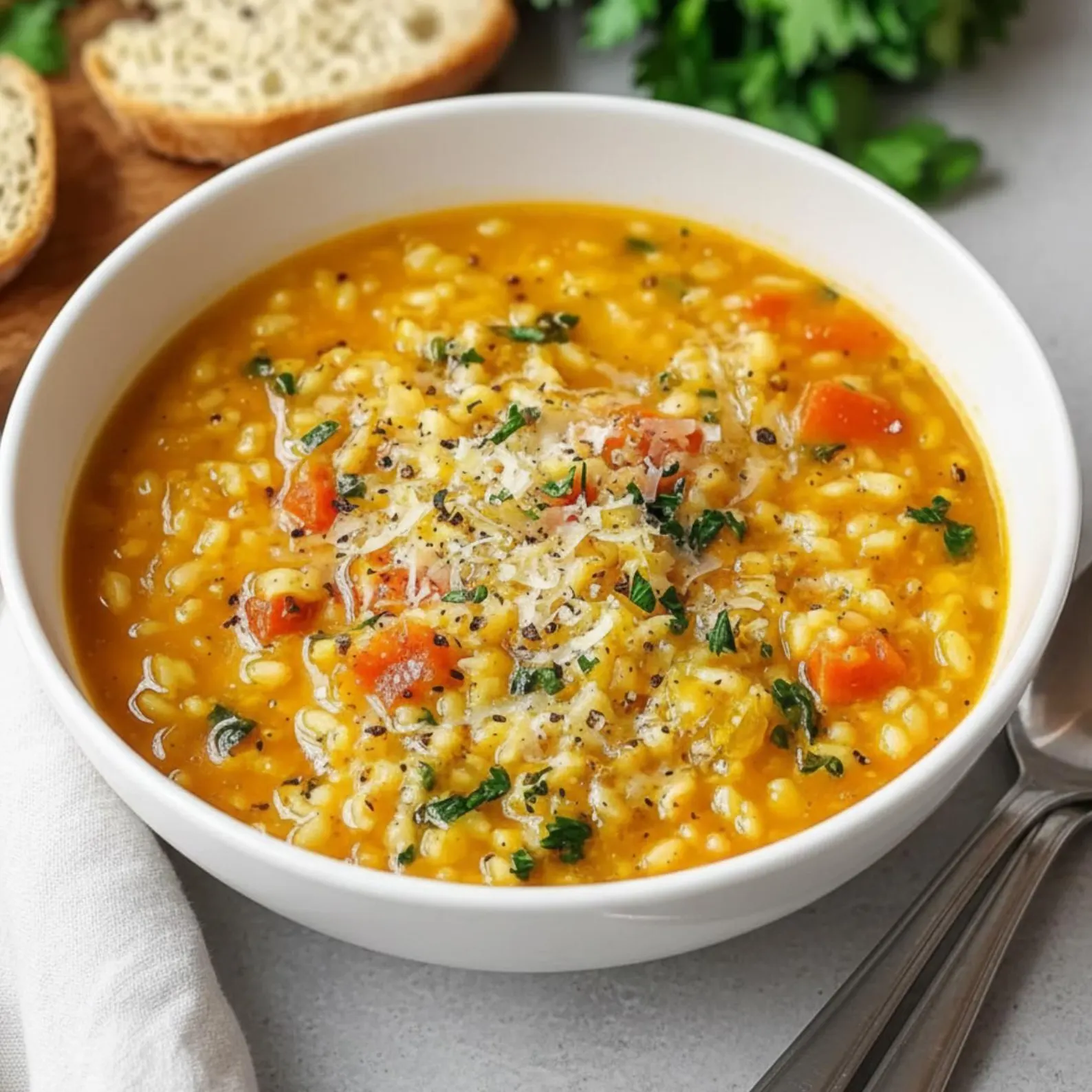
This Italian penicillin soup gives you a comforting dinner with clear, useful cues at every stage. You can keep it brothy for a chilly evening, use the full amount of pasta for a thicker pastina-style bowl, or prepare the chicken-and-broth base ahead so dinner is nearly finished before the day gets busy.
If you love a comforting bowl of homemade chicken noodle soup, think of this as its brighter, more herb-forward cousin.
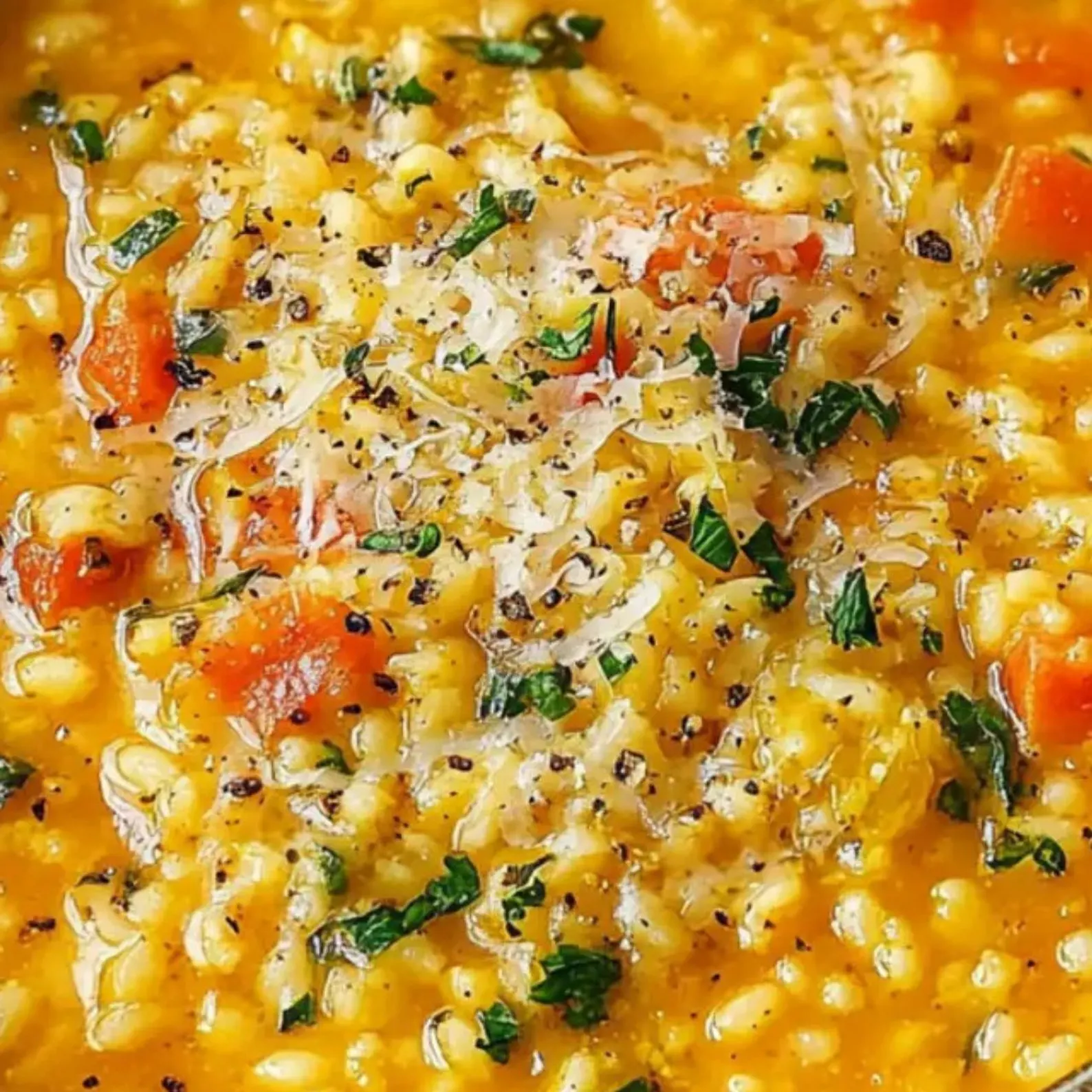
What I especially like is that the soup can meet you where you are. Add extra warm broth when the pasta has thickened the pot, serve it with Parmesan and black pepper at the table, or pair it with one simple side and let the soup remain the center of dinner.
🍲 What Is Italian Penicillin Soup?
Italian penicillin soup is an affectionate name for Italian-style chicken soup, often made with tiny pasta such as pastina. There is no single official formula. Some versions blend the vegetables into the broth, while others leave them in small, tender pieces. Some are quite brothy; others become thick enough to eat almost like a soft pasta dish.
In this version, the vegetables stay visible, chicken breasts simmer directly in the seasoned broth, and lemon and parsley go in after the pot comes off the heat. That gives the soup a savory, herb-forward base with a fresh finish.
The name describes comfort, not medicine. This is a nourishing meal, not a treatment or cure.
👀 Recipe at a Glance
| ⭐ Difficulty | Easy |
| ⏱️ Prep Time | 10 minutes |
| 🔥 Cook Time | About 45 minutes |
| ⏲️ Total Time | About 55 minutes |
| 🍲 Yield | 4 generous servings |
| 🍗 Main Protein | Boneless, skinless chicken breast |
| 🔥 Method | Stovetop simmer |
| 🥄 Texture | Brothy when fresh; thicker after resting |
| 🌿 Flavor | Savory, herb-forward, and lemon-bright |
| 💡 Best Tip | Keep extra warm broth ready because the pasta continues absorbing liquid |
| 🎯 Best For | Weeknight dinners, chilly evenings, and make-ahead lunches |
| ❄️ Freezer Guidance | Freeze the chicken-and-broth base without pasta, lemon, or parsley for 2–3 months |
❤️ Why You’ll Love This Soup
Everything begins in one pot. The vegetables soften, the chicken simmers, and the pasta cooks in the same broth, so every stage contributes flavor to the finished bowl.
The pasta gives the broth natural body. There is no cream, yet the soup does not feel thin or unfinished. Lemon and parsley go in at the end, keeping the chicken, pasta, and herbs from tasting flat or overly heavy.
You are also not locked into one texture. Use less pasta for a brothier soup, cook it separately for meal prep, or use the full amount for a thick, spoonable bowl.
🥕 Ingredient Notes
The Vegetable Base
Olive oil, onion, carrots, celery, and garlic build the foundation. Dice the onion, carrots, and celery to roughly the same size so they soften at a similar rate. The goal is not to caramelize them; gentle cooking gives you tender vegetables and a clean-tasting broth.
Add the garlic only after the other vegetables have softened. One fragrant minute is enough. Much longer and it may begin to catch on the bottom of the pot.
The Broth, Chicken, and Herbs
Lower-sodium chicken broth gives you control over the final seasoning. The liquid reduces slightly, and Parmesan at the table may add more salt, so it is easier to adjust near the end than to rescue an over-salted pot.
Boneless, skinless chicken breasts simmer directly in the broth and are shredded once cooked. Boneless, skinless chicken thighs can replace the breasts if you prefer darker meat and a slightly richer result.
Bay leaves, oregano, thyme, and optional red pepper flakes give the soup its herb-forward character. The stated amount of dried herbs makes a bold broth; if your herbs are particularly strong, begin with 2 teaspoons of each and adjust after simmering.
Why a Dutch Oven Makes This Soup Easier
You do not need special equipment to make this soup, but a wide, heavy-bottomed Dutch oven makes the process more forgiving. The broad cooking surface gives the onion, carrots, and celery room to soften evenly instead of steaming in a tight pile. The heavy base also holds a steady, gentle simmer, which helps the chicken cook without the broth jumping into a hard boil.
A regular soup pot works too. What matters is stable heat, enough room for the pasta to move, and a lid you can leave slightly ajar. A sturdy Dutch oven is also useful for braises, stews, and no-knead bread, making it a practical piece of kitchen equipment rather than a single-purpose purchase.
The Pasta, Lemon, and Parsley
Small pasta such as stelline, acini di pepe, ditalini, orzo, or small shells fits easily on a spoon with the chicken and vegetables.

Two cups make a thick, pasta-forward soup. Use 1 to 1½ cups when you want more broth, especially if you expect leftovers. Fresh lemon juice and parsley belong at the end so their flavor stays bright.
If that citrusy finish is your favorite part of the bowl, Greek avgolemono soup takes lemony chicken soup in a creamier direction.
💡 Lightbulb Tip: Have a little extra warm broth nearby before adding the pasta. You may not need it immediately, but you will be glad to have it if the soup sits before serving.
🥣 How to Make Italian Penicillin Soup
1. Soften the Vegetables
Warm 2 tablespoons olive oil in a large heavy-bottomed pot or Dutch oven over medium heat.
Add 1 cup diced onion, 2 diced carrots, and 2 diced celery stalks. Cook for 5–7 minutes, stirring occasionally, until the onion looks translucent and the vegetables have begun to soften. Stir in 3 minced garlic cloves and cook for about 1 minute, just until fragrant.
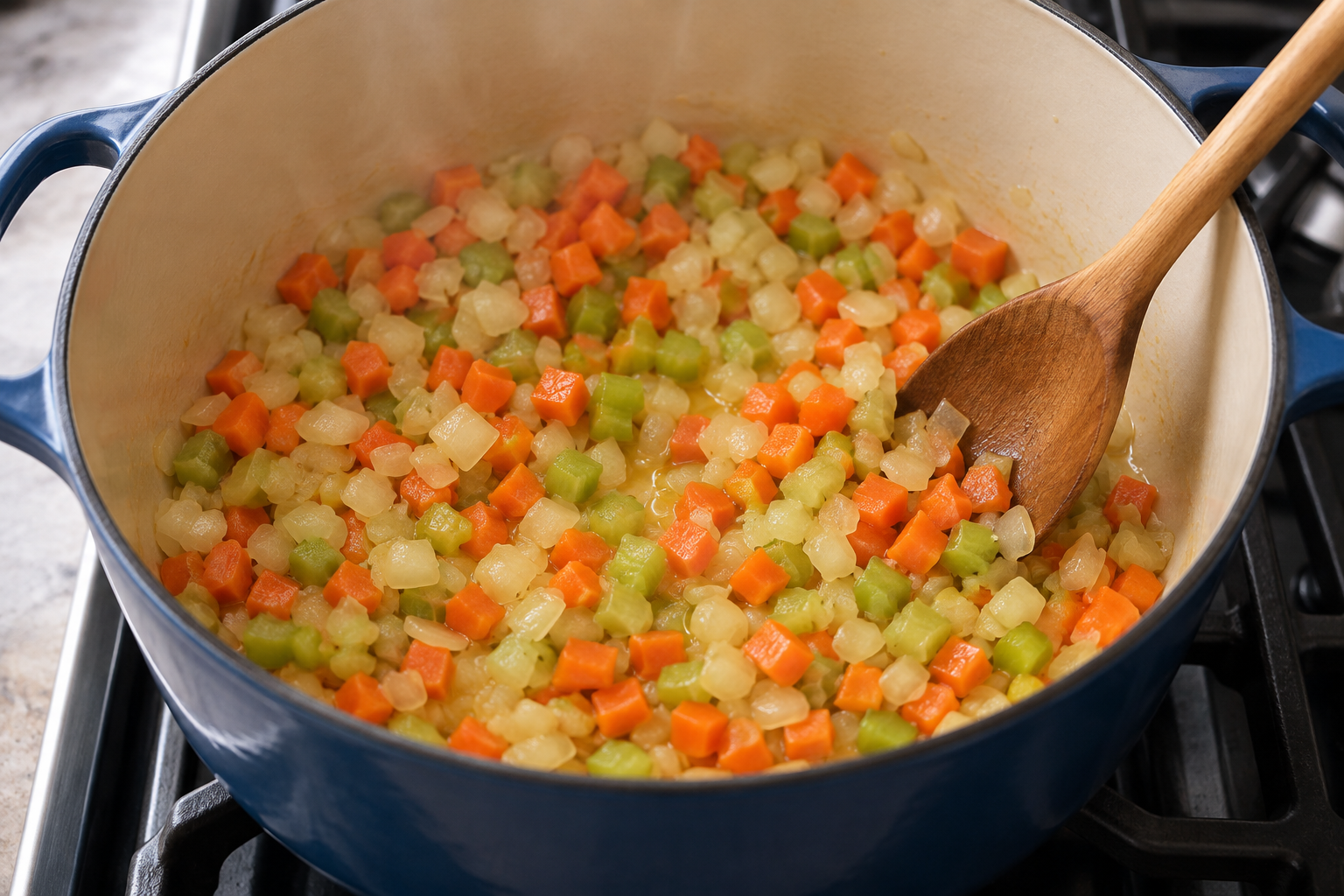
💡 Lightbulb Tip: You are softening the vegetables, not browning them. If they begin taking on deep color, lower the heat before adding the garlic.
2. Simmer the Chicken
Pour in 6 cups lower-sodium chicken broth. Add 1 pound boneless, skinless chicken breast, 2 bay leaves, 1 tablespoon oregano, 1 tablespoon thyme, and up to ½ teaspoon red pepper flakes.
Bring the soup just to a boil, then immediately reduce the heat. Partially cover the pot and maintain a gentle simmer until the thickest part of the chicken reaches 165°F (74°C), about 25–30 minutes.
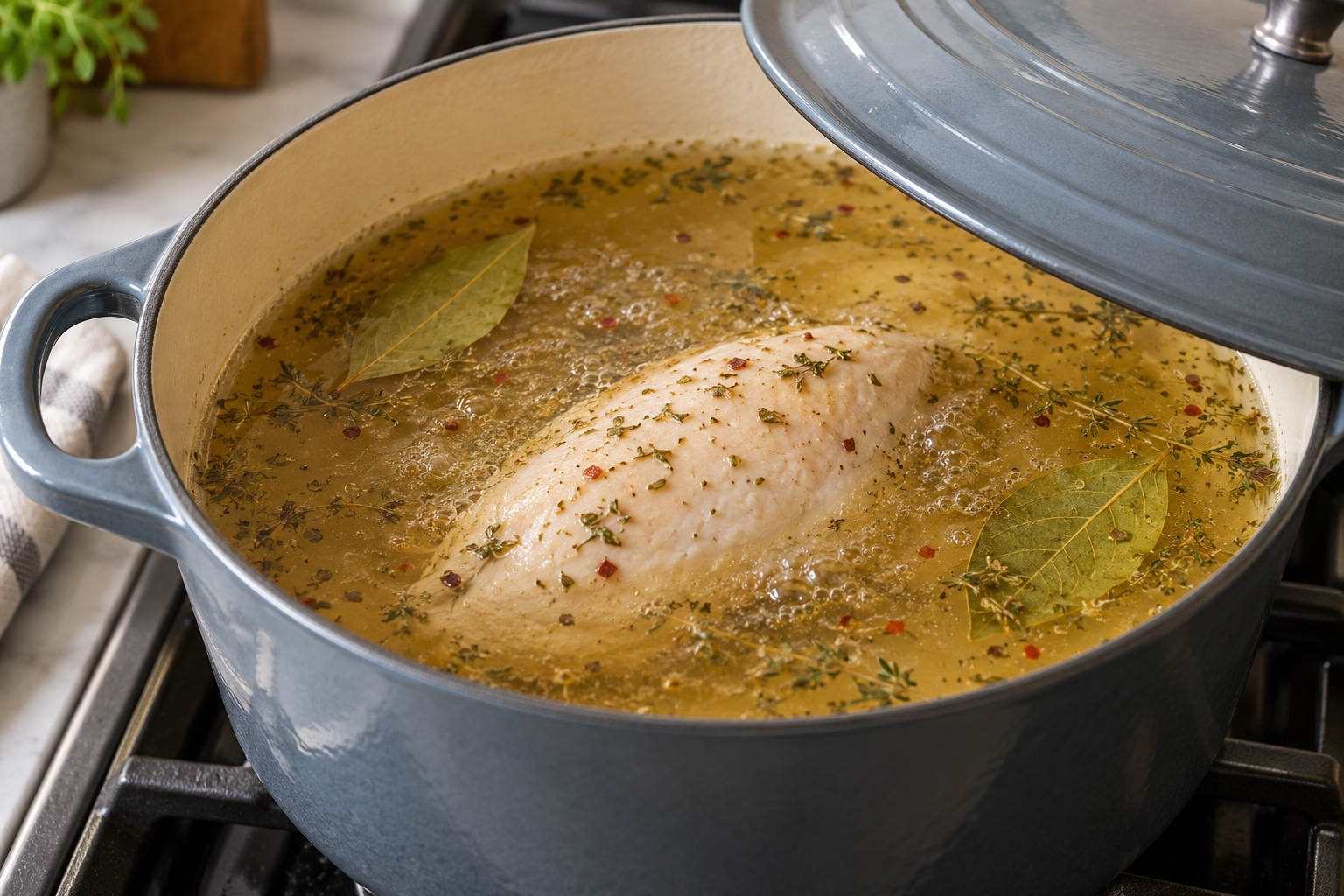
The surface should move quietly, with small bubbles rather than a rolling boil. That calmer heat is kinder to lean chicken breast.
💡 Lightbulb Tip: Begin checking the chicken early with an instant-read thermometer. Remove it as soon as it reaches 165°F (74°C) so it stays tender.
3. Shred the Chicken and Season the Broth
Transfer the cooked chicken to a plate and let it rest briefly. Discard the bay leaves, then shred the chicken into bite-size pieces with two forks and return it to the pot.
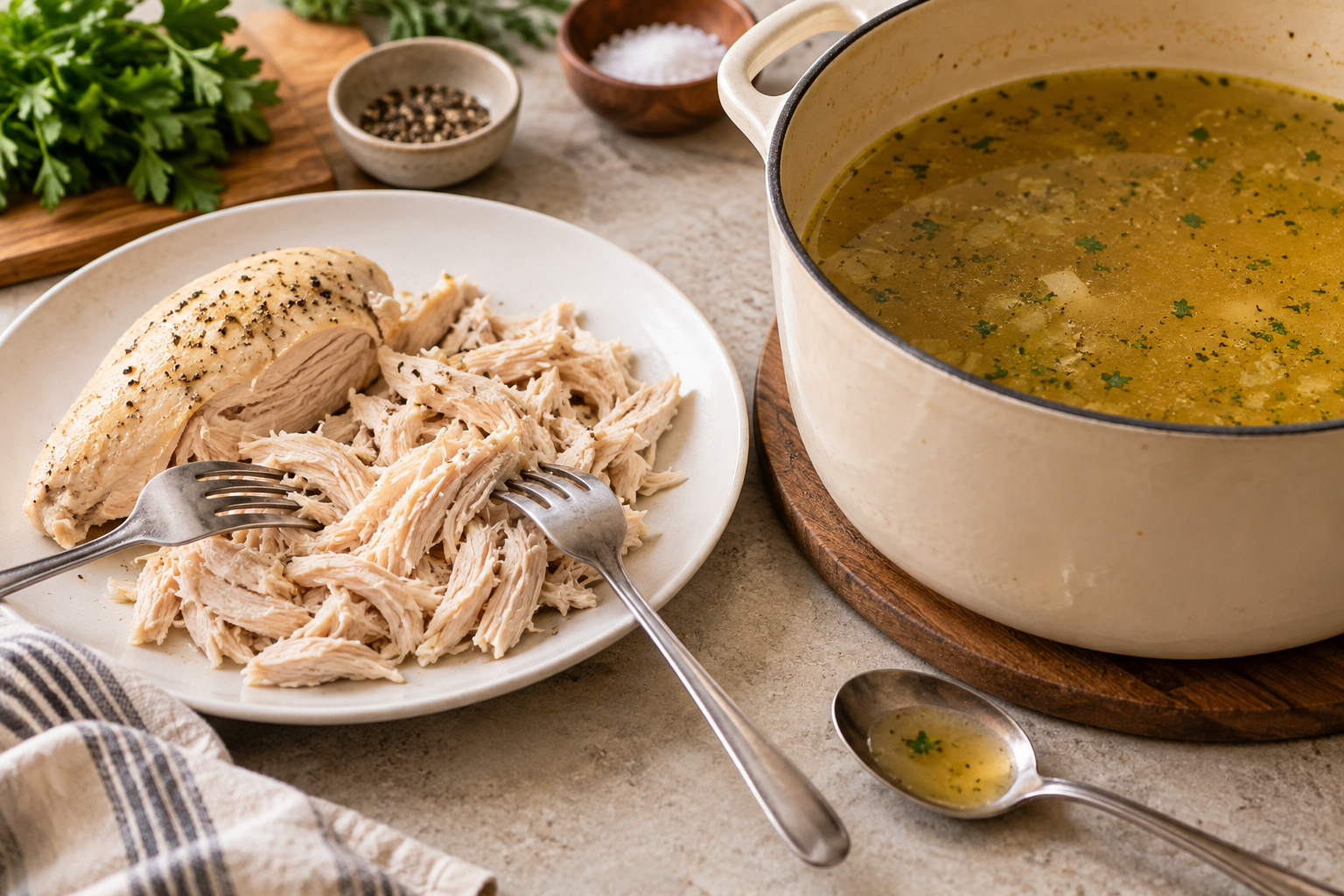
Taste the broth before reaching for the salt. Broths vary considerably, and the soup is not finished yet. At this stage, check whether the herbs have opened up and whether the broth needs a small amount of salt—not whether the lemon balance is perfect.
4. Cook the Pasta
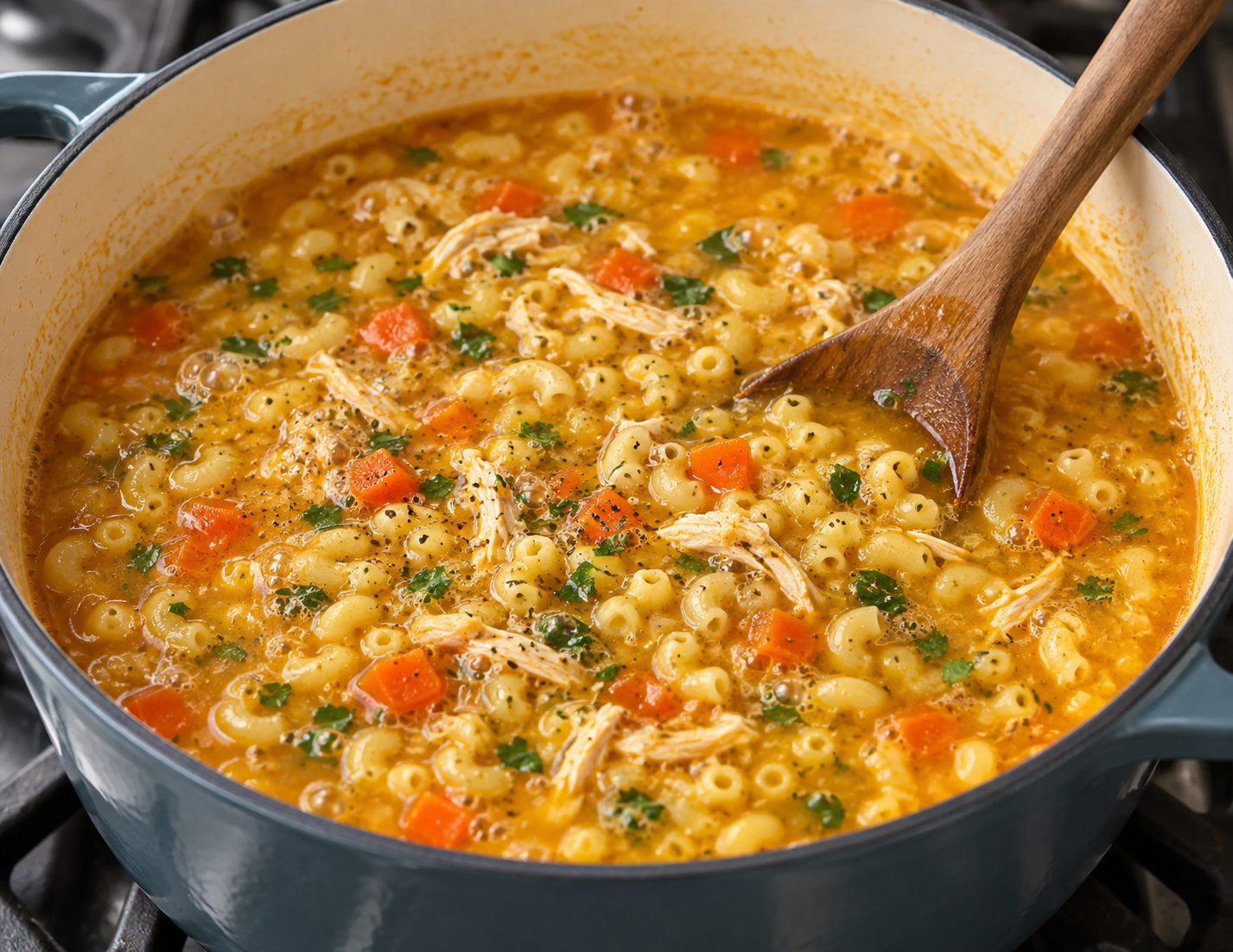
Bring the broth back to a lively simmer and stir in 2 cups small pasta, or use 1 to 1½ cups for a brothier result.
Cook according to the package timing, usually 8–10 minutes, until the pasta is al dente. Stir once or twice so the small pieces do not settle and stick to the bottom of the pot.
For a hands-off variation another day, try slow cooker lemony chicken orzo soup.
💡 Lightbulb Tip: Stop while the pasta still has a little bite. It continues softening in the hot broth and will absorb more liquid as the soup rests.
5. Brighten and Serve
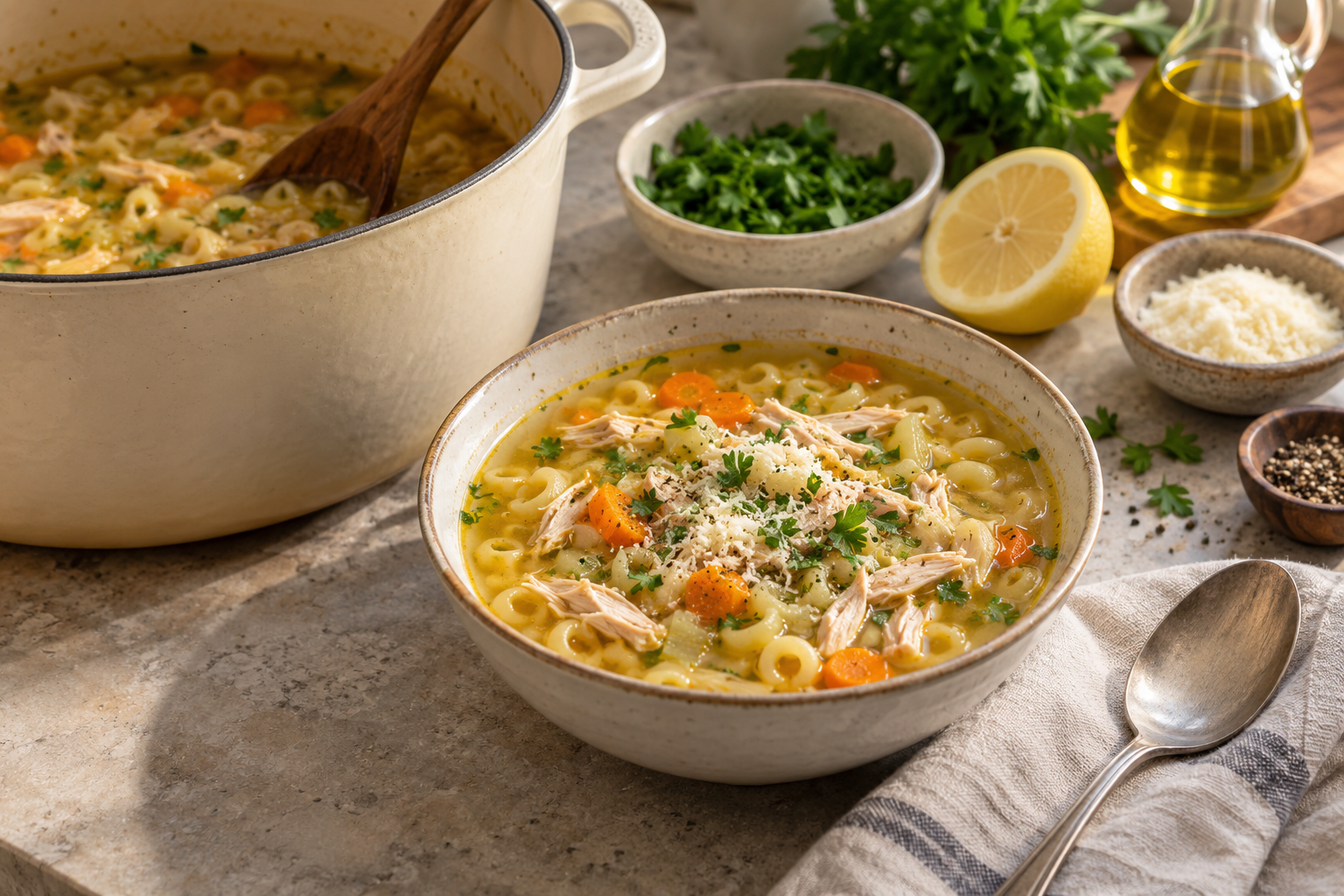
Remove the pot from the heat. Stir in ¼ cup fresh lemon juice and ¼ cup chopped fresh parsley.
Taste in this order: salt, lemon, then heat. Add what the soup actually needs. It may want another pinch of salt, a little more lemon, or a few more red pepper flakes.
Serve with black pepper, grated Parmesan, or a light drizzle of olive oil if desired. Each gives the bowl a slightly different finish.
🥄 How to Keep the Soup Brothy
Pasta continues absorbing liquid after cooking, so the soup naturally becomes thicker as it rests. Nothing has gone wrong; choose the approach that matches how you plan to serve it.
- For a brothier pot: Use 1 to 1½ cups pasta instead of the full 2 cups.
- For meal prep: Cook the pasta separately and add it to individual bowls.
- For a thick pastina-style bowl: Use the full quantity and let the soup stand for 5 minutes.
- For leftovers: Stir in warm broth while reheating until the consistency is right again.
💡 Lightbulb Tip: If the soup must sit before dinner, hold back 1–2 cups of warm broth and add it just before serving. That gives you control over the final texture without diluting the flavor too early.
🔄 Substitutions and Variations
Chicken thighs: Replace the breast meat with the same weight of boneless, skinless thighs. Use the thermometer rather than the clock and cook them to at least 165°F (74°C).
Rotisserie chicken: Simmer the vegetables, broth, and herbs for 15–20 minutes. Stir in about 3 cups shredded rotisserie chicken during the final 3–5 minutes, then add the lemon and parsley off the heat.
Gluten-free: Use a sturdy gluten-free small pasta, or stir cooked rice into the finished broth. Cooking gluten-free pasta separately can help control the texture.
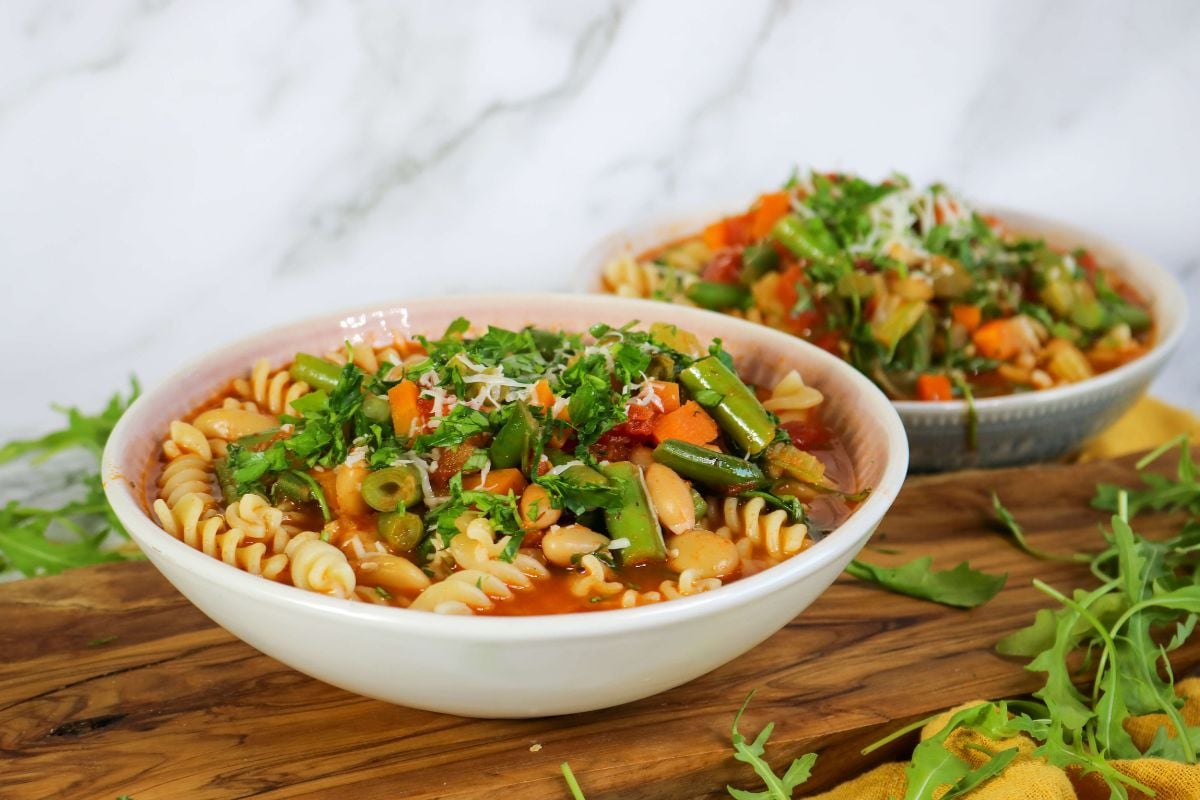
Vegetarian: Use vegetable broth, omit the chicken, and add two drained cans of cannellini beans. For another vegetable-forward bowl, see hearty minestrone soup with fresh arugula.
Extra greens: Stir in a few handfuls of baby spinach during the last 2 minutes. It will wilt quickly without taking over the soup.
🥖 What to Serve With This Soup
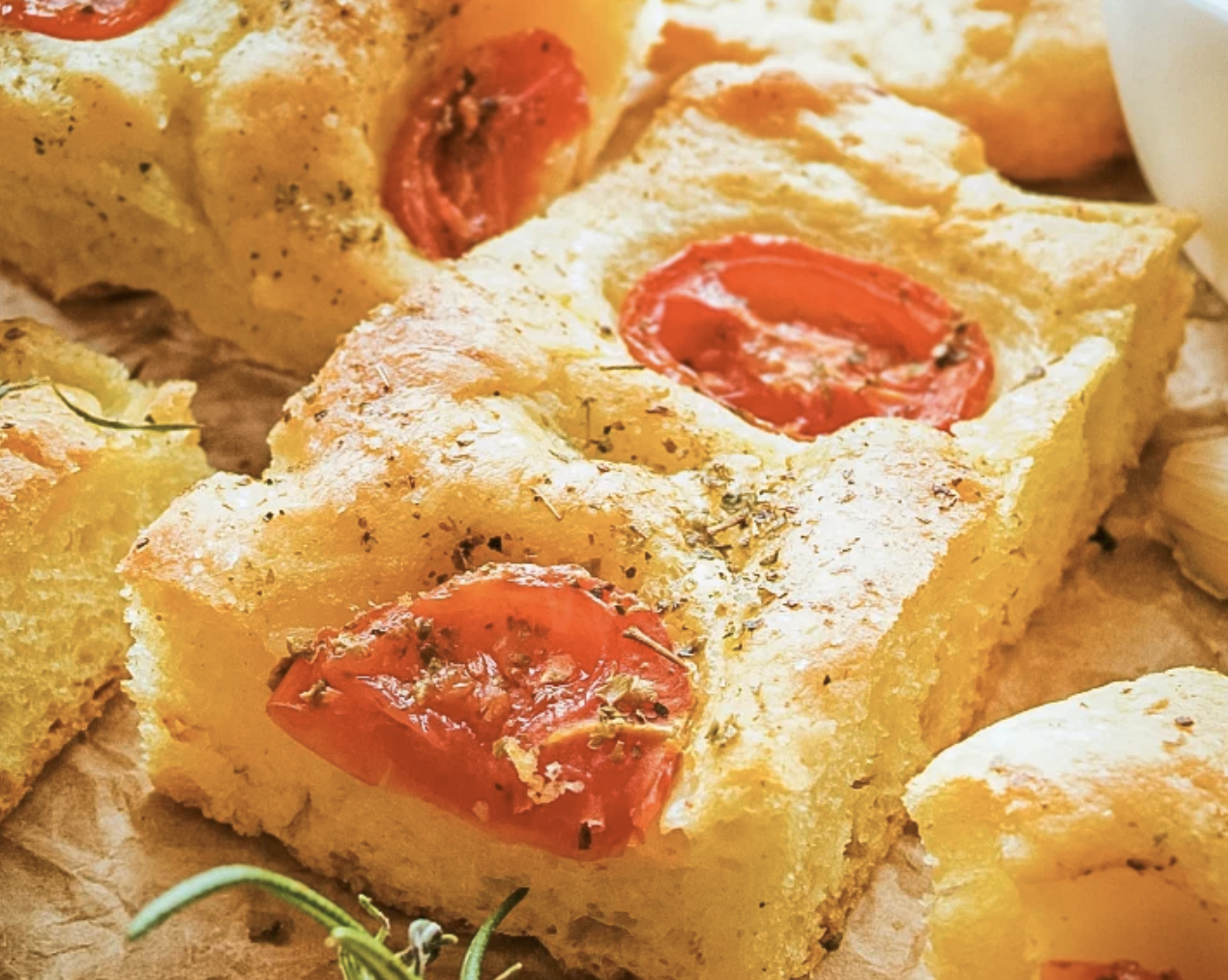
This is already a complete meal, so one simple side is enough. Put warm cheesy garlic bread or a piece of no-knead tomato focaccia beside the bowl when you want something for dipping.
If the soup is thick and pasta-forward, a crisp spinach and arugula salad gives the meal the fresh contrast it needs. I would not add several heavy sides. The pleasure of this dinner is one warm bowl, one contrasting accompaniment, and very little else to manage.
❄️ Make Ahead, Storage, and Freezing
Make Ahead
Prepare the soup through the shredded-chicken stage and refrigerate the base. When you are ready to serve, bring it back to a simmer, cook the pasta in the broth, and add the lemon and parsley after removing the pot from the heat. That last-minute cooking protects both the pasta texture and the fresh finish.
Refrigerate
Cool the soup promptly and refrigerate it in shallow, airtight containers for 3–4 days. Reheat only what you need and add warm broth a little at a time to loosen the pasta. A splash of fresh lemon after reheating can wake the flavor back up.
Freeze
For the best texture, freeze the chicken-and-broth base without the pasta, lemon, or parsley for 2–3 months. Thaw it overnight in the refrigerator, bring it to a simmer, cook fresh pasta in the broth, and finish with lemon and parsley.
❓ Frequently Asked Questions
Is Italian penicillin soup the same as pastina?
Not always. Pastina means “little pasta” and may refer to the pasta itself or to simple dishes made with it. Italian penicillin soup often contains pastina, but the name is used for several comforting Italian-style chicken soups.
What pasta works best?
Stelline, acini di pepe, ditalini, orzo, and small shells all work. Choose a shape small enough to share the spoon comfortably with the chicken and vegetables.
Do I need to cook the pasta separately?
No. Cooking it in the broth adds body and keeps the recipe to one pot. Cook it separately when you want a clearer, brothier soup or plan to store several portions.
Why is my soup too thick?
The pasta has absorbed more of the broth. Stir in warm broth a little at a time until the texture is right. Next time, use less pasta or store it separately.
Can I use rotisserie chicken?
Yes. Simmer the vegetable-and-herb broth first, then add about 3 cups shredded rotisserie chicken for only the final 3–5 minutes so it warms without becoming dry.
Is Italian penicillin soup a cold remedy?
No. The name is affectionate, not medical. Enjoy it as a warm, comforting meal and seek qualified medical advice for health concerns.
❤️ One Last Bite
The confident-cook version of this soup comes down to four decisions: soften rather than brown the vegetables, simmer rather than boil the chicken, stop the pasta at al dente, and add the lemon at the end.
Make those calls well and the bowl will taste cared for. You will have tender chicken, vegetables that still feel distinct, pasta that belongs in the broth instead of swallowing it, and enough lemon to brighten everything without turning the soup sour.
Bring the pot to the table while it is steaming, put the Parmesan and black pepper within reach, and let everyone finish the bowl their own way. For another Italian comfort soup, save homemade Italian wedding soup.
PrintItalian Penicillin-Style Soup
- Total Time: 55 minutes
- Yield: 4 generous servings 1x
- Diet: Dairy-Free, Dairy-free when served without Parmesan
Description
Tender chicken, small pasta, vegetables, herbs, and fresh lemon simmer together in a comforting one-pot soup with a bright, savory finish.
Ingredients
Ingredients:
2 tablespoons olive oil
1 cup diced onion
2 carrots, diced
2 celery stalks, diced
3 garlic cloves, minced
6 cups lower-sodium chicken broth
1 pound boneless, skinless chicken breast
2 bay leaves
1 tablespoon dried oregano
1 tablespoon dried thyme
Up to ½ teaspoon red pepper flakes
2 cups small pasta, or 1 to 1½ cups for a brothier soup
¼ cup fresh lemon juice
¼ cup chopped fresh parsley
Salt, to taste
Black pepper, Parmesan, and olive oil for serving, optional
Instructions
- Soften the onion, carrots, celery, and garlic in olive oil.
- Add broth, chicken, bay leaves, oregano, thyme, and red pepper flakes. Simmer gently until the chicken reaches 165°F (74°C), about 25–30 minutes.
- Remove and shred the chicken. Discard the bay leaves, return the chicken to the pot, and taste the broth.
- Add the small pasta and cook until al dente, usually 8–10 minutes.
- Remove from the heat. Stir in lemon juice and parsley, then adjust salt, lemon, and heat before serving.
- Prep Time: 10 minutes
- Cook Time: 45 minutes
- Category: Dinner
- Method: Stovetop
- Cuisine: Italian

Leave a Reply